

What ‘Sense And Sensibility’ Gets Right About Love That Modern Dating Gets Wrong
Premium domains for sale
Freedom Is Back In Style
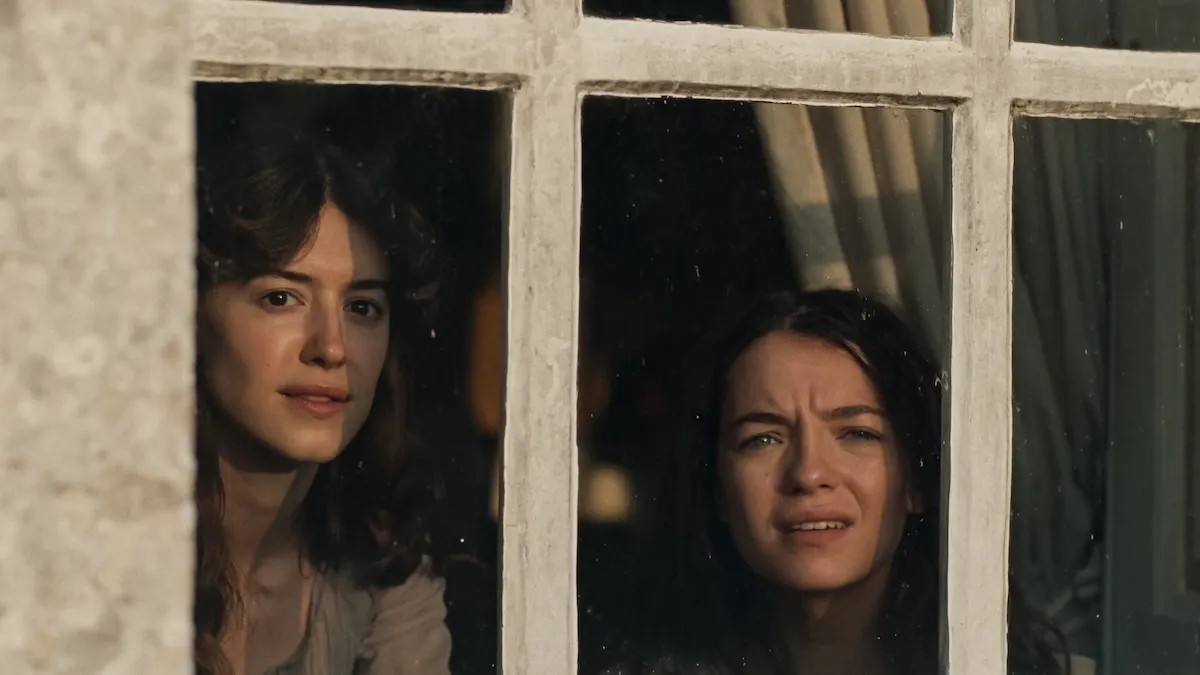
Unlike many recent adaptations of beloved classics, the new “Sense and Sensibility” movie based on Jane Austen’s novel remains holistically (if not literally) true to its source material. It reminds us of the timeless importance of this insightful novel without attempting to “update” its commentary on the human condition.
Freedom Is Back
In Style
Premium domains for sale
Austen’s 1811 novel is about the romantic travails and personal growth of two sisters, Elinor and Marianne, who, alongside their widowed mother and younger sister, must vacate their childhood home in favor of their selfish half-brother after their father’s death.
Elinor is stoic and tactful, the embodiment of “sense.” Marianne is sincere and passionate, the embodiment of “sensibility.” Each ultimately gets her happy romantic ending. Elinor’s “match,” Edward, is engaged to a gold-digging manipulator, Lucy, who abandons him when his family disinherits him (despite his honorable refusal to do the same to her), leaving him free to choose Elinor. Marianne faces rejection by the caddish, dashing Willoughby before developing the maturity to recognize that the stable, generous Colonel Brandon merits her tempestuous regard and affection.
A Beautiful, Old-Fashioned Film
This adaptation itself is excellent. The cinematography is beautiful and rich, the acting excellent and subtle, and the scenes softly lit and absent the anachronism of extra makeup and modern finery. The pacing is slow-moving without a lot of extra scene cuts. The casting of a “non-binary” actress as the minor character Mr. Palmer is the only modern twist that actively undercuts the source material. All in all, “Sense and Sensibility” is a rare pleasure to watch.
Moreover, Elinor’s plot line — she and Edward bearing their shared grief and longing while circumstance prevents their marriage, followed by their joyous elation when those restrictions dissolve — is moving. Marianne’s is somewhat less so. Her ill-fated romance with Willoughby and her eventual defection to Colonel Brandon appear comparatively quickly despite the 132-minute run time and, in part as a result, lack the depth of Elinor’s share of the story.
To engage with “Sense and Sensibility” today is to rediscover the timeless difficulty of integrating the realism and responsibility of Elinor’s sense with the idealism and excitement of Marianne’s sensibility, both individually and societally. Austen is clearly partial to Elinor, who retains her dignity regardless of her happiness or lack thereof (much as she is partial to Charlotte Lucas, Elizabeth Bennet’s best friend in “Pride and Prejudice,” who marries the buffoonish Mr. Collins for practical reasons and then makes the best of it).
Elinor is the honorable adult who has the unimpeachable self-mastery and maturity that would have saved Marianne her ill-advised suffering with respect to Willoughby. Marianne, for her part, is the blunt and direct character who has the confidence that would have saved Elinor her penultimate misunderstanding with Edward. Indeed, striking the optimal balance between head and heart, or stoicism and sincerity, is a perennial human problem.
A Culture Lacking Sense Doesn’t Know What To Do With Sensibility
Unfortunately, our culture today commonly misapplies both sense and sensibility in the lives and loves of young women. Sensibility has perversely become a governing ethos in the ostensibly impersonal, societal realm of politics. Toxic empathy for those with anti-normative, niche concerns now reigns supreme in the prevailing ideology of female youth. On issues from Israel to law and order to gender ideology, people routinely dismiss the onetime guardrail of common sense as mere bigotry. As a result, our culture lauds undignified, unbecoming, and immature hysteria rather than censuring it.
In 2026, Marianne-type women are pseudo-revolutionary activists fighting for the mono-cause — that is, against amorphous “oppression.” They accuse women like Elinor of weaponizing privilege in the pursuit of institutional incrementalism.
But, at the same time, sense is now so popular in the presumptively personal realm of love that it’s dehumanizing. Online dating offers the ability to screen men on silly criteria such as height. Artificial intelligence provides the possibility of bot boyfriends. Meeting people organically, in any ongoing social context, is rare. And rarer still is to let the heart lead in what we once called matters of the heart.
As the young British writer Freya India has observed, it isn’t just that today’s culture teaches girls, when it comes to love, not to impulsively trust their feelings. That is a good lesson, of course. It’s that culture increasingly teaches them not to have any feelings at all. First, by a Left whose excesses have become definitional. And then by a Right whose response is mostly to show graphs and quote philosophy without necessarily understanding or acknowledging that there are human depths, wounds, and hopes at play. “Do you know how it feels?” India asks. “How it feels to hold on to hopes of love and loyalty in a world of Tinder and hook-ups?”
No, I am not arguing that young women should pursue wild or hopeless romance; I’m a conservative and a pragmatist, after all. But it is rather disheartening that nobody today — least of all young women — seems free to admit any interest in love for love’s sake. Indeed, the gold-digging Lucy Steele, Austen’s villain in “Sense and Sensibility,” would be a natural fit in an era in which we have, sadly, adopted a norm of assuming the commodification and “trading up” of fellow human beings.
In other words, what upper-class parents once did via arranged marriages, young people are now doing for themselves by delaying or eschewing marriage, as well as preceding it by the endless analysis of clinical data that we now call “dating.”
The truth is that tearing down the strictures of religion, morality, and decency to let the passions rule has not worked out as its 1960s advocates would have hoped. Today’s world contains less color, excitement, and eroticism instead of more. Of course it does; after all, it is only via limits on sensibility that its overindulgence remains attractive. Understood in that context, the transfer of young women’s holistic, youthful spirit from the realm of romance to that of politics is ultimately nothing more than a sad (and dangerous) admission of defeat and ennui.
Perhaps what Austen gives us, then, is an enduring blueprint for returning to a world in which the maturity of sense reigns. Only in that context can we engage in the passion of sensibility without fear.
***
Elizabeth Grace Matthew writes about books, education, and culture, including on Substack.
This article is part of Upstream, The Daily Wire’s new home for culture and lifestyle. Real human insight and human stories — from our featured writers to you.
More from this network:
Domains for Sale · GOTPeople.org · TheDSAPlatform · The Truth About Socialism
What's Your Reaction?
 Like
0
 Dislike
0
 Love
0
 Funny
0
 Wow
0
 Sad
0
 Angry
0

I am just an average American. My teen years were in the late 70s and I participated in all that that decade offered. Started working young, too young. Then I joined the Army before I graduated High School. I spent 25 years in, mostly in Infantry units. Since then I've worked in information technology positions all at small family owned companies. At this rate I'll never be a tech millionaire. When I was young I rode horses as much as I could. I do believe I should have been a cowboy. I'm getting in the saddle again by taking riding lessons and see where it goes.
Premium domains for sale










Comments (0)