

What The Hell Happened?

Premium domains for sale
Freedom Is Back In Style
Well, that sucked.
Freedom Is Back
In Style
Premium domains for sale
A blue tsunami. The Republicans who wanted to win were like Richard Chamberlain in the movie “The Last Wave,” waiting on the shore for our doom, or for the Gen Xers in the crowd, Tea Leoni and Maximilian Schell on the beach in “Deep Impact,” just watching that gigantic wave come at them.
It was brutal and pretty unprecedented. The big question this morning is very simple: What the hell happened?
I want to start with what didn’t happen, what this wasn’t about.
Myth #1 is going to come from the legacy media: This was about the endorsement of Democrat policy. That’s not true. Americans didn’t suddenly turn in favor of Medicare for All or for the Green New Deal.
The CNN exit polls show that 54% of voters had negative views of socialism, compared to 33% who held favorable views. Fifty-seven percent of Americans were favorable to capitalism in that polling. How about support for trans rights? Fifty-two percent of people polled said that the support for trans rights had gone too far.

In California, a ballot measure in a blue tsunami year sought to impose a wealth tax on people worth over $1 billion, but it didn’t pass. It failed.
In Washington, D.C., a restriction on boys playing in girls’ sports is set to pass.
The American people didn’t radically turn to the left. That’s not what happened last night.
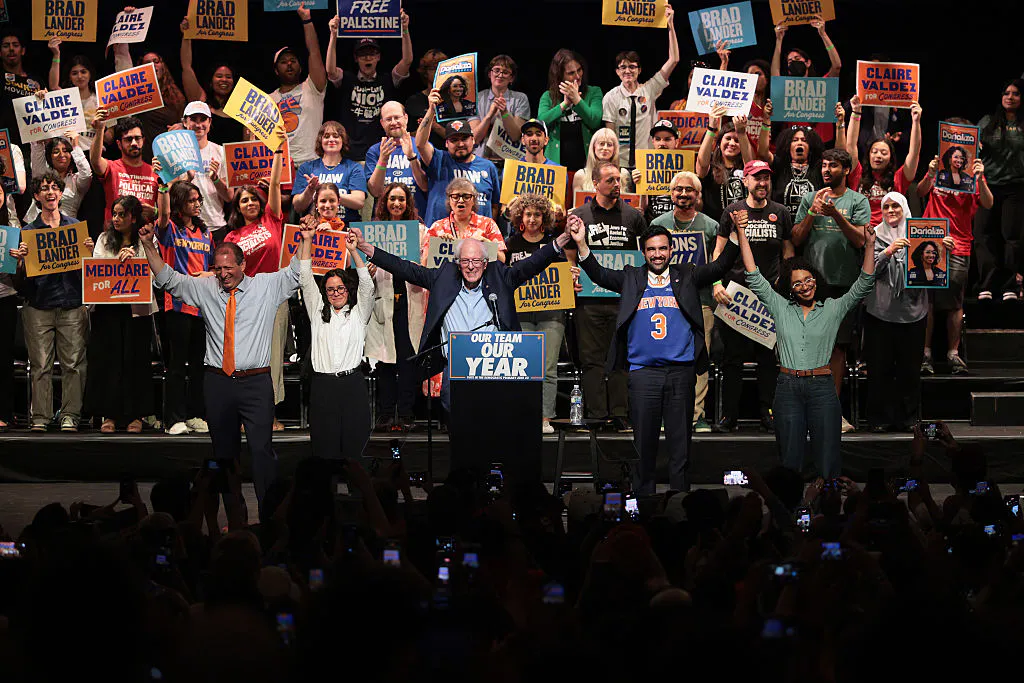
You could tell, because if you look at the Democrats all over the map, many of them are more moderate, some of them are DSA and they all won.
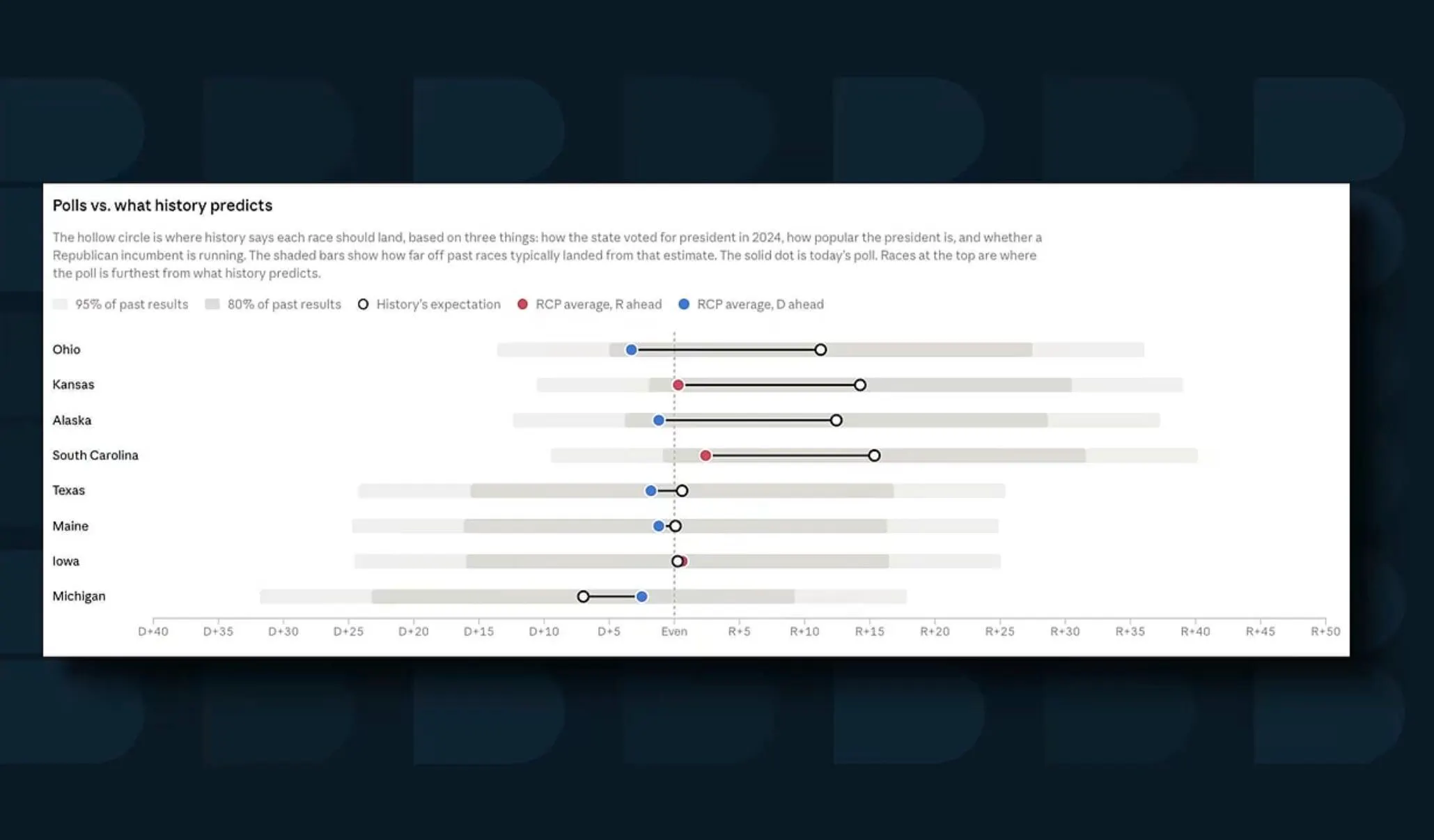
The results last night were catastrophically bad: Democrats could be up to 56 seats in the Senate and in the House they may have picked up as many as 43 seats. Just a blowout.
It was undoubtedly the biggest swing in the modern era in a midterm election. More Senate seats flipped this year than back in 1974 – at least seven Senate seats, maybe more. So here, for example, is a chart. It shows what we might have predicted based on sort of past data. We use a regression chart here to show how each race might have ended up based on the 2024 presidential vote, Trump’s approval rating, and incumbency.
Myth #2: The GOP lost because of candidate quality. This is the one that was coming out of the White House. Basically, President Trump came out and suggested it wasn’t him.
This wasn’t a candidate quality issue. In some races, candidate quality might help at the margins. But Susan Collins, who’s a really good candidate in Maine, the ultimate political survivor, the cat with nine lives, lost. Ken Paxton lost in Texas, but even if John Cornyn had been the nominee in this wave election, he probably would have lost. Ashley Hinson, a very good candidate in Iowa, lost.
I have proof positive: Angie Nixon in my home state of Florida is an ambulatory psychotic DSA member, a person who probably should be in a straitjacket. She came within two points of winning a Senate seat in Florida. In Florida.
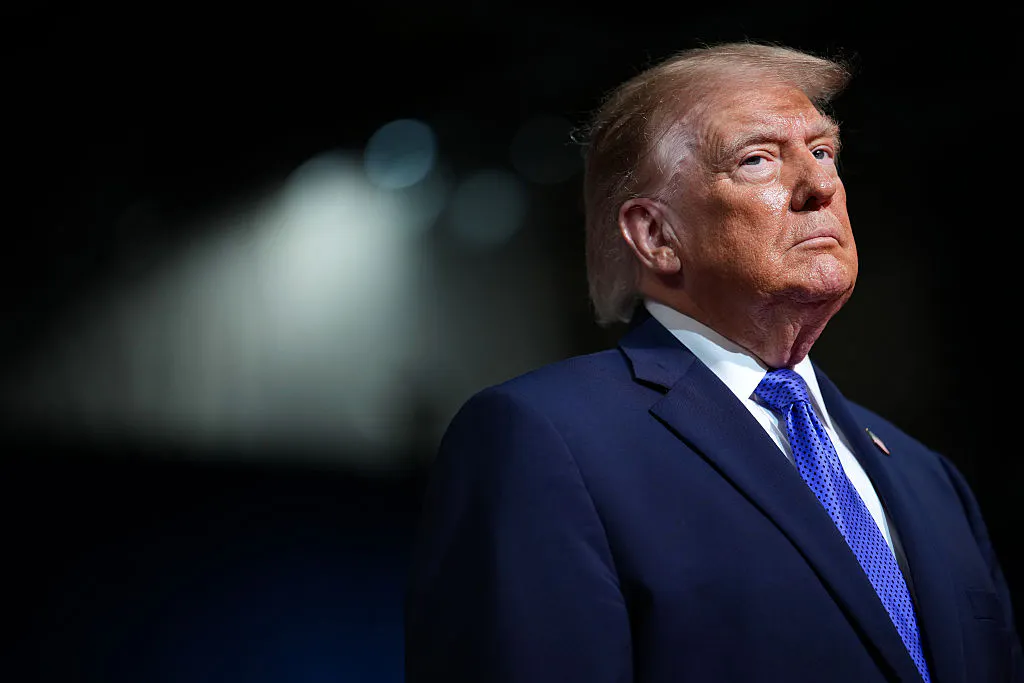
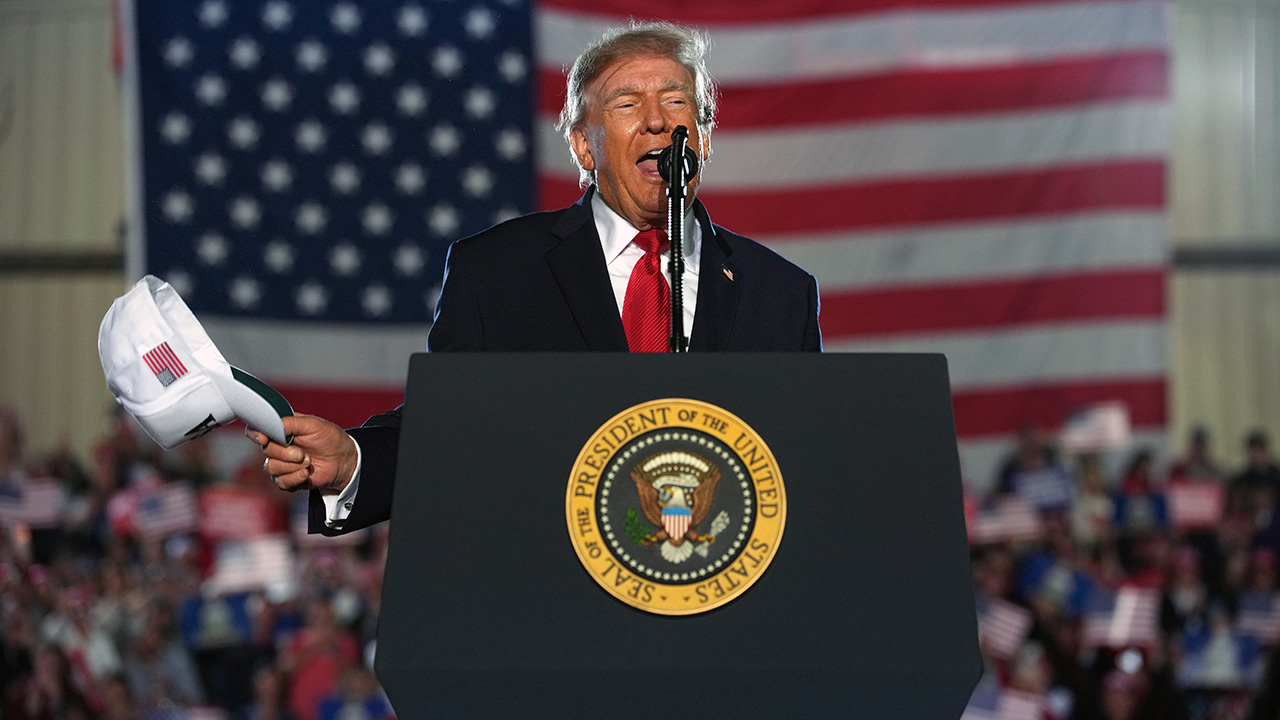
Myth #3: It wasn’t Trump. That’s not true. This midterm election repudiated President Trump. Period. End of story.
Look at his approval ratings, and you see a presidency that, from the outset, has been the story of a steady and devastating decline. There are people who are looking for step-functions here, clearly iterated points of inflection, such as things were going fine, then really poorly, he recovered, and then they went really poorly again.
But that’s not actually what his approval rating looks like. This is the real trajectory: pretty much from the time he became president, a slow and steady decline set in. “Liberation Day” really hurt him; a mild recovery followed, then a slow, steady decline from a high of 52% down to 38.3%.
If you look at a chart of Trump all the way back to the beginning of 2025, you don’t see a gigantic jump or plunge at any one point. When you look at Joe Biden’s approval chart, you see he was in the high 40s, then Afghanistan happened, and he dropped into the low 40s and high 30s and stayed there.
What you saw with President Trump was a slow, steady, unremitting decline. A chart of the generic congressional vote from Election Day 2024 to yesterday shows a slow, steady increase in the margin for Democrats.
There was a slow, steady bleed-out for Republicans fairly soon after his presidency began. And then it grew and grew and grew.
So what actually happened was a referendum on Trump.
Why?
We need to actually think about how voters vote.
I’m into politics at a granular level that pretty much no one else in America cares about, and a huge percentage of us at The Daily Wire are also interested in granular-level politics.
But this is not typically how people vote. People vote based on the gestalt, the whole ball of wax, the generalized sense that they have of President Trump.
In this election, the gestalt of President Trump fell apart again in the aftermath of the election. People vote based on a generalized feeling they have about everything.
Was it the execution of the Iran war? Yes. Was it tariffs? Yes. Was it the Reflecting Pool? Yes. Was it Truth Social statements and threats against the Fed Chair and well-publicized ICE controversies and dumb memes? Yes, yes, yes, and yes.
It was all the things, because that’s how people vote, and that’s how people think.
But let’s break it down into three big things that happened since President Trump 2.0 took office: Unaffordability, chaos, and corruption.
By every metric, unaffordability was the top issue in this election.
If people believe that their lives are unaffordable, you’re going to lose. Your party will perform poorly. This is the generic way things work in a midterm election; people believe an election will solve all the problems. They don’t get solved, they’re mad about it, and then they revert to the other party during a midterm.
That’s normal. And that’s particularly true in the second term of a president’s midterm, such as 2014 for Barack Obama, or 2006 for George W. Bush. If people feel that their lives are unaffordable, your party is going to get hit.
But if you’re talking about an electoral catastrophe like last night, you need more ingredients. And here are the other ingredients: chaos and corruption.
If you have a generalized sense that things are not going well, and then on top of that, you layer in a feeling of chaos, a feeling that the person just doesn’t care about your issues and is distracted, that’s a problem.
If you layer corruption on top of that, you’re looking at electoral doom.
That’s what happened last night. It’s the gestalt of all of these things all at once. It’s not just, for example, the tariffs, which I think are bad policy; it was also how they were rolled out. It’s the vacillation, the confusion, the unwillingness to back off of them.
Even where President Trump’s policy is correct, in my view, the rollout has been pretty bad nearly every time, from the Epstein files to the execution of the Iran war to tariff policy.
For example, I largely agreed with 80% of President Trump’s policies. But I also tend to disagree with 90% of the way he actually did them.
I think that’s true for a lot of people. I think that’s true for independents; I think that’s true for some Democrats.
The rule in politics — as it is in life — is that your strength is also your weakness.
Very often a person’s greatest strength is also their weakness; it’s the classic basis for Greek tragedy.
President Trump’s allure, and what makes him a unique personality, is the fact that he is totally impervious to criticism. They went after him with a hatchet in 2015 and 2016; he survived. They tried to prosecute him in 2023; he survived. He can lose; he can come back. He can survive. He is totally impervious.
But — there is a thin line between being impervious to bad criticism and being totally out of touch. Because if the way that you react to criticism is by building yourself a bunker, and then by having all your friends around you basically trying to enable you to do all the things, you end up even more out of touch.
That’s why when President Trump speaks about policies that are unpopular, and he says, “Listen, everyone I know is telling me they’re great,” or he says that he’s just going to keep doubling down on policies, or he tries certain policies in the first place, and there is no one there to tell him it was not a great idea, you end up with a lot of putting your hand in the fire, pulling the hand out, but insisting that none of that ever happened.
It turns out Americans don’t like that feeling of chaos and being out of touch.
That’s what is going on right now, whether you like his policies, as I mostly do, or hate them.
The data here are very clear. An NBC exit poll asked which of these six issues is the most important facing the country; by far, the answer was the economy at 39%. Of course, the economy covers a wide variety of things, ranging from tariffs to the impact of the Iran war. That’s obviously true.
Thirty-two percent said the state of democracy. This is tied to issues of corruption and chaos.
The president spent the day before the election at the Reflecting Pool talking about it. But for anyone who’s looking at their life, who cares about the Reflecting Pool? Whether you like what he’s doing at the Reflecting Pool or you don’t like the paint on the bottom of the Reflecting Pool, this is not a top 500 issue for Americans.
The disconnect and chaos were a problem.
It’s not a great look when the president has to condemn his ex-lawyer, Alina Habba, over an alleged $50 million deal to broker pardons. When reports say President Trump’s net worth has increased by $2.2 billion since he took office, people start to get a little suspicious.
The war on Iran contributed to oil price increases. That damaged Republicans, because higher oil prices always damage the party in power. War is always economically damaging to a country; that is how war works.
The problem with the war in Iran was not the rationale for the war. Iran cannot have a nuke and should not have a nuke. We, as the American people, have a right to be protected from that eventuality. We have a right to be protected from Iran being in total control of major chokeholds in the world economy. The president is totally right about all of that. Iran is a threat to our neighbors. They are a threat to our allies. They are a threat to us. They’ve been a threat to us for 50 years.
But when it comes to the execution of the policy, when you claim over and over there’s going to be no cost, that’s over-promising. And when you stop for no apparent reason — as you might recall, back in April, the president, with the help of the vice president, negotiated what I thought at the time was a terrible Memorandum of Understanding that basically delayed the end of the war. I was working under the impression that the president was going to pursue war in the same way that he had pursued war in his first administration, and also in Operation Midnight Hammer, meaning go fast, go hard, finish it fast, and achieve your ends.
That is the way to actually win a war. But if you decide that you’re not going to win it, you want to slow down because you’re worried about oil prices, and then it turns out the oil prices just bite you right in the butt again, and you exacerbate the domestic pain with no strategic explanation; it’s chaos.
When half your administration is doing business with the other countries in the Middle East, including places like Qatar, you’re taking an airliner from Qatar, or when your negotiators and their families are clearing sacks of cash in Dubai or Saudi or Qatar or Kazakhstan, people start to think, what is this really about?
Again, the disconnect.
It’s true with regard to interest rates, where the president has been railing publicly against the Federal Reserve himself or pushing bigger government spending while claiming that you’re cutting around the edges. And when you combine all of that with billionaires who are largely disliked by the American people showing up at the White House, it won’t end particularly well for the president or for any of those people.
If your image of President Trump’s economy is Trump with a bunch of tech billionaires, you’ll come away feeling he cares about those people; he doesn’t necessarily care about me.
Trump’s immigration policy has always been the most popular part of his platform, and he’s been totally consistent on it for decades. But according to CNN, 57% of voters said that Trump’s immigration policy had gone too far.
What image do many Americans have of his immigration policy? It is not some MS-13 guy being arrested by ICE. It’s Liam Ramos in his blue hat while his dad was being detained by ICE. His dad was an apparent illegal immigrant, which you can explain, but images are images.
The combination of unaffordability, chaos, and corruption answered the original question.
More from this network:
Domains for Sale · GOTPeople.org · TheDSAPlatform · The Truth About Socialism
What's Your Reaction?
 Like
0
 Dislike
0
 Love
0
 Funny
0
 Wow
0
 Sad
0
 Angry
0

I am just an average American. My teen years were in the late 70s and I participated in all that that decade offered. Started working young, too young. Then I joined the Army before I graduated High School. I spent 25 years in, mostly in Infantry units. Since then I've worked in information technology positions all at small family owned companies. At this rate I'll never be a tech millionaire. When I was young I rode horses as much as I could. I do believe I should have been a cowboy. I'm getting in the saddle again by taking riding lessons and see where it goes.
Premium domains for sale











Comments (0)