

What The Law Can Actually Do About The Other Dan Sullivan
Premium domains for sale
Freedom Is Back In Style
The Democrats who planted a second Dan Sullivan on Alaska’s Senate ballot pulled a dirty trick, but the Justice Department’s response lawsuit is unlikely to stop a single ballot from being counted. The law that actually applies to this mess runs through Juneau, the Federal Election Commission, a federal grand jury, and the United States Senate. Each of those forums can do something the lawsuit cannot, and each needs particular facts to do it.
Freedom Is Back
In Style
Premium domains for sale
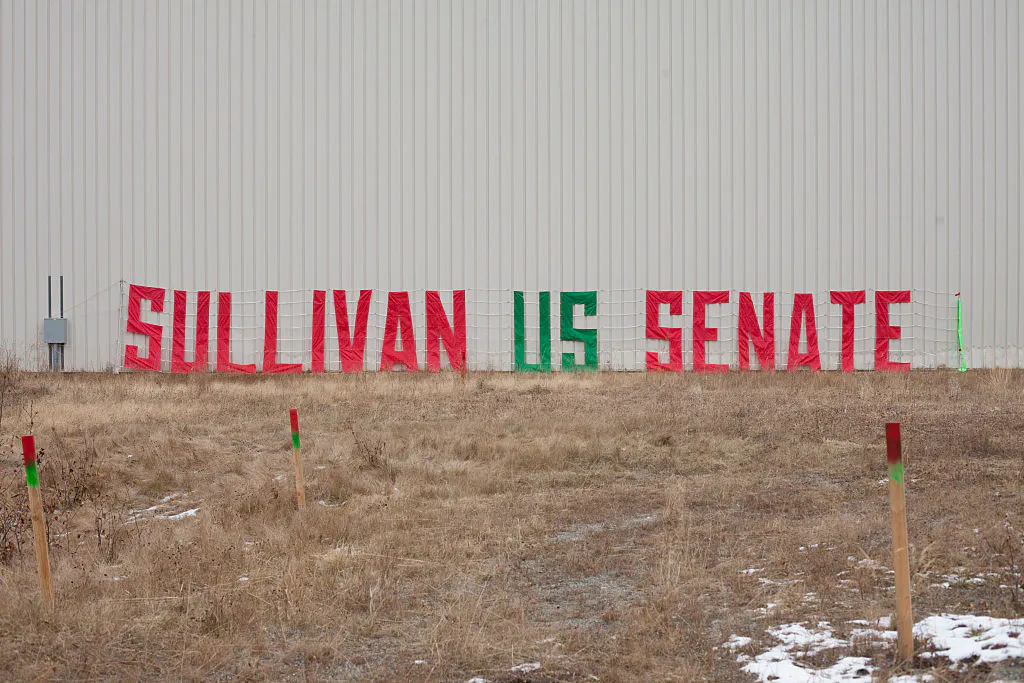
Sen. Dan S. Sullivan, a Republican, is running for a third term against former Rep. Mary Peltola, a Democrat. Thirteen days after the senator filed, a retired schoolteacher named Daniel J. Sullivan Jr. filed too, from Petersburg, a fishing town reachable only by air and sea, having switched his registration to Republican and asked to appear on the ballot as “Dan Sullivan.” Alaska’s Republican elections director threw him off. Two Alaska courts put him back; the trial judge found no authority in the Constitution, Alaska statute, or the Division of Elections’ own regulations for a “good faith” test, and the Alaska Supreme Court affirmed. So the state did the next best thing and labeled the ballot: “Sullivan, Dan S. (Registered Republican) Incumbent” above “Sullivan, Daniel J. Jr.,” no party. The fourth name on the ballot is Gerald Heikes, who drew 1.1% in the primary.
On Wednesday, The New York Times reported what Republicans had alleged for five months: that aides to Peltola’s campaign, the campaign’s lawyers and senior staff at the Democratic Senatorial Campaign Committee ran what they called a “ballot composition project,” sending a staffer to find every Dan Sullivan on Alaska’s voter rolls and an Ohio operative to close the sale. The same operation recruited Heikes, telling him, “we can’t give you money or anything, but we’ll make things happen for you.” Peltola’s fired campaign manager, Elisa Rios, told the paper her former boss was not directly involved but was “definitely aware,” then wrote the reporter that she retracted everything; the Times published anyway, citing sources, text messages and documents.
To be clear, ballot stacking is a bipartisan sport. In 2024, when Alaska’s Democrats sued to remove a Democrat serving a 20-year prison sentence in New York from the ballot against Peltola, the Alaska Republican Party intervened to keep him there, and won. The Democrats’ lawyers in that case, David Fox of the Elias Law Group and Thomas Amodio of Anchorage, now appear for Peltola’s campaign and the DSCC in federal court, where their brief calls the confusion theory “insulting to voters.” But elevating a weak opponent asks voters to choose him. Recruiting a man with your opponent’s name asks voters to choose your opponent and get somebody else. That is a trick played on the voter, and the campaign denied it for five months.
Now the lawsuit. The Justice Department’s complaint has one count under the National Voter Registration Act, a statute about voter registration and keeping rolls current. The provision it invokes begins “The purposes of this chapter are,” and lists among them “to protect the integrity of the electoral process.” The problem is that a purposes clause is not a cause of action. The complaint asks a federal judge to block certification only if “Senator Sullivan does not win the election,” and only by a margin the other Sullivan’s votes would cover, and then to order an “investigation” into what voters who chose the other Sullivan “meant,” which would require matching secret ballots to the people who cast them.
So what does work, and what would it take?
Tuesday, first. Alaska uses ranked-choice voting. A ballot that ranks the Petersburg Sullivan first and the senator second counts for the senator the moment the Petersburg Sullivan is eliminated, which he almost certainly will be. One number will tell us whether anything below this paragraph matters: the count of ballots that ranked the Petersburg Sullivan and never ranked the senator. If that number is smaller than the senator’s margin of defeat, the trick failed on its own terms, and everything that follows is about punishing the people who tried it, not about the seat.
Alaska law comes next. A defeated candidate or 10 voters may contest the election in superior court within 10 days, including on the grounds of “any corrupt practice as defined by law sufficient to change the results of the election.” That needs two facts the state does not have: a violation of a statute Alaska designates a corrupt practice, and proof that it swung the result, which means the exhausted-ballot number again. Governor Mike Dunleavy ordered the Department of Public Safety late Wednesday to look for the first, and the search will be short. Alaska’s corrupt-practice list runs to campaign-finance violations in state races, knowingly false statements about a candidate, vote-buying and force. Recruiting a man for his name is not on it.
The money is where the real exposure lives. Recruiting a candidate is legal, but paying for his campaign is a contribution: reportable by both sides, capped for most givers, and a felony when knowing, willful, and large. So the questions are who paid his filing fee, his consultants, his website, his mailers, and the lawyers who won his case in June. The caps are not where the Democrats are exposed. The DSCC and the national committee together may give a Senate candidate $62,000, and since June 30, when the Supreme Court struck down the limits on coordinated party spending in NRSC v. FEC, a case the Senate Republicans’ own committee brought and won, the DSCC may spend without limit in concert with Peltola herself. If the DSCC paid the Petersburg Sullivan’s bills, the amount wouldn’t be the problem; a knowing and willful failure to report it would be.
The exposure with no cap at all belongs to the super PACs, which may spend without limit only because they spend independently; spending that a campaign directs is a contribution a super PAC may not make in any amount. The Times reports that 49th State PAC, a pro-Peltola super PAC, paid about $87,000 this fall to a firm co-owned by Jerid Kurtz, the operative it places on the recruiting calls; the PAC says it never paid him for any services. The same question hangs over the million dollars two super PACs spent promoting Heikes. If any of it was routed through a third person to hide the source, that is the straw-donor felony, 52 U.S.C. § 30122, the charge most campaign-finance prosecutions bring.
Federal law has one statute for campaign impersonation, 52 U.S.C. § 30124, which bars a candidate or a candidate’s employee or agent from fraudulently misrepresenting himself as acting “for or on behalf of any other candidate” on a matter damaging to him. It fits poorly so far. The Petersburg Sullivan ran against the senator under his own name, and the only fact pointing the other way is the elections director’s finding that his website copied the senator’s “format, color scheme and overall theme.” That case would need an ad or a fundraising appeal built to pass as the senator’s, and evidence that someone on Peltola’s payroll directed it. The grander charge, conspiracy to defraud the United States, is the one Mueller used in 2018 against a Russian troll farm for hiding from the Federal Election Commission who paid for election activity. It would require concealment from the FEC in particular, because deceiving Alaska’s voters, however cynically, is not fraud on a federal agency.
Florida showed how this all ends. A Republican consultant named Frank Artiles recruited a no-party candidate who shared the Democratic incumbent’s surname into a 2020 state Senate race; a jury convicted Artiles in 2024 of conspiracy, excess contributions, and procuring a false candidate oath, and the appeal is still pending. Florida convicted the consultant and kept the election.
Then there is the cover-up, where the prosecutable crimes usually live. Lying to the FBI about who recruited or paid is a federal crime under 18 U.S.C. §1001. Lying under oath to a grand jury, or in a sworn declaration in federal court, is another under §1623. Now that a grand jury has reportedly issued subpoenas, deleting the texts would be obstruction under §§1519 and 1512. No one has yet been shown to have done any of it. The record does show, however, the proposed answer the campaign and the DSCC filed on October 23, pleading that they “lack knowledge or information sufficient to form a belief about the truth or falsity of the allegation concerning the purposes of Daniel J. Sullivan’s candidacy.” Thomas Amodio of Anchorage signed it, the Elias Law Group is listed as counsel, and the Times places a lawyer from that firm in the project’s texts. On the Times’ documents, a firm whose clients organized the candidacy signed a pleading professing ignorance of its purpose. That is unsworn, so it is not perjury, but it would be the denial Rule 11 forbids: a plea of ignorance by a party that knows. The Justice Department’s filing Wednesday said it intends to seek discovery into “whether the Campaign attempted to deceive the Court,” and if the case survives the week, sworn answers are what turn a scandal into §1623 cases.
One federal theory will be floated and should be buried. §241, conspiracy against rights, is the statute the Justice Department used to convict Douglass Mackey over the 2016 “text your vote” memes, on the idea that deceiving voters injures the right to vote. The Second Circuit threw out that conviction in July 2025 and ordered an acquittal, for want of proof that Mackey had agreed with anyone, and declined to say whether the statute reaches deception at all. The Alaska case has the opposite problem. Agreement is the one thing the Times documents in abundance; what is missing is the lie. Even at its broadest, the theory needs a lie about how, when, or where to vote. Alaska told the truth even if it was confusing.
That leaves the Senate as the only recourse that can actually change who gets the seat. Article I, Section 5 makes each House “the Judge of the Elections, Returns and Qualifications of its own Members,” and the Supreme Court said in Roudebush v. Hartke, a 1972 case about Indiana’s recount of a Senate race, that which candidate is entitled to a Senate seat “is, to be sure, a nonjusticiable political question.” Alaska certifies, the governor transmits the certificate, and the Senate decides. It can seat Peltola; it can seat her “without prejudice,” as it seated Indiana’s Vance Hartke in 1971 while a recount fight ran; or it can refer her credentials to the Rules Committee, subpoena the campaign and the DSCC, and judge for itself. It has refused to seat a senator-elect before, Pennsylvania’s William Vare, after an inquiry into the means used to influence the disputed 1926 election. What the Senate would need is a petition of contest from the defeated candidate or from citizens, and a record. That record is being assembled now, by the FEC, by a grand jury if there is one, by whatever discovery survives Judge Gleason’s ruling, by the documents the Times says it holds, and by Elisa Rios, the one witness who has spoken on the record and then tried to take it back. The Senate can subpoena all of it. Nothing that constrains the FEC, a grand jury, or an Alaska court constrains the Senate; its standard is its own.
The rest of the work is plain: count the ballots, follow the money, charge anyone who lied, send the certificate, and if necessary, let the Senate judge, as the Constitution says it shall.
***
Dr. Mark Goldfeder, Esq., is Director of the National Jewish Advocacy Center.
More from this network:
Domains for Sale · GOTPeople.org · TheDSAPlatform · The Truth About Socialism
What's Your Reaction?
 Like
0
 Dislike
0
 Love
0
 Funny
0
 Wow
0
 Sad
0
 Angry
0

I am just an average American. My teen years were in the late 70s and I participated in all that that decade offered. Started working young, too young. Then I joined the Army before I graduated High School. I spent 25 years in, mostly in Infantry units. Since then I've worked in information technology positions all at small family owned companies. At this rate I'll never be a tech millionaire. When I was young I rode horses as much as I could. I do believe I should have been a cowboy. I'm getting in the saddle again by taking riding lessons and see where it goes.
Premium domains for sale









Comments (0)