

White Guilt Morally And Culturally Disarms The West
Premium domains for sale
Freedom Is Back In Style
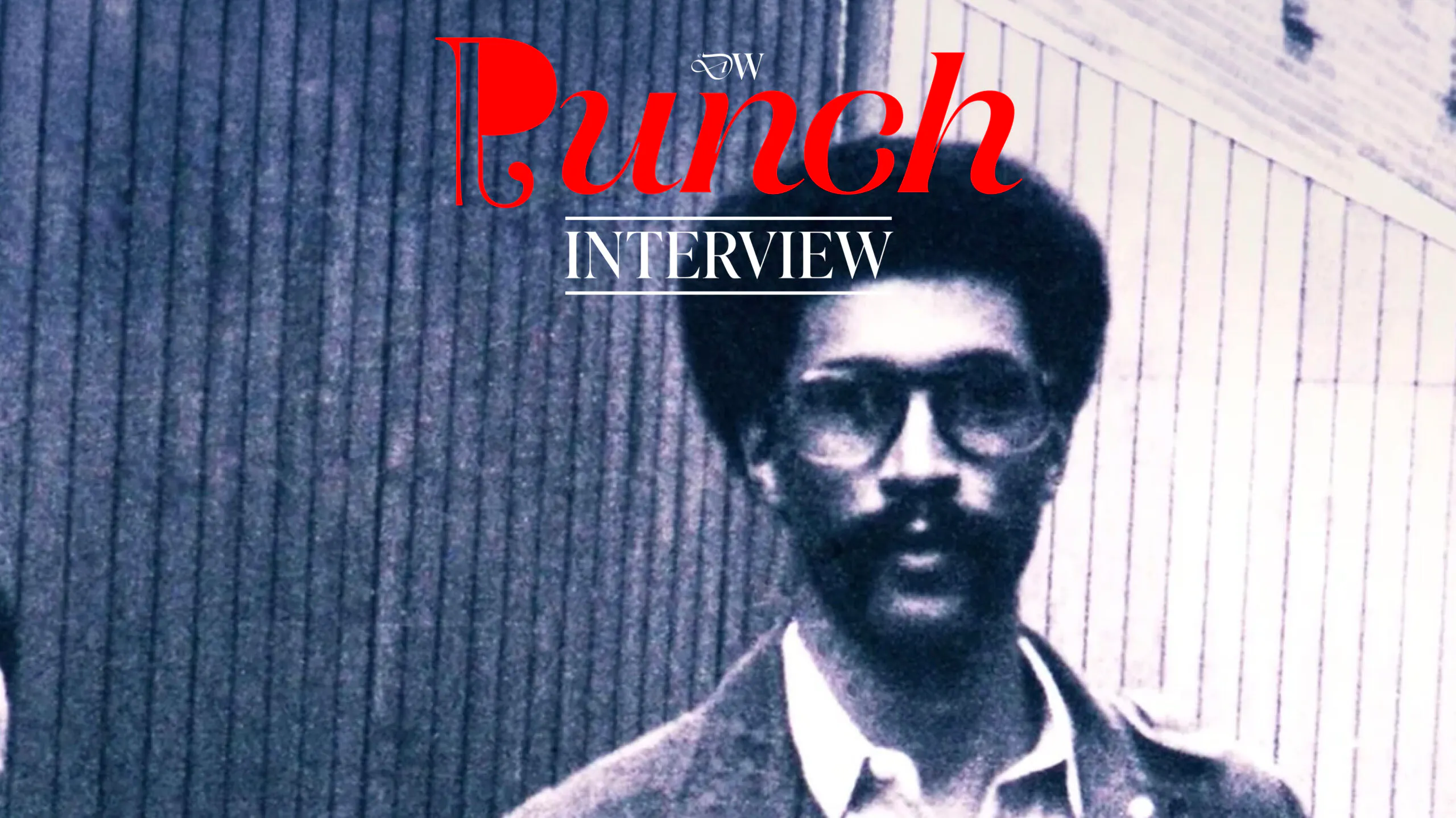
Shelby Steele could be considered the most dangerous man in America. Eli Steele is, by all accounts, his father’s son. Both men have defied the odds personally and professionally, using their talents to highlight the flaws of the Left’s ideology – identified by a worldview centered mainly on race, victim mentality, and grievance culture – that was once on the fringes of the more radical wing, now swallowing politics and the culture whole. Eli’s new documentary, “White Guilt,” is “drawn from the life work of his father, Shelby Steele. It is the story of a man who saw the evil that others could not, or would not, and who named it and refused to back off of it for fifty years.”
Freedom Is Back
In Style
Premium domains for sale
Eli talks with Ben Domenech about his father’s turn from black militant to militant American, their new film, and how to finally move past an America trapped in its own racial obsession to one that fulfills the promise that all men are truly created equal.
***
Ben Domenech: I want to start by asking you to explain for people who are unfamiliar with the concept behind this documentary, why it was so important for you to make it.
Eli Steele: “White Guilt” is the most important story that no one is telling. I do believe it’s one of the most evil forces in America. One, it undermines our principles and our values. The people imposing it tend to focus on things like Marxism, wokeism, even suicidal empathy. But those are all either ideologies or symptoms. White guilt is the disease. It has an origin. We can trace it back to the collision between the civil rights movement and white supremacy. White people were on top. They were superior. The civil rights movement came along and said, “No, you have attached morality to race, and that is wrong. Morality belongs to character.” And many whites wanted to reclaim the position on top. And so the way to that was to turn against America and America’s racist past.
And that became the power of the Left: “We are not like those racist whites. We are the good ones. We will help all the minorities. We’re allies.” But a lot of people on the Right made the mistake of saying, “I have no white guilt. I never owned slaves. I never took part in segregation. I’m not a racist. I have black friends.”
But that’s not what white guilt did. What the Left realized was that in order to have power, they had to create “the other.” You always need the other — really moving towards tribalism. And the other became the Right, predominantly on the conservative side. And they said, “We, all whites, have a collective guilt for the past. And the only way to escape that guilt is to turn against America.” So if you believe in America, you are a racist, and that’s very expedient. And hopefully that explains the concept.
BD: I became familiar with Shelby Steele’s writing when I was younger. What I found particularly moving was how much he was animated by rejecting so many things I felt the American approach to race took for granted. I was born in Jackson, Mississippi. I grew up in Charleston, South Carolina. And the Southern experience of growing up gave me a very insulated experience from the way that race was interpreted in the North and in liberal cities, simply because everyone I knew lived in mixed neighborhoods. They lived on top of each other. If you’re growing up as a working-class white family in the South, it means you’re living on the same block as black families.
My best friends growing up were all across that spectrum. And it was really a shocking thing for me to get a little older and to go to New York City and to see the conflicts between races as a teenager that I had thought were set well in the past. What do you think from Shelby’s message about race in America that most contends with the assumptions of the liberal elite about the places that racism comes from or the places in America that have the most racism?
ES: Cities like New York and Boston had more racism than probably would be experienced in other places. And so I understand what you mean by the South. We were there extensively — like in Kentucky. We drove into Kentucky when Michael Brown was killed; my father went to Kentucky.
BD: That’s the documentary that you made previously in response to the Ferguson incident.
ES: Yes, exactly. And we see almost four or five interracial couples walking down the street. You really see in the North what white guilt is; there’s no truth to white guilt. It is an ideology — or not an ideology, but a condition that is grounded in race. So if your power — if you decide that your redemption is through help, if you ground your redemptive efforts in race, then there’s always going to be an absolute inhumanity in that. The only way you can truly help somebody is by seeing their character, honestly, their strengths and weaknesses. But white guilt is a very, my father’s word, a preferential identity: “I will help you in order to get my innocence.” You can’t help people that way. So you are actually a racist because you use skin color to gain your redemption.
And so that’s why we talked to a white leftist in videos, and a black person says something to a white leftist — they don’t know what to do when that black person doesn’t follow this “white guilt,” because the opposite side of the coin of white guilt is black power. And white guilt is transactional.
The only way to get out of this horrible thing — the past of America, the racism, all of that — is to buy our innocence. And sure enough blacks said, “Well, that’s a great vulnerability of whites to exploit.” So we would tell them we’re victims. And so now you’ve got white people doing this false innocence grounded in race. And then you have blacks making their power out of their own victimization, and these people are locked into boxes. That’s why there’s a profound inhumanity in all of this. When you lock people into racial roles, and you have victimization being power, it’s no wonder why our country has declined so much.
We have to keep lowering standards, and in it, the whites keep pursuing what has become more delusional. That’s why we look at the Left, and we think, “My God, isn’t that crazy?” And you actually buy into Ibram Kendi’s philosophy that we must use racism in order to make our country better.
If you flip everything, you become more absurd. That’s because race has become our foundation, not the individual. And tribalism has returned to America. And that is all due to white guilt. This is not suicidal empathy. Suicidal empathy is more of a symptom. White guilt is… I should make it very clear. In the 1960s, when you had a collision between the white supremacists and the civil rights movement and the white people fell, there was a fallout. And that fallout is white guilt. Martin Luther King said that. They knew the white people were going to have to deal with the fact that the world recognized them as racist.
BD: There’s a quote that your father had in the context of his book about President Obama. What I remember is something I’ve seen repeatedly with political candidates over the years: he talks about how the desire to have a racial identity is about taking a collective truth, one rooted in grievance and protest, and making it a personal truth. So in the context of Obama, he was obviously talking about the fact that Obama had no lived experience of any of the things that he was evoking.
I feel like that happens over and over again in our politics in a way that is designed to play directly on white guilt. You don’t have to have any connection to it — you don’t have to come from a family that experienced this, you don’t have to have a grandfather or a great-grandfather who experienced any of this. You take the collective grievance, and you put it on yourself in a generational way. Personally, I find that disgusting; we see it repeated across our politics. My question for you is: do you think we can ever reach a point where that no longer plays out in our politics the way it has, even in recent decades, when we are so far removed from this?
ES: That’s a very good question. Obama knew that his power would be in identifying with the black guy, even though that black guy, in my cynicism, was not part of the American line; he was from Kenya. I have a true connection to slavery. My kid is white, but my great-grandfather was born into slavery. So I know that power very well because I have a choice, right? Nikole Hannah-Jones had that choice: white mother, black father, and a middle-class upbringing. So pretty similar to mine. She decided she identified with the black guy, and so white guilt made Nikole Hannah-Jones possible.
Nikole Hannah-Jones played the black side of the coin — the black power side of that coin. And she knew that if she were to go to the black side, she was going to have to follow that black power politic very militantly. Slavery must be everywhere. We got the 1619 Project, which went into almost every school. So if you want to understand the power of white guilt, because what she was doing was giving the white education power structure — the institution — its innocence. You are right, Nikole; we are a profoundly systemic racist nation. We must educate every kid. We must ground the founding of our nation in slavery.
So if that’s the object or the basis, how do we get past that?
I think that the answer really is to first understand the power of white guilt and start addressing it. And now, what makes white guilt very difficult for people, and what makes suicidal empathy so attractive, is that suicidal empathy is a diagnosis. They usually say, “Ah, that guy on the Left, he’s crazy. That’s suicidal empathy.” White guilt doesn’t do that. White guilt states, “What are you going to do? You?” Now I’m not talking about them. I’m talking about you. What are you, as the individual, going to do? Because all these years you said, “As a white man, I cannot say this or do this, or I’ll be a racist. Or, as a black man, I cannot say or do this, or I’ll be your Uncle Tom.” So we kept quiet, and we kept people, as my father says, deferential.
We kept deferring to people like Nikole Hannah-Jones. We didn’t want to get fired. I’m not minimizing the price that people have had to pay. I mean, my own father paid the price. I paid the price in a smaller way, so I know the price, but at the same time, if we’re not really going to pay that price in the short term — because what happened to our country, we’ve seen a decline. So I would say the way out really is to understand where we are, but also to understand that we have white guilt inside our brain. What I mean by that is that we police ourselves.
The other way is people saying, “I’m going to become tribal just like them and become just a white identity. I’m embracing the white identity.” The only way out for us is to become American, for us to really become unapologetic about the American principles, which are the greatest principles, the most universal principles, in the world. And I know people may think it’s kumbaya or something like that, but really, what else is there? The Bible tells you to do the same thing. If we compromise the Bible, we compromise the American principle. Right now we’ve got to stop compromising on that. And that’s the challenge of living in freedom. And that’s the way we have to, in a collective sense as a society, start living by the principle.
BD: Your father’s experience is unique because he’s been around long enough to experience how the conservative movement and Right-of-center thinkers treated people writing about the subjects he was writing about. I wonder how hard it was for him in his life and how much you witnessed in your life of that difficulty, navigating the experience that had to be, I suspect, extremely difficult and surrounded by enemies and people who wanted to undermine you because the nature of his ideas were so dangerous to the facade that they had spent so much time and effort building.
ES: Yes, dangerous. Well, his principles demanded that we live by the most radical idea Thomas Jefferson put forth: that all men are created equal — meaning that under the law, we are equal. We’re not equal in terms of how we’re born or our challenges, but we’re equal in that we have a shot at freedom in this country. So that’s the dangerous thing that he was pushing. And so it made me kind of laugh in a way because is this not what we should all be aspiring for? Is this not why we fought World War II and the Civil War? A lot of people died for this idea. And so for us to call it dangerous today shows our decline. And my father was born in segregation, so he was denied the American principles, but he knew what they were. His father knew what they were. His mother did. For example, my grandparents married interracially in, I think it was 1942 or ’43.
My grandmother, a white woman, was a daughter of the American Revolution, from a nice upper-middle-class neighborhood in Ohio. She did not have to marry a black man and move to the black side, on the south side of Chicago, but she fell in love. So she showed love over the racism of the time, and she paid a huge price for that. And my own parents married in 1967, when interracial marriage was still outlawed — this was right before Loving v. Virginia. So they showed love again.
My point is they’ve always had that rebellion within them to choose the higher human value.
So my father had gone through the shock of freedom because, remember, he was a man born in segregation. He graduated from high school, and there was still segregation. He was planning on living his life under segregation. He never thought it would end.
And that’s what we talk about in the film. It’s a very nice part of the film. He thought it would be white supremacy forever. Then all of a sudden it falls apart, and now he’s free. Black people were free. And so it was a shock because what do we do? How do we reorganize our lives and so forth? How do we live without this oppression?
And so he went through the black power phase because he was angry. White people had just moved on. But he said, “Whoa, whoa, whoa, whoa. We just had slavery; we just had segregation. No, you have to pay the price.” But he realized that, in order to join the black power part of it, he was just being nothing more than black. It was a dead-end identity for him. So he said, “You know what? My parents made me march all through my childhood for our rights as an American. And that’s what I want. I want that complete freedom unconditionally.” So my father went from being a black militant to an American militant. He became the biggest believer in America. And he said, “I am going to hold on to this with everything I’ve got. I’m never going to let go. There’s no care what anybody says or does or what price I have to pay.” And that was his courage, and he did pay a price, but look what he’s done.
He made a name for himself. He became one of the best writers in the country. He’s probably not going to get enough credit for his writing skills.
He became a person of craft, a person of skill. The whole world was his. So why would he betray that for living like Nikole Hannah-Jones in a small racial identity where you have to think about race with every decision he makes? And so that’s my best answer, in a way, because the American identity was what his family marched for, and he said, “That’s what I have to be — even if I have to be a critic, talk about white guilt and all of that, but I have to take a stand for freedom.” So I don’t think there’s anybody that’s more free than my father today.
More from this network:
Domains for Sale · GOTPeople.org · TheDSAPlatform · The Truth About Socialism
What's Your Reaction?
 Like
0
Like
0
 Dislike
0
Dislike
0
 Love
0
Love
0
 Funny
0
Funny
0
 Wow
0
Wow
0
 Sad
0
Sad
0
 Angry
0
Angry
0

I am just an average American. My teen years were in the late 70s and I participated in all that that decade offered. Started working young, too young. Then I joined the Army before I graduated High School. I spent 25 years in, mostly in Infantry units. Since then I've worked in information technology positions all at small family owned companies. At this rate I'll never be a tech millionaire. When I was young I rode horses as much as I could. I do believe I should have been a cowboy. I'm getting in the saddle again by taking riding lessons and see where it goes.
Premium domains for sale










Comments (0)