

Who put the left in charge of America's working class?
Premium domains for sale
Freedom Is Back In Style
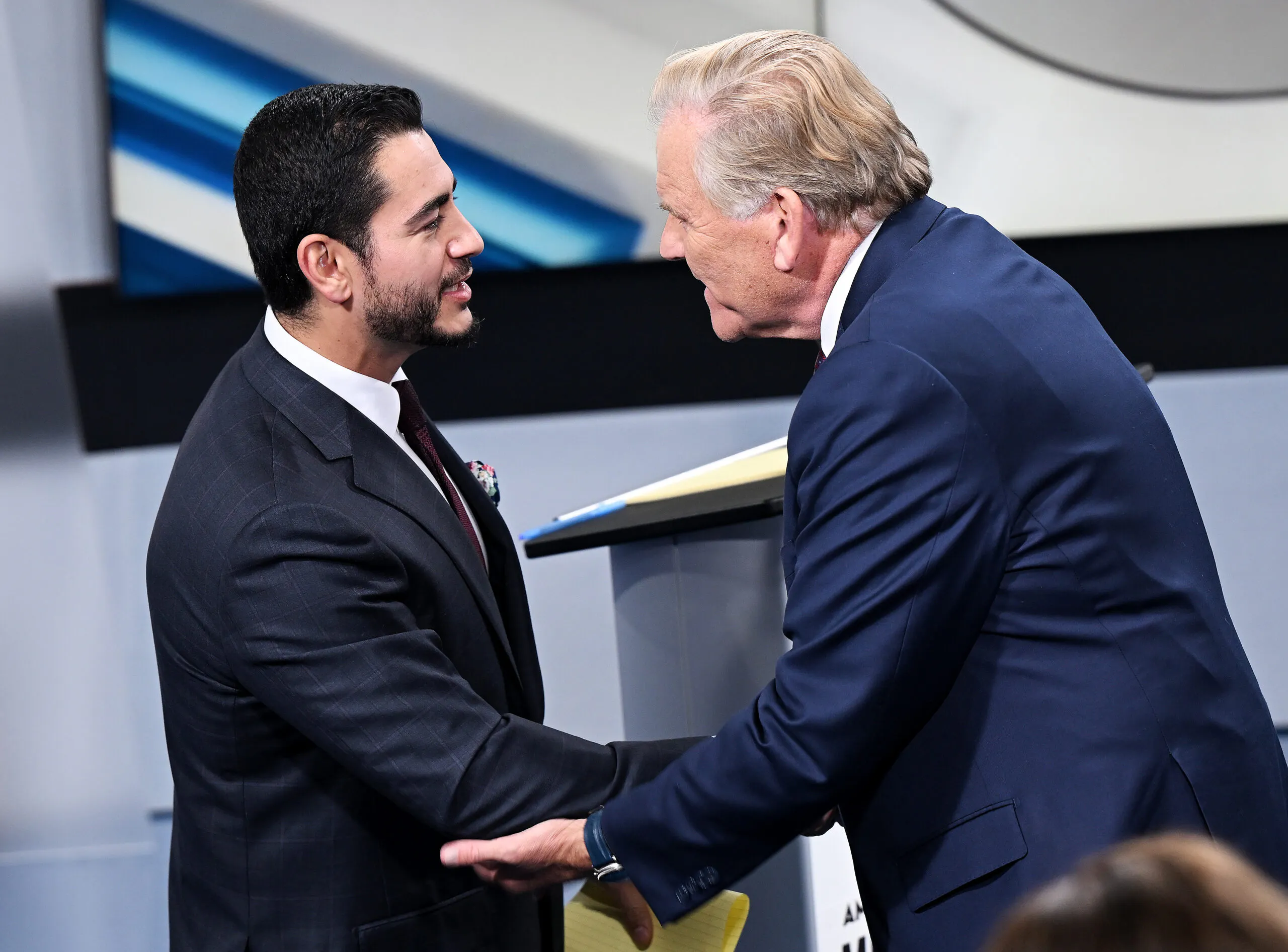
Abdul El-Sayed has made no secret of whom he believes Democrats should represent.
Freedom Is Back
In Style
Premium domains for sale
Speaking to the United Auto Workers this summer, the newly minted Democratic nominee for Senate in Michigan declared that it was “damn past time” for his party to be “firmly on the side of working people.”
The credentialed left wants the working class' grievances but has little interest in its virtues.
El-Sayed is not a member of the Democratic Socialists of America; he calls himself a capitalist. But the Bernie Sanders ally has emerged as one of the most prominent figures on the insurgent economic left, campaigning against corporate power and billionaires while promising an economy that works for working people.
His own path to the barricades was somewhat less proletarian. El-Sayed is a Rhodes Scholar with a medical degree from Columbia and a doctorate from Oxford. And these days he's hardly an outlier.
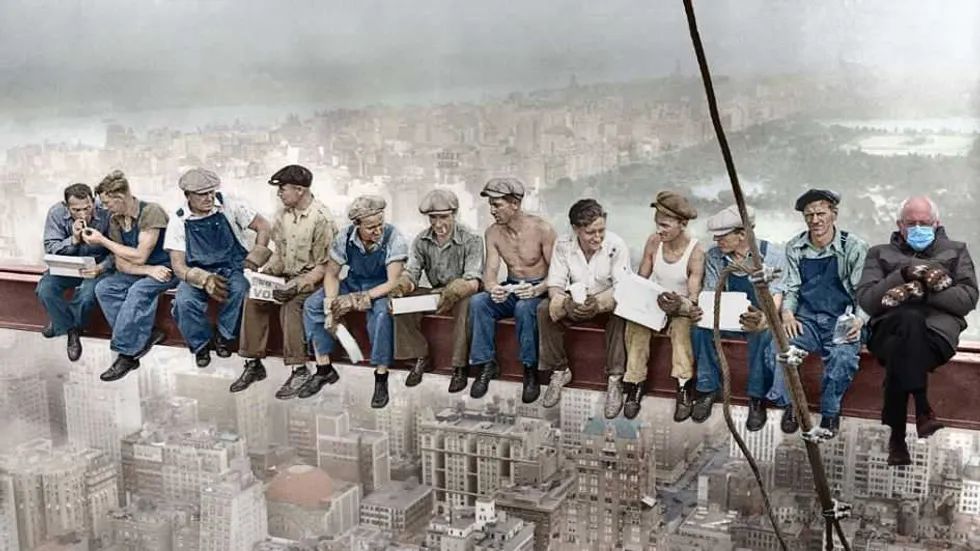
Let's do lunch box
Once upon a time, the phrase “working class” evoked a very specific image. A guy named Sal with calloused hands, a steel lunch box, and a bad back, punching a timecard at seven in the morning to make sure his children could buy decent shoes.
According to a fresh report from the Pew Research Center, 60% of Americans now say “working class” describes them well. That includes half of college graduates and, remarkably, half of upper-income Americans.
So who exactly counts as working class anymore?
Historically, the answer was more complicated than Sal and his lunch box. In the old Marxian sense, the proletariat consisted broadly of people who survived by selling their labor rather than living from property or capital. By that definition, an adjunct professor with three degrees and an anemic bank account may have a better claim to proletarian status than the plumber who owns his own company and employs three other plumbers.
But that isn't what most Americans came to picture when they heard the words “working class.”
Over the course of the 20th century, the phrase acquired a cultural meaning as well as an economic one. It came to evoke factory workers, mechanics, tradesmen, construction crews, waitresses, truckers — people who worked with their hands, collected an hourly wage, or made a living without accumulating a wall full of credentials.
The educated precariat
Now the two meanings are colliding. The modern socialist left has revived something closer to the older economic definition. Its emerging constituency includes a peculiar new proletariat: highly educated Americans with plenty of credentials but not necessarily much money.
Nate Silver recently dug into the numbers behind the Democratic Socialists of America and found exactly this pattern. According to the DSA's own 2021 membership survey, 80% of members age 25 and older had bachelor's degrees, while 45% reported household incomes below $60,000.
Political analyst Ruy Teixeira calls them the “educated precariat.” They got the degrees, but the economic status supposedly waiting on the other side never quite materialized.
What survived was their sense of entitlement to tell other people how things should be run. The credentialed precariat may have lost the salary and corner office, but not the conviction that the people who went to college should be telling the people who didn't what's good for them.
And so they didn't merely join the working class. They appointed themselves its representatives.
RELATED: America’s young are being recruited into socialism — one dance party at a time
 Bettman/Michael Tullberg/Getty Images
Prole drift
Teixeira notes that non-college working-class Americans are conspicuously absent from DSA activism. Socialist candidates, he argues, tend to find their greatest strength in white professional-class areas rather than working-class black and Hispanic ones.
The credentialed left speaks constantly in the name of workers while increasingly inhabiting a different cultural universe from the blue-collar Americans it claims to represent. They took the old Marxian categories, ran them through a dry cleaner, and turned class struggle into a boutique political identity tailor-made for the credentialed precariat.
The people who know the most about class struggle increasingly seem to know the fewest actual people who change tires, hang drywall, drive trucks, or repair furnaces. Meanwhile, the guy who actually owns the steel lunch box is increasingly voting Republican.
Pew found that 67% of Republicans identify as working class, compared with 55% of Democrats. Even among upper-income Americans, 61% of Republicans call themselves working class, compared with just 38% of Democrats. Among college graduates, Republicans are also more likely than Democrats to claim the label.
Stolen valor
That helps explain why the left and right increasingly seem to be speaking different languages when they talk about class. The socialist left sees class primarily through economic insecurity and the relationship between labor and capital. The credentialed left wants the working class' grievances but has little interest in its virtues. Exploitation, insecurity, and victimhood confer moral status. Self-reliance, toughness, family obligation, and the stubborn conviction that a man ought to solve his own problems do not fit nearly as comfortably into the progressive worldview.
On the right, those virtues have become inseparable from working-class identity. It means taking pride in earning your keep and putting family before corporate diversity initiatives. Above all, it means despising the condescension of credentialed bureaucrats.
An independent contractor running a two-man framing crew might clear six figures in a good year, yet he has zero in common with a university administrator making the exact same salary. One builds real structures that stand against the wind; the other drafts policy documents designed to justify their own redundant existence.
True working-class Americans — the blue-collar workers who actually do physical labor — deserve better than sharing an identity pool with credentialed cosplayers. A diesel mechanic working 12-hour shifts under a hoisted truck engine lives in a completely different galaxy from a brand strategist working remotely from a coffee shop while identifying as a member of the proletariat. A fundamental difference exists between working for a living and belonging to the working class.
The modern left spent decades treating the four-year degree as the ticket to a better life, only to turn around and loot the cultural prestige of the blue-collar lifestyle when those credentials failed to deliver what so many graduates expected. Conservatives don't need to own factories to champion the working class. They simply honor the dignity of hard work and the common sense of people who fix things when they break.
The credentialed class can speak in the name of the working class all it wants. That doesn't mean the working class asked it to.
More from this network:
Domains for Sale · GOTPeople.org · TheDSAPlatform · The Truth About Socialism
What's Your Reaction?
 Like
0
Like
0
 Dislike
0
Dislike
0
 Love
0
Love
0
 Funny
0
Funny
0
 Wow
0
Wow
0
 Sad
0
Sad
0
 Angry
0
Angry
0

I am just an average American. My teen years were in the late 70s and I participated in all that that decade offered. Started working young, too young. Then I joined the Army before I graduated High School. I spent 25 years in, mostly in Infantry units. Since then I've worked in information technology positions all at small family owned companies. At this rate I'll never be a tech millionaire. When I was young I rode horses as much as I could. I do believe I should have been a cowboy. I'm getting in the saddle again by taking riding lessons and see where it goes.
Premium domains for sale




















Comments (0)