

Why America Can’t Afford To Underestimate Iran’s Favorite Proxy
Premium domains for sale
Freedom Is Back In Style
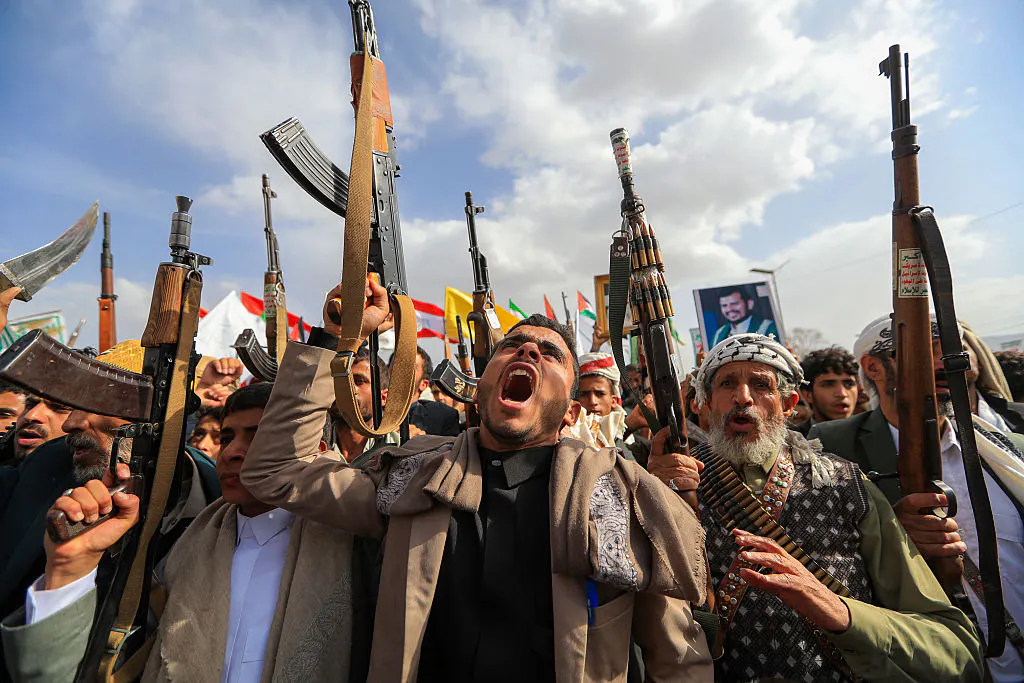
When Henry Kissinger observed in 2006 that the Islamic Republic of Iran must choose “whether it wants to be a nation or a cause,” he anticipated a geopolitical crossroads that has culminated in today’s reshaped Middle East. Two decades later, as devastating Western and Israeli military campaigns have severely degraded Tehran’s premier frontline terror proxies — Hezbollah, Hamas, and Palestinian Islamic Jihad — the Iranian regime has aggressively pivoted to its most resilient asymmetrical asset: the Houthi movement in Yemen.
Freedom Is Back
In Style
Premium domains for sale
Once dismissed as a regional, barefoot insurgency, the Houthis have been elevated into the vanguard of Iran’s “Axis of Resistance,” utilizing Tehran’s sophisticated weaponry, intelligence, and funding to project Iranian power far beyond the Persian Gulf. By transforming this Yemeni proxy into a primary instrument of its revolutionary cause, Iran has not only disrupted vital global trade choke points like the Bab al-Mandeb Strait but has also extended its covert reach directly into the American security apparatus through insider threats.
Ultimately, the rapid escalation of Houthi capabilities — underscored by high-profile domestic espionage and catastrophic missile strikes on Saudi infrastructure — proves that the group can no longer be underestimated as a localized threat, but must instead be countered as the formidable spearhead of Iran’s surviving regional strategy.
On the eve of October 7, 2023, Hezbollah held more than 150,000 missiles, many of them precision guided. Now, everything has changed. The top leaders of these terror organizations have been eliminated. Hezbollah’s finances, like those of its Iranian patron, are in disarray.
Consequently, Iran has increasingly relied on the Houthis, a Yemen-based group that wasn’t even a designated foreign terrorist organization a decade ago. Long dismissed as a “ragtag band fighting in sandals,” the Houthis have defied expectations. The once-derided “tribesmen in flip-flops” from a Middle Eastern hinterland managed to disrupt key energy and trade routes and have even enticed a U.S. government employee to turn coat.
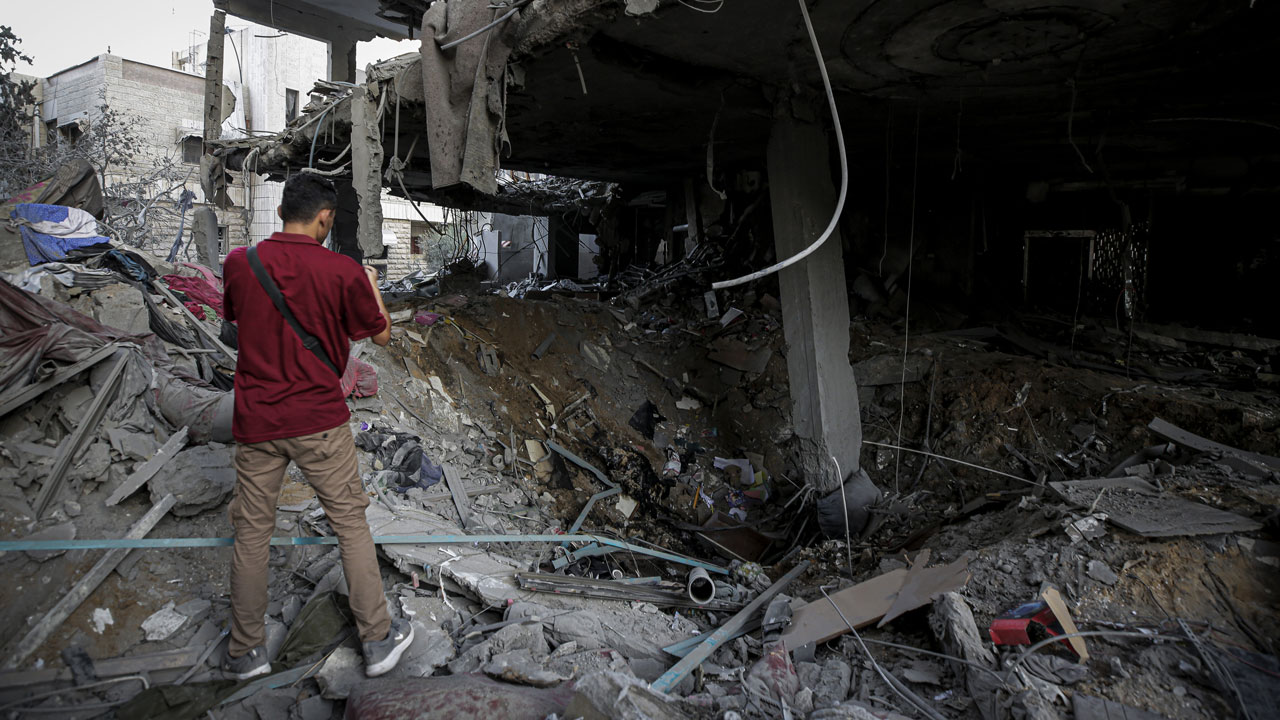
On October 10, 2026, the Houthis launched a devastating missile attack on King Khalid International Airport in Riyadh, Saudi Arabia. The strike killed 14 people, injured more than 300 others, and forced the indefinite closure of one of the largest airports in the Middle East.
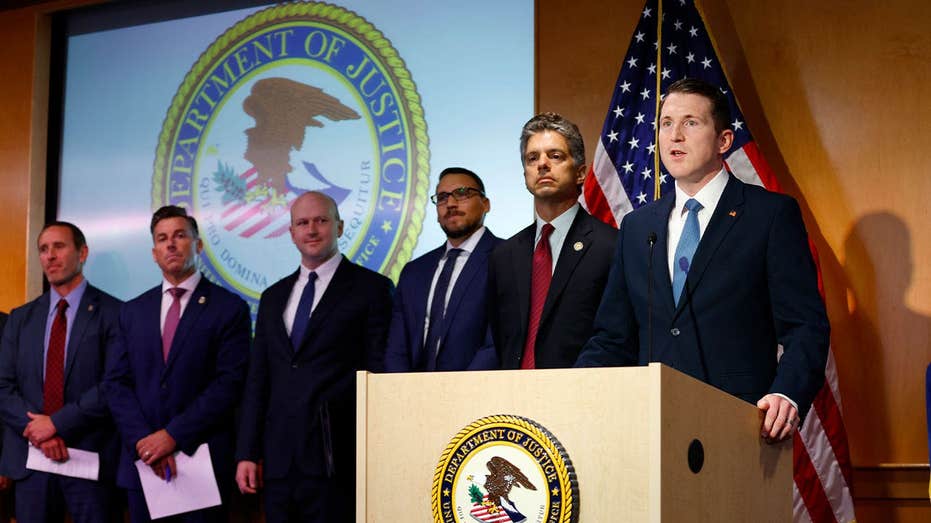
The U.S. Department of Justice had announced the arrest of Ashton Hamad Ellaboudy, a 51-year-old Department of Energy employee just a week before. Ellaboudy first came to the FBI’s attention after authorities received information that he had acquired precursor chemicals, components, and other materials commonly used to construct homemade explosive devices.
Ellaboudy, a former member of the U.S. Army Corps of Engineers, currently faces charges for attempting to provide material support or resources to a designated foreign terrorist organization (FTO). In addition to purchasing materials for homemade explosives and drones, Ellaboudy allegedly tried to help the terror group improve its communications.
The DoE employee reportedly used his official U.S. passport to travel to the Houthi-controlled capital city of Sana’a in September 2025. He stands accused of providing research and utilizing his professional engineering background to benefit an organization whose motto is “God is the greatest, death to America, death to Israel, a curse upon the Jews, victory to Islam.”
Other signs of growing Houthi influence are less covert.
In September 2026, they launched an offensive on Yemen’s western coast, temporarily seizing control near the strategic port city of Mocha, the Perim Islands, and the Hanish Islands. As Reuters reported, the assault gave the militants direct land-based firing positions over the 18-mile-wide choke point, enabling Iran’s Yemeni proxy to temporarily disrupt commercial traffic.
Global oil prices shot up as the Houthis directly threatened the Bab al-Mandeb Strait. While a subsequent offensive by Saudi-backed Yemeni forces curtailed these Houthi gains, the escalation exposed the group’s expanded reach.
Though the Houthis have been forced back, their reliance on money, arms, and material from Iran means they too will soon feel the pinch as Tehran’s coffers run dry. Unlike Hezbollah, the Houthis do not possess an extensive global smuggling network in Latin America and Africa to raise funds and offset losses. Under pressure, Iran is increasingly turning to the Houthis to regain the initiative and obtain leverage.
Recent events show that we should not underestimate the formidable Houthis. They have posed an intractable problem for years, since emerging in the early 1990s as a revivalist movement of Shi’ite Zaydi Muslims.
Known formally as Ansar Allah, the group has received support from Iran since its inception. In 2004, they mounted a rebellion against the central Yemeni government, and by 2009, they had established autonomy in northern Yemen. In 2015, the Houthis deposed the president, prompting a Saudi-led coalition to intervene.
President Donald Trump designated the Houthis as an FTO, only for the Biden administration to revoke the designation to facilitate humanitarian aid and diplomacy. In January 2024, they were redesignated as a Specially Designated Global Terrorist group.
In March 2025, the Trump administration launched Operation Rough Rider — a targeted air and naval campaign designed to destroy Houthi infrastructure and preserve freedom of navigation in the Red Sea and the Gulf of Aden.
The Houthis have become a vital part of Iran’s aggression, while pulling back on attacks on America’s enemies. At Tehran’s urging, they’ve declined to attack ships from allied nations like China and Russia. By making skillful use of Yemen’s geography, these battle-hardened militants have demonstrated their immense value to Iran’s regional strategy.
Iran has turned to the Houthis out of necessity, but also because the terror group’s rise has been unmistakable. Simply put: the Houthis are harder to target and kill, and they have long benefited from being underestimated.
The U.S. and its allies can no longer afford to treat the Houthis as the backward tribesmen of yesteryear. Instead, Washington should begin targeting Houthi support networks abroad and stateside. And Riyadh should look to Jerusalem, not Islamabad or Ankara, for help in countering Iran’s latest terror threat.
***
Sean Durns is the director of the Counter Extremism Research Center (CERC) at Capital Research Center.
More from this network:
Domains for Sale · GOTPeople.org · TheDSAPlatform · The Truth About Socialism
What's Your Reaction?
 Like
0
 Dislike
0
 Love
0
 Funny
0
 Wow
0
 Sad
0
 Angry
0

I am just an average American. My teen years were in the late 70s and I participated in all that that decade offered. Started working young, too young. Then I joined the Army before I graduated High School. I spent 25 years in, mostly in Infantry units. Since then I've worked in information technology positions all at small family owned companies. At this rate I'll never be a tech millionaire. When I was young I rode horses as much as I could. I do believe I should have been a cowboy. I'm getting in the saddle again by taking riding lessons and see where it goes.
Premium domains for sale




















Comments (0)