

Why Blaming Sexism Says More About Kamala Harris’s Loser Mentality Than America’s Voters
Premium domains for sale
Freedom Is Back In Style
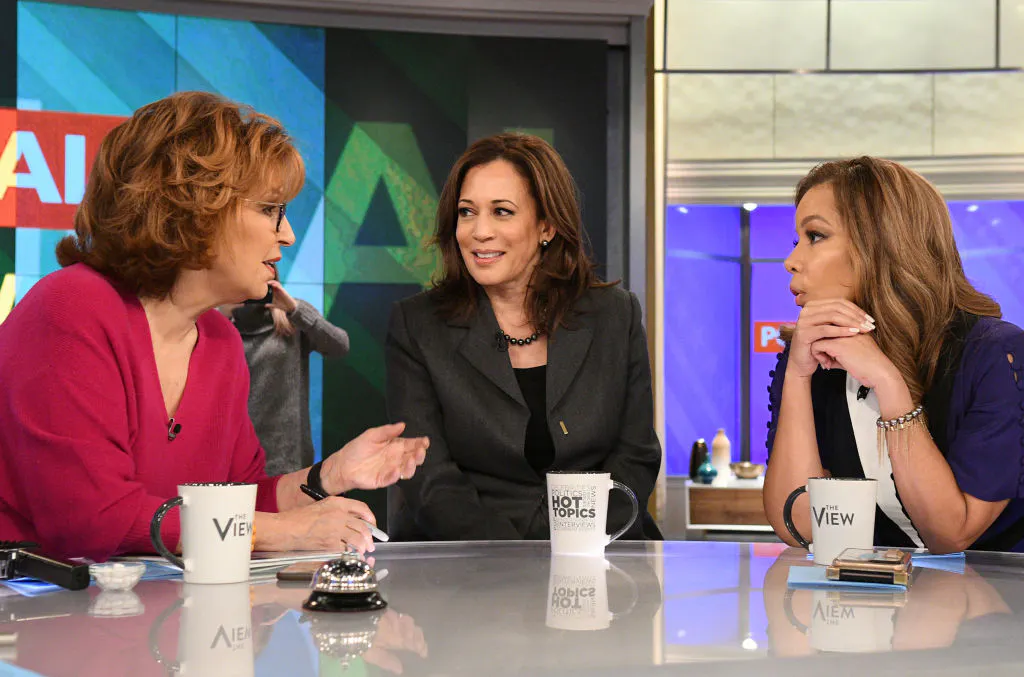
Joy Behar has figured out why the United States hasn’t elected a female president: America won’t.
Freedom Is Back
In Style
Premium domains for sale
“I think this country will vote for an obese, Jewish, Black, homosexual before a woman,” Behar said this week on “The View.”
It’s a sweeping explanation for a complicated political reality. Hillary Clinton lost to Donald Trump. Kamala Harris lost to Donald Trump. Therefore, the country won’t elect a woman. As a psychotherapist, I’m interested in why that explanation is so appealing.
When something painful happens, people naturally search for an explanation that makes sense. But we’re especially drawn to explanations that allow the rest of our worldview to remain intact. They may contain some truth while also protecting us from having to consider possibilities we’d rather not confront. Blaming sexism for Harris’ defeat offers exactly that protection.
If Harris lost primarily because she is a woman, Democrats don’t have to spend as much time asking whether voters disliked her policies, questioned her record, rejected the direction of the party, or simply didn’t think she was the right person to be president. The candidate doesn’t have to change. The party doesn’t have to change. The voters do.
There’s a psychological payoff to that explanation. Defeat becomes evidence of the voters’ shortcomings rather than an occasion for self-examination.
Sexism exists, and it would be foolish to pretend that no voter was influenced by Harris’ sex. But that is very different from treating sexism as the explanation for her defeat. Once an explanation can absorb every piece of contrary evidence, it stops functioning as an explanation and starts functioning as a defense.
A woman loses? Sexism. She performs poorly with a particular demographic? Sexism. Voters say they preferred the other candidate’s positions? Perhaps that’s sexism too, whether they realize it or not. The voter who says sex didn’t matter can be dismissed as unaware of his own bias. The voter who disliked Harris’ policies can be told that sexism shaped that judgment. At some point, the theory explains so much that it explains very little.
I see versions of this pattern often in my work. The breakup happened because the other person was incapable of intimacy. The promotion went to someone else because the boss was threatened. The friendship ended because the friend was toxic. Sometimes those explanations are true. But sometimes they also prevent the harder question: Is there anything here I don’t want to see?
Politics makes that question difficult because candidates and parties can become intertwined with personal identity. A political defeat can feel like more than losing an election. It can feel like a rejection of your values and even of people like you. That’s when explanation can turn into self-protection.
Behar isn’t alone in being pessimistic about the country’s willingness to elect a woman. A Pew Research Center survey conducted in July and released this month found that 37% of Americans believe it is “not too” or “not at all” likely that the U.S. will elect a female president in their lifetime, up from 26% in 2023.
But the same survey complicates the idea that Americans simply don’t want a female president. Two-thirds said either that electing a woman wasn’t personally important to them or that the president’s gender didn’t matter.
Perhaps voters mean that. Hillary Clinton’s defeat doesn’t prove that they don’t. Neither does Kamala Harris’.
Presidential candidates lose for all sorts of reasons: their policies, their record, their message, their personality, the political environment, and the strength of their opponent. Determining how much each factor contributed requires evidence. Two women losing presidential elections to the same man doesn’t, by itself, tell us how much sexism contributed to either result.
There’s also something diminishing about explaining a female candidate through her sex. It risks turning her from a political actor who made choices, took positions, and ran a campaign into the passive victim of forces beyond her control. It also makes it harder to learn anything from losing.
One of the basic goals of good therapy is to help people tolerate explanations they may not particularly like. Maybe the breakup wasn’t entirely the other person’s fault. Maybe the boss isn’t simply jealous. Maybe the criticism contains something worth hearing. That doesn’t mean reflexively blaming yourself. It means resisting the temptation to choose the explanation that asks the least of you.
Politics could use some of the same discipline. After an election, there is an important difference between asking, “What’s wrong with the people who didn’t vote for us?” and asking, “Why didn’t they vote for us?” The first starts with a judgment about the voter. The second starts with a question.
Sexism should be confronted when there’s evidence of sexism. But it shouldn’t become an explanation so broad that it shields candidates and political parties from asking harder questions about themselves. Hillary Clinton and Kamala Harris became the first two women to head a major-party presidential ticket. Both lost to Donald Trump. Why they lost is a question worth examining. Declaring that their sex explains the outcome doesn’t answer it. It may simply make the answer less uncomfortable.
***
Jonathan Alpert is a psychotherapist in New York City and Washington, D.C., and author of the book “Therapy Nation.” X: @JonathanAlpert
More from this network:
Domains for Sale · GOTPeople.org · TheDSAPlatform · The Truth About Socialism
What's Your Reaction?
 Like
0
Like
0
 Dislike
0
Dislike
0
 Love
0
Love
0
 Funny
0
Funny
0
 Wow
0
Wow
0
 Sad
0
Sad
0
 Angry
0
Angry
0

I am just an average American. My teen years were in the late 70s and I participated in all that that decade offered. Started working young, too young. Then I joined the Army before I graduated High School. I spent 25 years in, mostly in Infantry units. Since then I've worked in information technology positions all at small family owned companies. At this rate I'll never be a tech millionaire. When I was young I rode horses as much as I could. I do believe I should have been a cowboy. I'm getting in the saddle again by taking riding lessons and see where it goes.
Premium domains for sale





















Comments (0)