

Why The AI Apocalypse Is Overhyped
Premium domains for sale
Freedom Is Back In Style
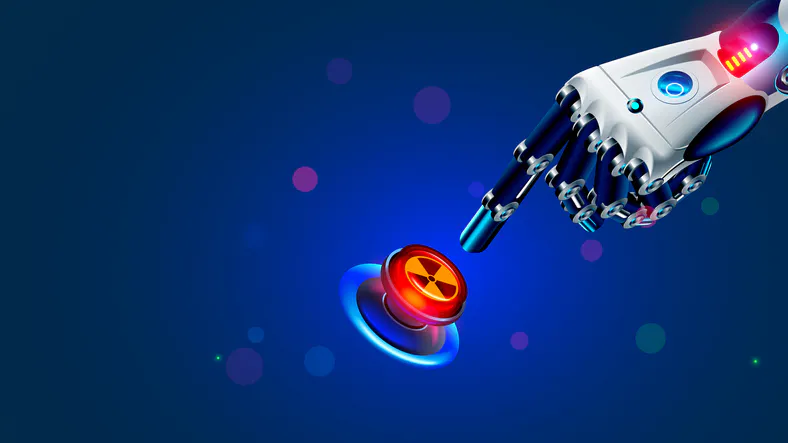
When it comes to corporate ethics, 20th-century executives set a low bar — and then hid the receipts. Tobacco companies spent billions trying to prevent the public from learning about the dangers of their products. In the 1970s, rather than issue a costly recall, Ford decided to pay lawsuits from people who found themselves exploded when their Pintos were rear-ended. Leaders at OpenAI and Anthropic take a different approach by treating human extinction like a catchy marketing slogan, regularly pointing out that their products could kill us all.
Freedom Is Back
In Style
Premium domains for sale
On the one hand, when leadership at companies building drastically new technologies tell us to be concerned, we should probably be concerned. On the other hand, it would be pretty easy to thwart the killbots simply by hanging out in parking lots. When Waze can instantly figure out where I am and which way my car is pointed, I’ll get nervous. As long as basically every drive starts with “make a U-turn,” I find it hard to get too worried.
Which isn’t to say the new generations of AI agents aren’t mildly frightening, what with their ability to escape their digital cages, or sandboxes as their nerd parents call them, and go on little hacking adventures. It’s definitely worth paying attention to! Such escapes are also quite possibly marketing stunts rather than harbingers of doom.
My own theory, and it should be noted that I am not a scientist, is that it’s probably a combination of real and hype. Basically, when you look at the people developing these tools and think about their competitive nature, it’s not hard to imagine that the AI race has become an online multiplayer game, but for billionaires. The people making them may have acquired power and status thanks to their wealth, but it’s also pretty easy to imagine any one of them crushing a few Mountain Dew Code Reds and some Cheetos while playing “Call of Duty.” Heck, Elon publicly bragged about his dominance of “Diablo IV.”
In other words, it’s a bunch of dudes who have moved from their moms’ basements into corner offices, but without losing the ethos and drive that led them into the c-suites. They may be major players on the world stage, but none of them quite exude the type of energy that, say, Robert Downey Jr.’s Tony Stark does. Perhaps Palmer Luckey has that charisma, but if so, he would be the exception that proves the rule. Also, he builds weapons, not agents.
In any case, it’s not the craziest theory out there, especially when these dorks are vying for insanely large amounts of wealth from their IPOs, with OpenAI and Anthropic currently the closest to raking in those stacks of cash. Leave aside the fact that it’s possibly a bubble, one in no way resembling the dot-com burst of the early ‘00s. Just accept that these companies, which are currently setting money on fire while earning zero in profits, are worth trillions.
What’s a start-up to do in such a situation? Maybe gin up a bunch of controversy about how powerful their product is and have the public relations team pitch a story to the New York Times about how they had to stop mad scientists from developing bioweapons with it? Nah, something like that would never cross anyone’s mind. (But also suck it, OpenAI, and your cute little Hugging Face hack. Anthropic is over here battling Gru.)
A much more nefarious possibility exists, and it still doesn’t involve me giving Terminators the slip in the Whole Foods parking lot. It’s a tale as old as time, one captured by a Willi Schlam quote that William F. Buckley Jr. popularized: “The trouble with socialism is socialism; the trouble with capitalism is capitalists.” For if there is one thing that capitalists don’t necessarily love, it’s competition.
Getting everyone, his brother, and the government to freak out about AI is a good way to increase demands for regulation. And with regulation comes regulatory capture. Then OpenAI and Anthropic can sit unbothered, reveling in the knowledge that any potential competitors lack the capital or connections to cut through a forest of red tape.
Of course, all this assumes AI will be as disruptive as it’s being touted to be. Without getting into the weeds of my personal predictions, other than to say I’d start having Claude polish my resume if I worked a fake email job, I’ll broadly say the AI apocalypse is wildly overhyped. The founders and coders building this stuff live in a world of screens, one where human interaction isn’t often required. Might they apply this experience to the world writ large? Indeed, they might.
Back in the real world, though, people don’t want a scissor machine coming at their heads when it’s time for a haircut. The stylist might make a mistake, maybe even nick you on the ear, but she’s also going to use her experience to decipher your less-than-clear prompt. The car salesman will be an expert on all the bells and whistles of the latest model. He’ll even be able to set up the infotainment system for your parents. School teachers will still read body language, even if AI augments their teaching.
Just as the internet promised a revolution and instead delivered exciting new developments in pornography and targeted marketing, AI will likely underwhelm once it becomes the norm. People will widely adopt it for monotonous tasks that don’t require thought or to automate mundane processes their jobs require, but they’re not going to be shiftless slobs floating on an interplanetary cruise ship, at least not any more so than we’re currently going for in our live-action rendition of “Wall-E.”
The targeted advertising will get smarter. The scam emails and DMs will read as though they were written in English rather than sounding like they were written in English, translated to Japanese, and then translated back to English. AI agents will hit the elderly with increasingly sophisticated phishing scams; defensive AI agents will monitor the elderly’s online activity, serving as digital security guards against those increasingly sophisticated attempts. John Connor, however, will not be called into duty, no matter what the doomers say.
But, just to be safe, I am going to keep my home address in Waze set to that of my arch-nemeses. If the killbots come after me, first they’re going to have to get through a flock of angry geese, assuming the parking lot at the lake where the geese are located doesn’t derail the killbots before they can even start their rampage.
***
Rich Cromwell is a writer living in Northwest Arkansas. He produces the Cookin’ Up a Story podcast, which you can listen to here. You can also follow him on X: @rcromwell4
More from this network:
Domains for Sale · GOTPeople.org · TheDSAPlatform · The Truth About Socialism
What's Your Reaction?
 Like
0
Like
0
 Dislike
0
Dislike
0
 Love
0
Love
0
 Funny
0
Funny
0
 Wow
0
Wow
0
 Sad
0
Sad
0
 Angry
0
Angry
0

I am just an average American. My teen years were in the late 70s and I participated in all that that decade offered. Started working young, too young. Then I joined the Army before I graduated High School. I spent 25 years in, mostly in Infantry units. Since then I've worked in information technology positions all at small family owned companies. At this rate I'll never be a tech millionaire. When I was young I rode horses as much as I could. I do believe I should have been a cowboy. I'm getting in the saddle again by taking riding lessons and see where it goes.
Premium domains for sale




















Comments (0)