

A Warning From Britain: I Was Nearly Groomed At 11. Surveillance Won’t Save Girls Like Me
Premium domains for sale
Freedom Is Back In Style
When I was eleven years old, an older man tried to groom me online.
Freedom Is Back
In Style
Premium domains for sale
I didn’t tell my parents, and I didn’t report it. Instead, driven by the confused, often dangerous curiosity kids have at that age, I made a fake Facebook profile pretending to be thirteen. Soon enough, I was talking to men who wanted me to send them nude photos and who tried to groom me into radical Islam.
I have never spoken about this publicly until today.
I bring it up now because whenever politicians want to remove our basic civil liberties, they use young women and girls as a human shield. They stand up at their dispatch boxes or write tweets claiming that anyone defending digital privacy simply doesn’t understand the horrors of online abuse.
I understand it. I lived it. I know the terror of predatory manipulation, the reality of sextortion, and the ease with which adults are able to target vulnerable children online.
Which is precisely why I know the government’s plan is dangerous, patronizing nonsense.
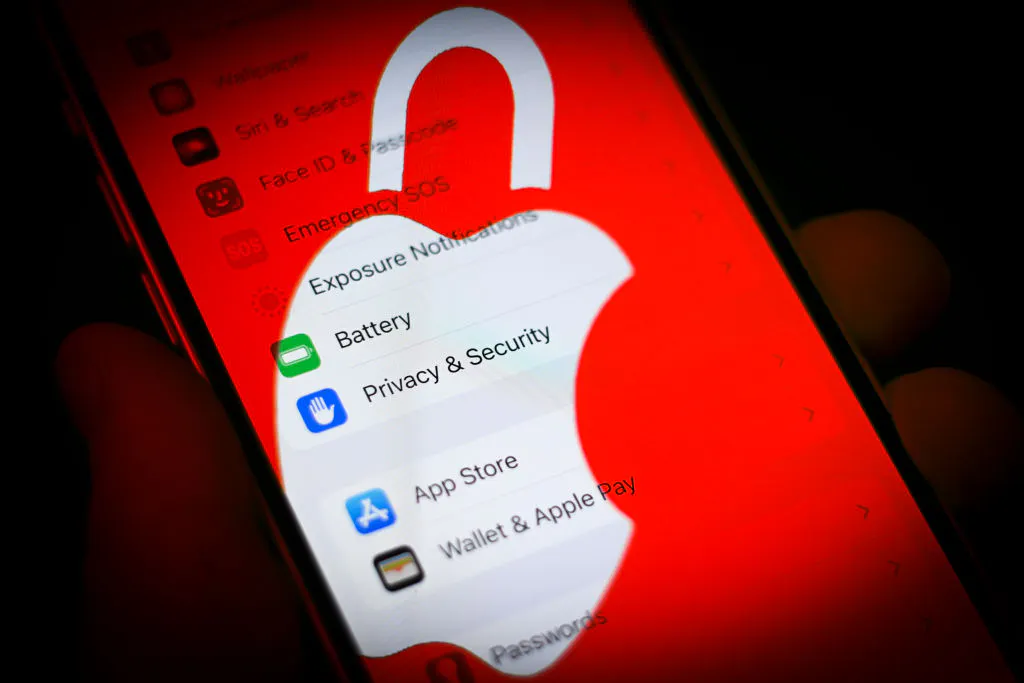
Addressing the House of Commons, Culture Secretary Lisa Nandy announced legislation to force Apple and Google to build automated scanning tools directly into the operating systems of our phones. The goal sounds noble: make it impossible for anyone under 18 to take, view, or send explicit images.
But a smartphone has no idea how old you are. The only way to stop a teenager from taking a picture is to lock the camera and messaging apps for everyone by default. Unless you upload your passport, driving license, or bank card, your phone stays permanently child-locked. You spend your own money on the phone, but the state decides you aren’t adult-enough to use it until you show your papers to an intermediary.
Ministers will tell you this isn’t surveillance because the scanning runs locally on the handset. Quite frankly, that insults our intelligence.
In cybersecurity terms, this is called client-side scanning. Even if raw images stay on the phone, computers are never infallible. An algorithm with an error rate of just 0.1% scanning billions of daily messages across Britain’s 90 million mobile phones creates millions of false positives, unwarranted lockouts, and privacy breaches.
Worse, to disable this, adults are forced onto third-party age-verification databases that are routinely leaked. When Discord began demanding photo IDs for age appeals, its verification vendor was breached, exposing the government IDs of 70,000 users. Just recently, ID-scanning vendor IDScan.net suffered a breach that compromised over 170 million identity documents. In a country where nearly 75% of large businesses suffer cyber breaches every year, handing millions of sensitive identity records to them doesn’t protect young women. Rather, it hands stalkers, hackers, and identity thieves our front-door keys.
If software is forced onto my phone to inspect my camera and my private photos without my consent, that device is no longer mine. It is an automated state-mandated babysitter, sitting on my nightstand, judging what I’m allowed to do.
Once you have that scanning infrastructure in our pockets, privacy is finished. If they can mandate this today, what stops the next government from scanning for unapproved political speech, protest material, or leaked documents tomorrow? The back door will already be open, baked into our devices.
More than that, it misunderstands how grooming actually happens. When I was eleven, a device-level nudity block would not have saved me from the manipulative conversations, the psychological coercion, or the adults who sought out children to meet in the world. The real predators will bypass this with VPNs, burner phones, or modified software. The only people trapped in this will be ordinary citizens who just wanted a phone that wasn’t spying on them.
As young women, we face a suffocating paternalism. We are constantly told to be independent and girlboss and to take control of our lives. Yet, the moment we take out our phones, we are told by the state we have to be controlled by them for our “safety.”
You don’t protect young women by forcing millions onto identity databases that will inevitably leak. You protect us by hunting down the blackmailers and teaching young people how to spot predatory manipulation before it takes hold.
I was nearly groomed as a child. I know the dark corners of the web better than the politicians lecturing us from Westminster. I don’t want Lisa Nandy acting as my digital mother, and I don’t want the state inside my phone.
***
Samiksha Bhattacharjee is the Head of Ladies of Liberty Alliance UK, a Young Voices UK contributor, and the President of the University College London Libertarian Society. You can find more of her work at Samiksha’s State of the Debate.
More from this network:
Domains for Sale · GOTPeople.org · TheDSAPlatform · The Truth About Socialism
What's Your Reaction?
 Like
0
Like
0
 Dislike
0
Dislike
0
 Love
0
Love
0
 Funny
0
Funny
0
 Wow
0
Wow
0
 Sad
0
Sad
0
 Angry
0
Angry
0

I am just an average American. My teen years were in the late 70s and I participated in all that that decade offered. Started working young, too young. Then I joined the Army before I graduated High School. I spent 25 years in, mostly in Infantry units. Since then I've worked in information technology positions all at small family owned companies. At this rate I'll never be a tech millionaire. When I was young I rode horses as much as I could. I do believe I should have been a cowboy. I'm getting in the saddle again by taking riding lessons and see where it goes.
Premium domains for sale
















Comments (0)