

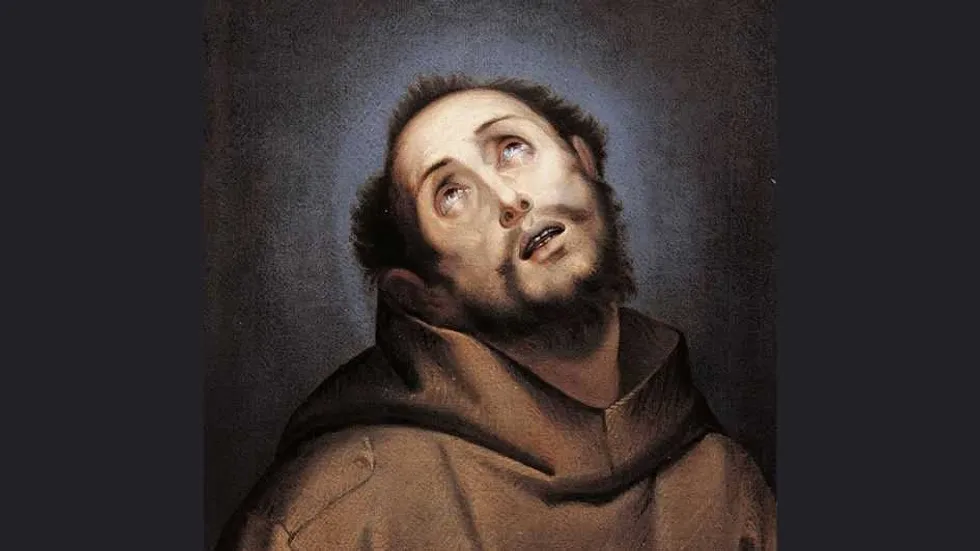
After 800 years, why do we still treat St. Francis as a glorified garden gnome?
Premium domains for sale
Freedom Is Back In Style
One of the first things I did when we moved into our semi-furnished rental last year was place a 12-inch concrete statue of the Blessed Virgin Mary — one of the few possessions I'd recovered from the ashes of our house in the Palisades — by the front door.
Freedom Is Back
In Style
Premium domains for sale
I thought the place needed a brazenly Catholic touch to counteract the tasteful Westside L.A. “spirituality” already on display: the Native American kitsch, the Henry Miller quote in the powder room, the reclining Buddha in the garden by the front door.
The closer Francis drew to Christ, the more intensely Catholic he became.
Never mind that next to the Buddha the owner had already put one of the Church's most famous saints: a tonsured St. Francis of Assisi, cradling a dove in his hands, rabbits gathered around the birdbath at his feet.
That Francis was even welcome at such an ecumenical gathering seemed to confirm my general impression of him as a kind of generic Christian Zen master. The statue looked like a glorified garden gnome to me.
Without even realizing it, I'd bought into modernity's slow domestication of one of the most radical Christians who ever lived.
Sainthood without sanctity
G.K. Chesterton noticed the problem more than a century ago. Modern admirers, he wrote, had learned to “appreciate the saint almost without the sanctity.”
Francis did not grow up poor. He was born in Assisi in 1181 or 1182, the son of a prosperous cloth merchant. As a young man, he enjoyed fine clothes, spent money freely, and dreamed not of feeding sparrows but of military glory.
Around the age of 20, he went to war against neighboring Perugia, was captured after Assisi's defeat, and spent months as a prisoner. Illness followed. Another attempt at a military career ended with Francis turning back before he had really begun it.
His conversion came slowly, through humiliation, failure, illness, and prayer.
Look at one of those garden statues of Francis, surrounded by birds and rabbits, and it's easy to imagine sharing at least a little in his saintliness. I like animals. I can be nice to a bird.
But Francis learned to love God's creation from the bottom up, beginning with nature at its most capriciously cruel and monstrous: leprosy.
Sweetness of soul and body
The disease could horribly disfigure the human body, and in Francis's world, its sufferers lived largely apart from everyone else. Francis, like everyone else, was repulsed by them.
Thomas of Celano, his earliest biographer, says that Francis once found even the sight of leper houses unbearable. If he spotted one from two miles away, he would cover his nose with his hands.
Then, Celano writes, Francis encountered a leper and did what would previously have been unthinkable: He approached the man and kissed him.
Francis' own account is less dramatic but probably more revealing. “The Lord himself led me among them,” he wrote near the end of his life. He began showing them mercy, and what had once seemed bitter became “sweetness of soul and body.”
Celano tells us what that mercy looked like. Francis went to live among lepers, washing them and cleaning the pus from their sores.
To repair the Church
According to Franciscan tradition, Francis was later praying before a crucifix in the crumbling church of San Damiano outside Assisi when he heard Christ tell him to repair His church. Francis, quite reasonably, took this literally, rebuilding San Damiano and helping restore other dilapidated churches around Assisi. Only later would the command acquire its more famous second meaning. Francis would spend the rest of his life repairing the Church in a rather more ambitious sense.
His new life brought him into increasingly bitter conflict with his father. Pietro Bernardone had spent years building a prosperous business and raising a son who now seemed determined to give the proceeds away. The dispute culminated in dramatic fashion. Standing before the bishop of Assisi, Francis surrendered his claim to his father's property and stripped off the clothes his father had provided him. The bishop covered the naked young man with his cloak.
The movement that formed around Francis eventually became the Order of Friars Minor. Its members worked, prayed, preached, cared for the sick, and lived without the ordinary security provided by possessions. Francis himself insisted on manual labor. “I worked with my hands, and I still desire to work,” he recalled near the end of his life.
Chesterton put the intensity of his asceticism more colorfully: “He devoured fasting as a man devours food.”
The peace of Christ
None of this means the familiar Francis of birds and flowers is a fraud. Francis really did possess an extraordinary love for creation. His "Canticle of the Creatures" praises God through Brother Sun, Sister Moon, wind, water, fire, and “our Sister Mother Earth.” The poem later supplied the title of Pope Francis' 2015 encyclical Laudato si’.
But Brother Sun and Sister Moon did not emerge from a pleasant afternoon spent admiring the Umbrian countryside. Francis composed the first part of the "Canticle" near the end of his life, sick and suffering at San Damiano.
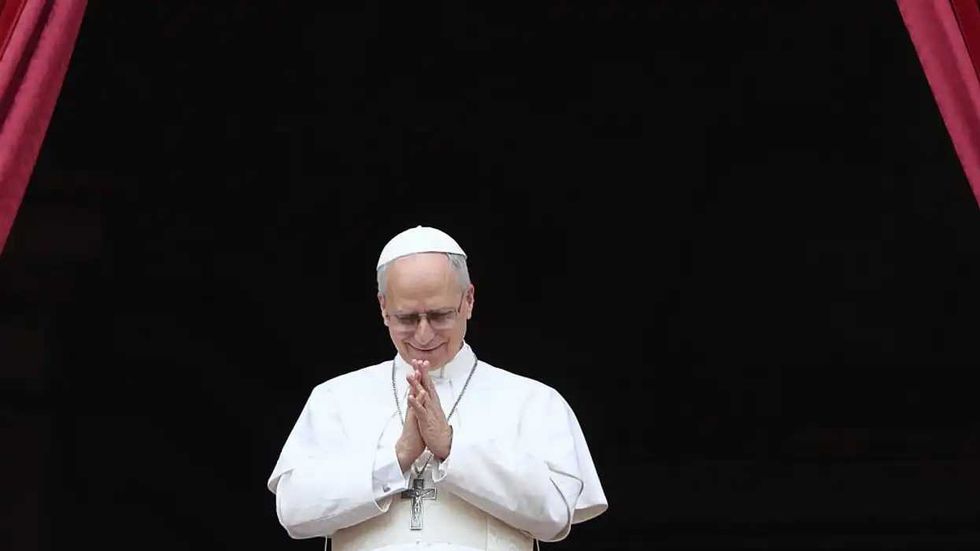
When Jorge Mario Bergoglio was elected pope in 2013, his friend Cardinal Claudio Hummes embraced him and said, “Don't forget the poor!” Bergoglio later recalled that he immediately thought of Francis of Assisi — the man of poverty, peace, and creation. He became the first pope to take the name Francis.
Visiting Assisi later that year, he addressed the Francis most of us think we know.
“Franciscan peace is not something saccharine,” the pope said. Nor, he added, was it “a kind of pantheistic harmony with forces of the cosmos.”
Behind enemy lines
Pope Francis' contention that "the peace of Saint Francis is the peace of Christ” helps illuminate one of the most striking episodes of Francis' life.
In 1219, while Christian and Muslim armies were fighting the Fifth Crusade in Egypt, Francis crossed the battle lines near Damietta and entered the camp of Sultan al-Malik al-Kamil.
An eyewitness account helps us understand how extraordinary this was. Jacques de Vitry, bishop of Acre, wrote the following year that this unarmed friar had walked into enemy territory in the middle of a war and preached to the Muslims for several days. The sultan eventually had him returned safely to the Christian lines.
What Francis and al-Kamil said to each other is harder to know. Later accounts supplied increasingly elaborate details, including Francis offering to undergo an ordeal by fire.
But we do know what Francis thought friars should do among Muslims, because he wrote it down. They could live among non-Christians “without quarrels or disputes,” he instructed, acknowledging themselves as Christians. Or when they believed it pleased God, they could explicitly proclaim the Christian faith. Francis had walked unarmed across a battlefield to do exactly that.
Closing the gap
Francis' quieter contributions to Christianity proved just as enduring. In 1223, at Greccio, Francis arranged a manger with hay, an ox, and a donkey so worshipers could contemplate the conditions in which Christ had been born. A priest celebrated Mass over the manger. While there were no statues playing Mary, Joseph, or the infant Jesus, the celebration nevertheless became the ancestor of the Christmas crèche now found in homes and churches around the world.
Greccio also tells us something about the peculiar intensity of Francis' mysticism. Again and again, he seemed determined to collapse the distance between himself and the physical life of Christ. At Greccio, he wanted people to encounter Bethlehem almost as if they had been there: the hay, the animals, the feeding trough, the poverty into which Christ had been born.
A year later, at La Verna, that identification with Christ became more mysterious — and, if the Franciscan accounts are true, physical. During a mountain retreat, Francis experienced a vision of the crucified Christ and received wounds corresponding to the wounds of the crucifixion — the stigmata. The claim did not first surface centuries later. Brother Elias announced the wounds in a letter sent after Francis' death, and Thomas of Celano described them in the biography he wrote for Francis' canonization.
Francis himself left no account of receiving them.
RELATED: Pope Leo XIV: The right leader for a church in crisis
 Mondadori Portfolio/Getty Images
Brother Fire
By then, his body was falling apart. Francis was losing his sight to a painful disease of the eyes. Doctors tried plasters and eye washes. They opened his veins to bleed him. His condition only grew worse. Finally, a physician proposed something more drastic: burning the flesh around his failing eye with a red-hot iron.
When the doctor placed the instrument in the fire, the man who had written of Brother Sun and Sister Moon extended his friendship to the very element about to cause him terrible pain.
“My Brother Fire,” Francis addressed it, asking it to “be courtly to me in this hour.”
The hot iron was drawn across his face from his ear toward his eyebrow. It didn't work. Near death, according to Thomas of Celano, Francis asked his brothers to lay him naked on the bare ground so he could greet yet another member of his family of creation: “our Sister Bodily Death." On the evening of October 3, 1226, at the Portiuncula, she arrived. Francis was probably 44 or 45 years old. Two years later, Pope Gregory IX declared him a saint.
Today, October 3, marks exactly 800 years since Francis' death. Few Catholic saints have traveled as far outside Catholicism as Francis. Environmentalists claim his love of creation. Peace activists invoke his encounter with the sultan. Protestants have found plenty to admire too. Christianity Today has included him among its “131 Christians Everyone Should Know.” One evangelical writer simply called him “our Francis, too.”
And of course, he turns up beside Buddhas in Los Angeles gardens.
Catholic to the core
But the Church is observing his 800th anniversary in unmistakably Catholic fashion. At the direction of Pope Leo XIV, a special Jubilee Year of St. Francis began January 10 and continues through January 10, 2027. The Apostolic Penitentiary is offering Catholics a plenary indulgence for pilgrimages to designated Franciscan churches and other places connected to Francis, accompanied by the prescribed prayers and observances and the usual conditions of confession, Communion, and prayer for the pope's intentions.
A plenary indulgence is not the first thing that comes to mind when most people look at the little friar holding the bird. But neither, probably, is Francis' "Testament."
Francis dictated the document near the end of his life, partly to make sure the movement he was leaving behind remained recognizably Catholic. There he writes of his reverence for priests “according to the manner of the holy Roman Church.” He says he sees in this world nothing bodily of Christ except the Eucharist, which he wants “honored above all things.” He recalls that when God first gave him brothers, he wrote down their way of life and “the Lord Pope confirmed it for me.”
The "Testament" ends by telling his friars to keep it alongside their Rule and read the two together, so that they might observe the Rule “in a more Catholic manner.”
You don't need a specific creed to admire Francis, or even to follow him for quite a distance. But follow Francis far enough, and you eventually find yourself at the threshold of the Church and all it contains: the Eucharist, priests, confession, obedience, the pope.
At the same time, his example strips away centuries of polemic and invites us to see the Church more clearly. Here was a man almost comically ill-suited to the idea that Christianity is fundamentally about clericalism, bureaucracy, or institutional power. He owned nothing. He wasn't a priest. He preached to lepers and Muslims, slept on the ground, rebuilt ruined churches with his hands, and founded a movement whose very name emphasized the littleness of its members.
And yet the closer he drew to Christ, the more intensely Catholic he became.
Chesterton saw in that relationship something of the mystery of the Church itself: a human institution that somehow provides a path to the divine. “The casket that was locked in Palestine can be unlocked in Umbria,” he wrote, “for the Church is the keeper of the keys.”
More from this network:
Domains for Sale · GOTPeople.org · TheDSAPlatform · The Truth About Socialism
What's Your Reaction?
 Like
0
Like
0
 Dislike
0
Dislike
0
 Love
0
Love
0
 Funny
0
Funny
0
 Wow
0
Wow
0
 Sad
0
Sad
0
 Angry
0
Angry
0

I am just an average American. My teen years were in the late 70s and I participated in all that that decade offered. Started working young, too young. Then I joined the Army before I graduated High School. I spent 25 years in, mostly in Infantry units. Since then I've worked in information technology positions all at small family owned companies. At this rate I'll never be a tech millionaire. When I was young I rode horses as much as I could. I do believe I should have been a cowboy. I'm getting in the saddle again by taking riding lessons and see where it goes.
Premium domains for sale























Comments (0)