

AI Should Read The Classics. We Should Keep Them Too.
Premium domains for sale
Freedom Is Back In Style
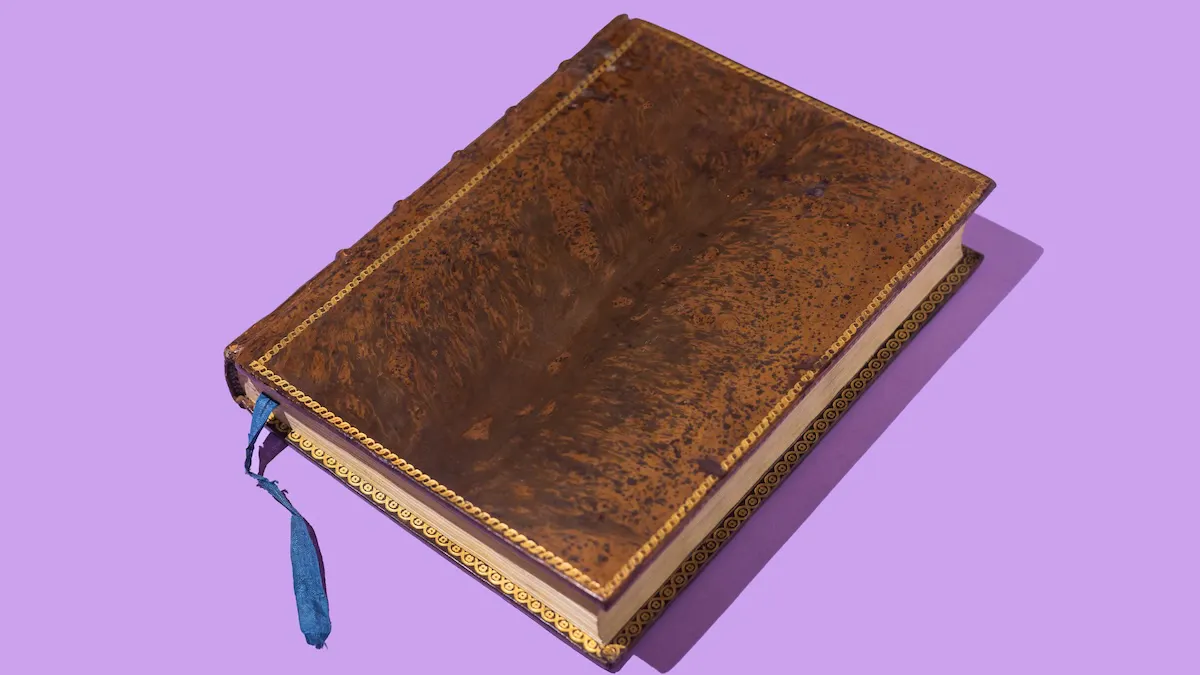
It is deeply perverse to think that artificial intelligence could learn from the great literature of past times by destroying the books that contain it. It is no surprise that booksellers, collectors, and all others who are concerned about the preservation of cultural history have been angered by reports that AI companies are purchasing huge numbers of used books, scanning them, and then discarding the original copies. This worry is especially strong when the books in question are rare, old, or otherwise irreplaceable.
Freedom Is Back
In Style
Premium domains for sale
But this controversy raises a significantly more complicated question than whether AI should be allowed to read old books. Simply put, it should. If we believe that artificial intelligence is going to become one of the most important intellectual technologies of the coming century, then it is difficult to argue that we should deliberately deprive it of humanity’s greatest literature.
An AI trained exclusively on the disposable “slop” of the modern internet would be an intellectual disaster. There is immense value in having these systems encounter Shakespeare, Austen, Dostoevsky, Dickens, Homer, Dante, and the thousands of lesser-known writers whose works have accumulated across centuries.
The problem is not that AI wants to learn from the past. The problem is that we have become so careless about possessing the past that we are willing to destroy its physical record to make a digital copy.
The Italian Futurists understood the danger of treating cultural inheritance as something that exists merely to be worshiped. Filippo Marinetti, in his famous 1909 “Futurist Manifesto,” declared, “Museums: cemeteries!” He raged that the Italian obsession with preserving the past was a kind of cultural paralysis, arguing that art existed to propel humanity forward rather than leave it permanently staring backward.
Marinetti was right: Culture is not alive just because it has been preserved in an untouched, physical state. A book sitting on a shelf, unread, is technically being preserved. But if nobody ever reads it, learns from it, argues with it, writes in response to it, or carries its ideas into the future, then preservation has become little more than embalming. The book is dead and useless, no matter how old or rare it is. We should not want museums that are mausoleums. We should want living libraries.
That is why there is something almost fitting about artificial intelligence becoming one of the newest readers of humanity’s oldest books. The machine does not need to replace the reader, but it should become another reader. It can expose forgotten works to people who otherwise would never encounter them. It can help translate, search, compare, and contextualize texts that have spent decades or centuries inaccessible to anyone who did not know where to look.
But that possibility makes the physical destruction of books more troubling, not less. A digital copy is not the same thing as the original, and history has given us plenty of reasons to be suspicious of the idea that digitization automatically means preservation. Once information exists primarily as a digital file, someone has to control that file.
We have already seen what happens when cultural works are revised to accommodate the sensibilities of a later generation. In 2023, Steven Spielberg acknowledged that he made a mistake when he altered the 2002 re-release of “E.T.,” replacing the guns carried by federal agents with walkie-talkies. Spielberg eventually came to regret changing his own film, admitting that “E.T.” was a product of its era and that he should never have “messed with the archives” of his own work.
Roald Dahl’s books provide another, more insidious example. New editions altered the language from the original texts to make them conform more closely to contemporary sensibilities. Words were changed, descriptions were softened, and new language was inserted, long after Dahl had passed.
The point is not that every digital archive is necessarily untrustworthy, but that a physical copy gives us something a digital copy cannot: an independently existing record. If you own an original edition of a book, nobody can push an update to it. Nobody can change a word while you sleep or aren’t looking. Nobody can alter the file on a server, revoke your access, remove it from a digital storefront or decide that your particular copy no longer complies with the prevailing cultural consensus.
That matters enormously in an age when so much of our intellectual life is moving behind centralized digital systems.
The same principle applies to the increasingly familiar argument over “banned books.” Much of the contemporary political rhetoric surrounding book bans obscures the distinction between restricting access to a book in a particular institution and making a book literally unavailable. But the technological future presents a much more serious version of the latter possibility.
If a book exists only as a digital file controlled by somebody else, its availability is ultimately conditional. It can be deleted, it can be locked, it can be altered, and it can be disappeared. A physical copy sitting in someone’s private library is much harder to erase — barring the future envisioned in “Fahrenheit 451” coming to pass.
This is why the response to AI-driven book scanning should not be an anti-technology crusade. It should be a renewed appreciation for private ownership. We need people to own books. Not merely institutions, corporations, or governments. People.
Private collections, family libraries, used bookstores, church libraries, university archives, historical societies, and collectors all provide redundant repositories of cultural memory. The more copies exist in the hands of ordinary people, the harder it becomes for anyone to erase a work from existence.
That does not mean every book needs to be locked behind glass; quite the opposite, the best form of preservation is use. Read the books, give them to your children, loan them to your friends, and write in the margins. Argue with the great ideas.
The Internet Archive offers a useful model. As outlined last week in Ars Technica, its scanners have deliberately favored slower, more careful processes for fragile and rare books because the purpose of digitization is preservation, not merely extraction. The goal is to create the digital copy without sacrificing the physical one. That process is less efficient, but it is more civilized.
AI companies are engaged in a technological race, and nobody should be surprised that they are looking for the fastest and cheapest ways to acquire the enormous quantities of high-quality text required to train increasingly sophisticated models. But there are some things for which efficiency is not the only relevant metric. A 500-year-old book is not merely a container of tokens. It is an artifact.
Destroying that object in the name of preserving its contents digitally is not necessarily immoral. Sometimes the trade-off may be justified, but it should never be regarded as inconsequential.
There is also a larger lesson here for those of us who are enthusiastic about the future. Futurism does not have to mean amnesia. We can embrace AI, industrialization, automation, and every other technology that makes the future stronger and more capable while simultaneously becoming more serious about preserving the things worth carrying into that future. Indeed, the two projects should reinforce one another.
Let the machines read the classics. Let them help us discover forgotten authors. Let them translate ancient works, compare texts across centuries, and make the world’s accumulated knowledge accessible to the people.
But while the machines are reading, let us keep the books, not as museum pieces, not as sacred objects that nobody is allowed to touch. As living things. The purpose of preserving a book is not ultimately to ensure that a particular physical object survives for another thousand years. The purpose is to ensure that what is inside it survives, and the only way to guarantee that the past actually has a future is to keep reading it.
***
This article is part of Upstream, The Daily Wire’s new home for culture and lifestyle. Real human insight and human stories — from our featured writers to you.
More from this network:
Domains for Sale · GOTPeople.org · TheDSAPlatform · The Truth About Socialism
What's Your Reaction?
 Like
0
Like
0
 Dislike
0
Dislike
0
 Love
0
Love
0
 Funny
0
Funny
0
 Wow
0
Wow
0
 Sad
0
Sad
0
 Angry
0
Angry
0

I am just an average American. My teen years were in the late 70s and I participated in all that that decade offered. Started working young, too young. Then I joined the Army before I graduated High School. I spent 25 years in, mostly in Infantry units. Since then I've worked in information technology positions all at small family owned companies. At this rate I'll never be a tech millionaire. When I was young I rode horses as much as I could. I do believe I should have been a cowboy. I'm getting in the saddle again by taking riding lessons and see where it goes.
Premium domains for sale


















Comments (0)