

America Last? The Influx Of International Players Is Squeezing Out Domestic College Athletes
Premium domains for sale
Freedom Is Back In Style
This article was written by Karen Crouse and published on Sport & State, a new media company founded by Clay Travis that is built around sports, culture, original voices, and live conversation.
Freedom Is Back
In Style
Premium domains for sale
* * * * *
SPRINGFIELD, Mo. — The parents drove from their home in St. Louis, three-and-a-half hours each way, with their soccer-playing son for a daylong recruiting visit at Missouri State. As the son stood on the pitch kicking balls to Bears team members, the unseasonably warm September sun dissolved the years as the father, who played Division I soccer at a university in another state, reminisced about his own career.
He was snapped back to the present by a question. What were his son’s chances of earning a place on the Bears’ roster or on other Division I universities high on his college wish list?
“It’s almost impossible,” the father said.
Back when the father was a teenager, the pathway to college soccer was fairly straightforward. You started in recreational or club soccer, competed on your high school team and, if you were skilled enough, were recruited at age 17 or 18 to continue playing while pursuing a college degree.
The college athletic scholarship or roster spot continues to represent the highest reachable rung on the sporting ladder for American kids — a pathway to a college education — save for the rare few whose skillset places them on an express track, like the 17-year-old Cavan Sullivan, who this month became the youngest to score a goal for the U.S. men’s national team.
But the climb has become more complicated. For those with financial means, the rungs could include a gap year at an academy in Europe. For others, a stop at a junior college for seasoning. Whatever your pathway, you’re advised not to go it alone; recruiting agencies that operate like matchmakers, pairing players with college coaches, have become de rigueur.
More and more, it is leading to a dead end for U.S.-born athletes. In increasing numbers, they are being squeezed out of collegiate competitive sports by a combination of rising international student-athlete participation rates and shrinking roster numbers ushered in as part of last year’s settlement of a class-action lawsuit, House v. NCAA.
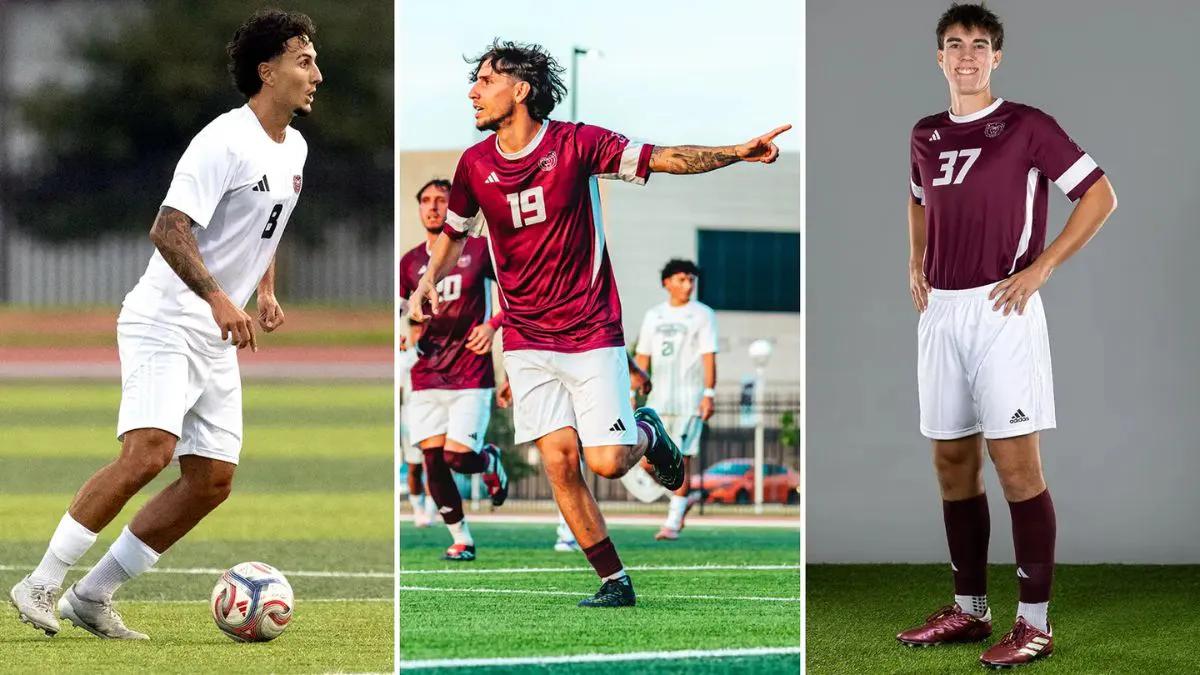
The son’s odds of making a Division I roster have plunged since his father’s days. His plight comes into sharp focus when you look at 17th-ranked Missouri State, where the 27-man roster includes 26 international student-athletes spanning the globe from Canada, Colombia, England, Hungary and Ireland to Italy, Japan, Portugal, Scotland and Spain.
Among the country’s best programs, it’s more of the same. The top-25 teams in the NCAA rankings feature 265 international student-athletes, which represent 36.9 percent of the available roster spots. Overall, foreign-born student-athletes make up 34 percent of all Division I men’s soccer participants.
???? Sound the Alarm ????
37% of NCAA D1 Men’s Soccer Athletes are International!
This is getting out of hand and the @NCAASoccer , @NCAA , and Club leagues need to step in. @MLSNEXT @ECNLboys .
If the @ussoccer is claiming they are going to restructure college soccer to develop and produce American players for the pros and USA ???????? national team, then it starts with putting restrictions on how many internationals you can have on a team.
Hey @ussoccer , you can’t be happy with the fact that 22-25 year old washed up internationals are taking a lot of roster spots from home grown talent?
This is also a product of all these Scam USA international recruiting agencies that most of you are getting “advice” from but these agencies are only flooding colleges with internationals.
Watch the full video please. American kids, this is your competition and it’s getting worse every year. ????
#CSTruth
https://t.co/yejZ8783Dj
— College Soccer Truth ™ (@ImCollegeSoccer) December 5, 2025
From the start, collegiate athletics have had an international flavor. The first NCAA Track and Field Championships in 1921 included a Canadian-born hurdler, Earl Thomson, who competed for Dartmouth. The difference, then and now, is scale.
Douglas DePeppe, a lawyer who played Division I soccer at Rhode Island, crunched the numbers from last year’s men’s championship tournaments in Divisions I, II, III, NAIA and NJCAA Divisions I and II. The results, which he shared during a September appearance before a House of Representatives committee in the nation’s capital, raise legitimate concerns about what the future holds for American soccer players — and U.S. athletes in general — in collegiate sports.
| Association | Teams | Players | U.S. Players | International Players |
|---|---|---|---|---|
| NCAA Division I | 48 | 1,433 | 847 (59.1%) | 586 (40.9%) |
| NCAA Div. II | 40 | 1,420 | 702 (49.5%) | 718 (50.5%) |
| NCAA Div. III | 64 | 2,203 | 1,840 (83.5%) | 363 (16.5%) |
| NAIA | 40 | 1,369 | 401 (29.3%) | 968 (70.7%) |
| NJCAA Div. I & II | 24 | 758 | 292 (38.5%) | 466 (61.5%) |
| Total | 216 | 7,183 | 4,082 (56.8%) | 3,101 (43.2%) |
Only in Division III, notably, the one level where athletic scholarships are not awarded — perhaps leaving recruiting agencies working with international athletes with less financial incentive to place them there — was the domestic influence robust, with 1,840 of the 2,203 players, or 83.5 percent, U.S.-born.
Long gone are the days when international student-athletes were a seasoning that added spice to competition. Today, they are a main ingredient across all sports outside of football. As the collegiate landscape is being reshaped by the same globalization drift that has already rocked the worlds of engineering and technology, healthcare and education, sports such as soccer have become a political futbol.
At the heart of the debate about international student-athletes is the role of collegiate sports: Do they exist to maximize the potential of primarily U.S.-born student-athletes? Is the priority America First? Or are they intended as a global farm system that showcases the highest-quality non-professional competition?
Michael Seabolt has been on the Missouri State men’s soccer staff since 2007, including the past five seasons as the head coach. He regards participation in his program, which has been ranked as high as No. 7 in the national rankings this season, as a privilege reserved for the most deserving, wherever they come from. In contrast to Missouri State’s wide recruiting net are No. 12 Michigan State, where 26 of the 27 players are US-born — including 14 from in-state, and No. 13 Washington, where all 30 student-athletes on the roster are US-born and 21 are from in-state.
“Division I is the highest amateur, if you can still call it that, level of soccer in the United States and probably the highest level in the world of amateur sports,” Seabolt said. “It’s an incredibly high level. It’s not an automatic, ‘I played high school soccer, I can do this’ level. Or, ‘I played club soccer, I can do this’ level.”
He added: “Every year we try to recruit the best guys from Springfield, the best guys from Missouri, the best guys from the Midwest, the best guys nationally.”
But because he is recruiting from the same pool of talent as private school powerhouses such as Notre Dame, the former No. 1 Stanford, and the current No. 1 SMU, Seabolt can’t count on the best of the best from the United States ending up at an American Conference program in America’s heartland.
“And after all that happens, we’re going abroad,” he said. “Not the other way around. It’s start locally and then expand our search.”

Seabolt has helped the Bears to 10 regular-season conference championships, three conference tournament titles and six NCAA tournament appearances, including a place in the Sweet 16 in 2020-21. This year’s squad started 9-0-2 to match the program’s longest unbeaten streak before sustaining a loss at home to Tulsa. The program, which is 9-1-3 after a 0-0 tie at Florida Atlantic on Sunday, is a point of pride for the school. A home game in mid-September against conference rival Florida International University filled the stands and boasted a cheer squad and makeshift pep band.
The leading scorer, Diego Real, is a fifth-year forward from Spain who played two seasons at Oklahoma City’s Mid-America Christian University in the NAIA before becoming a Bear. Real’s pathway is common at Missouri State, where almost half the international student-athletes on this year’s roster took gap years to work on their development or arrived at the university after polishing their skills at U.S. prep schools, U.S. junior colleges, NAIA schools or Division I, II, and III universities.
The lone U.S.-born player on this year’s squad, Gavin Weidman, a 6-foot-1 midfielder from South Carolina, took a gap year after high school at Seabolt’s urging and spent it training and taking online classes at an academy in Spain that boasts of its success in placing players at NCAA Division I schools.
I asked Weidman where he believes he’d be if he hadn’t spent a year abroad honing his skills. “I’ve thought about that,” he said. “I may just be a regular student at a university.”
Not playing soccer? “Yeah,” he said, “I think that’s what would have happened.”

But what if your family can’t afford the $45,000 fee for the developmental experience? Former tennis pro turned tennis broadcaster Patrick McEnroe has observed that in his sport, this new college pathway is essentially off-limits to student-athletes from middle- or lower-class backgrounds.
McEnroe has watched it happen at the academy that he and his brother, John, operate in New York, which factored into his decision to testify alongside DePeppe at the House Subcommittee on Higher Education and Workforce. The coup de grace for McEnroe came in May when he tuned into the televised NCAA tennis championships and was shocked by how few U.S.-born student-athletes were on the courts. In that moment, he jumped from interested bystander to fierce America First advocate.
Congrats to TCU, Texas, Wake Forest and Virginia on reaching the NCAA men’s tennis Final Four.
By my count:
24 singles starters.
3 from the USA.
It’s not about one school or one match.
It’s about the overall numbers — and what they mean for the American college tennis pathway.
— Patrick McEnroe (@PatrickMcEnroe) May 15, 2026
“For American kids, the rungs on the ladder are disappearing,” McEnroe said in a telephone interview, “and that’s why I’m putting my ass out there. A person in town whose son plays at my academy, all he wanted to do was play Division I tennis. That was his goal in life. His mother said her son and his friends, if they didn’t think playing in college was a possibility for them, they wouldn’t commit to it.”
He added: “Ninety-nine-point-nine percent of kids by the age of 14 or 15 know they aren’t going to be a pro athlete. They keep playing because of the opportunity to get a college education — which is what this is supposed to be about — while participating in athletics. If a lot of them see that dream slipping away, my concern is they are eventually going to give up.”
An honor for me to appear at this congressional hearing.
— Patrick McEnroe (@PatrickMcEnroe) September 16, 2026
McEnroe thought back to his 17-year-old self, who was a promising tennis player but not ready for the pro circuit. He said he arrived at Stanford, his No. 1 college choice, as one of the country’s top recruits, but his first year he played singles behind five players. Would he be granted the same opportunity now, given the influx into the college game of Europeans, including some freshmen in their 20s with some pro experience behind them?
“I had to bust my ass to work my way up,” he said. “Americans can work their way up from being 7 or 8 to get a spot like the Europeans are doing.”
McEnroe doesn’t buy the narrative that college sports is to showcase the best talent that hasn’t already gone pro. “Who funds most of the universities?” he said. “Taxpayers. So now we’re supposed to fund improving the overall product of a collegiate sport? For what reason?”
The NCAA hasn’t moved to stem the influx of foreigners onto U.S. collegiate teams, so the federal government has stepped in. Rep. Tim Walberg (R-Mich.), working in concert with Sen. Jon Husted (R-Ohio), recently introduced the TEAM USA Act, which would cap, at 20 percent, the number of international student-athletes on any varsity college team (and at one athlete on any team of 10 or fewer members).
???????? H.R. 10351, Training and Education for American Members in University Sports and Athletics (TEAM USA) Act ????????
Chairman @RepWalberg and Senator @SenJonHusted introduced the TEAM USA Act to protect opportunities for American student-athletes—from college competition to the Olympic stage.
— House Committee on Education & Workforce (@EdWorkforceCmte) September 14, 2026
McEnroe supports limits on student-athletes from abroad. “I’m not against international players,” he said. “It’s just the numbers have gotten out of control.”
Before they began their warmup for the FIU match, the Missouri State players filed into the stands to greet James Jennings, a former Bear, one of many who would show up on a night when team alumni were honored at halftime.
Jennings, a native of Ireland who played for the Bears from 2022-25, was a part-time starter at forward all four years. He came to the United States after his academy contract with Stoke City Football Club, a professional second-tier English club, wasn’t renewed. “I thought I was going to go pro,” he said.
Stoke City’s failure to re-sign him was a rude awakening, forcing Jennings to pivot. He was connected to a recruiting agency, an industry that has grown by leaps and bounds in the past 10 years, leading to more international athletes landing on the radar of U.S. coaches. The agency brokered an introduction between Seabolt and Jennings, who said, “I had never heard of Springfield, Missouri or Coach Seabolt.”
Figuring he had nothing to lose, Jennings decided to give college soccer a try. “I thought, ‘Oh, America, it’s going to be so easy,’” he said, referring to the level of play. That was another rude awakening. “I couldn’t have been more wrong.”
Seabolt said recruiting agencies at home and abroad like the one that helped deliver Jennings to the Bears are a small segment of the wide net he casts to find talent. A few of his former student-athletes are employed in the industry, which can charge athletes up to five figures for a placement. While those connections are beneficial, he is careful not to become overly reliant on them.
Within soccer circles, rumors swirl of coaches accepting kickbacks from agencies for each athlete placement or of quid pro quo arrangements, such as coaches signing an agency athlete who doesn’t precisely fill a need in one class so they’ll have priority on a prized agency athlete in the next class. Seabolt couldn’t speak to those rumors other than to say, “If anybody proposed something like that to us, we would absolutely reject that.”
He added: “I think it’s important that coaches maintain relationships and do recruiting independent of these agencies, so they are not put into a pressurized situation where they are forced to rely only on these agencies.”
Jennings earned his undergraduate degree in exercise science and is doing some youth soccer coaching on the side while taking graduate courses to become a certified athletic trainer. He can appreciate that, unlike his U.S.-born peers, college soccer was not, for him, a goal realized but a goal recalibrated after his pro aspirations fizzled.
But he said he has grown to love the community, which was welcoming from the start, and has come to consider it home.
Jeremy Gunn, the long-time coach of the men’s team at Stanford, can relate. He came to the United States from his native England in the late 1980s to play soccer at Cal State Bakersfield — and never left. In those days, he said, the top college programs had mostly U.S.-born players, while the schools in what he described as “the less fashionable areas” of the country looked overseas to fill out their rosters.
The opportunity to play for a school in one of those so-called less fashionable areas changed his life, Gunn said. At Stanford, he relies almost completely on U.S.-born players, but not out of any deeply held philosophy. It has more to do, he said, with the university’s academic requirements and recruiting calendar.
“If it’s a state institution, some people have argued, should you be able to use state funding paid by U.S. taxpayers towards foreign student-athletes or not,” Gunn told me in a telephone interview. “I’m not arguing for or against any of that. When you look at the development of the American student-athlete, is it stifled by lack of opportunity or enhanced by level of competition?”
It’s a question without consensus, and here in the heartland, the next non-American All-American is hard at work, grateful for the opportunity however it came his way.
Follow Karen Crouse on X at @Kayceeunplugged
United Soccer Coaches Men’s Top 20
Through Oct. 12, 2026
| School | US-Born Players / Total Players On Roster |
|---|---|
| SMU | 26 of 32 |
| Indiana | 25 of 30 |
| Georgetown | 20 of 28 |
| Clemson | 11 of 29 |
| Creighton | 20 of 29 |
| South Carolina | 10 of 27 |
| Pittsburgh | 16 of 25 |
| Louisville | 17 of 27 |
| Akron | 20 of 29 |
| UCLA | 14 of 30 |
| Kansas City | 13 of 32 |
| Michigan State | 26 of 27 |
| Washington | 30 of 30 |
| Maryland | 11 of 28 |
| Charlotte | 11 of 28 |
| Vermont | 14 of 30 |
| Missouri State | 1 of 27 |
| Wisconsin | 21 of 27 |
| Cornell | 26 of 30 |
| UNC Wilmington | 22 of 28 |
More from this network:
Domains for Sale · GOTPeople.org · TheDSAPlatform · The Truth About Socialism
What's Your Reaction?
 Like
0
 Dislike
0
 Love
0
 Funny
0
 Wow
0
 Sad
0
 Angry
0

I am just an average American. My teen years were in the late 70s and I participated in all that that decade offered. Started working young, too young. Then I joined the Army before I graduated High School. I spent 25 years in, mostly in Infantry units. Since then I've worked in information technology positions all at small family owned companies. At this rate I'll never be a tech millionaire. When I was young I rode horses as much as I could. I do believe I should have been a cowboy. I'm getting in the saddle again by taking riding lessons and see where it goes.
Premium domains for sale









Comments (0)