

Britain abolished slavery. Now comes the $25 trillion bill.
Premium domains for sale
Freedom Is Back In Style
The protagonist of Chuck Palahniuk’s novel "Lullaby" investigates an ancient African poem so powerful it has the ability to kill anyone who hears it spoken aloud. I’ve never had quite that reaction to a work of literature. There is, however, one word that sends my blood pressure high enough that it may yet finish the job: reparations.
Freedom Is Back
In Style
Premium domains for sale
Yes, the West Indies are rattling the change jar again, pursuing reparations from Britain that one prominent estimate puts at £18.8 trillion — roughly six times the U.K.'s annual GDP.
If we are going to do this consistently, North African states might be presented with a bill for the Barbary slave raids on Europeans. Scandinavians can cough up for the Vikings.
Caribbean governments are escalating their campaign to make Britain pay reparations for slavery. At the Third CARICOM Regional Conference on Reparations in Barbados last month, Barbadian Prime Minister Mia Mottley told attendees it was time to move beyond advocacy and build a specific, “evidence-based case” for reparatory justice.
Just asking
The campaign is no longer merely rhetorical. CARICOM has adopted a revised Ten-Point Plan calling for measures, including debt cancellation, public health and education programs, cultural development, and monetary compensation. Regional leaders are also exploring legal routes to pressure Britain into negotiations.
Jamaica has gone furthest. In September, its government petitioned King Charles — in his capacity as Jamaica’s head of state — to refer three questions concerning slavery to the Judicial Committee of the Privy Council, Jamaica’s highest court. The petition asks, among other things, whether Britain has an obligation to provide restitution for slavery and its continuing consequences.
The Jamaican government has stressed that the petition itself contains no monetary claim. Charles nevertheless agreed to refer the questions to the Privy Council, giving the reparations campaign precisely the legal hearing its architects wanted.
Gold into a grave
Here we go again.
You cannot financially compensate someone who died 200 years ago. Attempting to correct centuries-old injustice by redistributing wealth from people who never enslaved anyone to people who have never been slaves is economically illiterate and morally absurd. Reparations are the equivalent of throwing gold into a grave — an act of submission, a meaningless gesture meant to extract wealth and absolve white guilt.
There is also the obvious problem of deciding who owes whom.
Should Britain eventually pay some form of collective compensation to Caribbean states, black tax-paying citizens of the U.K. would be among those footing the bill. Meanwhile, plenty of people in both Britain and the Caribbean have ancestries that refuse to cooperate with the tidy racial categories reparations politics requires.
Some descendants of slaves also have slave-owning ancestors. Some Africans were enslaved by other Africans. Kingdoms including Dahomey and the Ashanti Empire captured and sold people from rival societies into the Atlantic trade.
But why waste time with nuance when you can slap an invoice on the nearest white guy whose long-dead relatives navigated the Atlantic?
Litigating ghosts
And therein lies the problem. Identity politics has trained us to view slavery almost exclusively through the racial dynamic of the transatlantic trade. That trade was monstrous, but slavery was hardly its invention. Africans enslaved Europeans. Asians enslaved fellow Asians. For centuries, slave traders operated across North Africa, the Middle East and the Indian Ocean world.
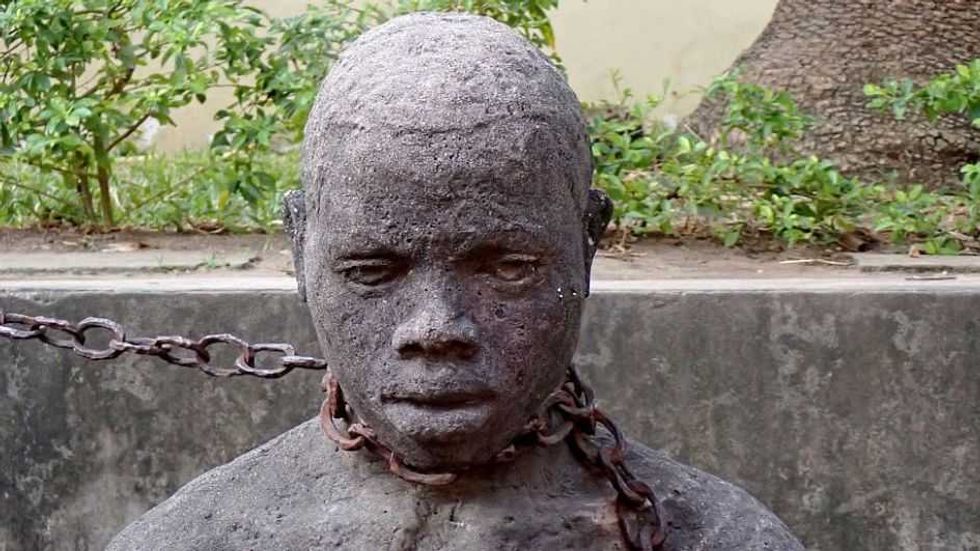
The Omani Sultanate made Zanzibar (now Tanzania) one of East Africa’s great slave-trading centers. Millions of Africans across Central and East Africa endured capture and forced migration through the wider slave-and-ivory trade, with victims marched to the coast and many sent through Zanzibar to plantations or onward to Arabia, Persia, India, and elsewhere.
When did you last hear a serious campaign demanding reparations from Oman?
Any form of “reparative justice” must eventually encounter a statute of limitations. Otherwise, we end up in an infinite regress: litigating ghosts, assigning inherited guilt and putting the morality of long-dead civilizations on trial.
If we are going to do this consistently, North African states might be presented with a bill for the Barbary slave raids on Europeans. Scandinavians can cough up for the Vikings.
Or we can go further back and charge the Italians, whose Roman ancestors under Emperor Claudius put my ancestors to work building roads and forts.
RELATED: The long defeat: What William Wilberforce can teach American Christians
 Jim Dyson/Getty Images
Making up for it
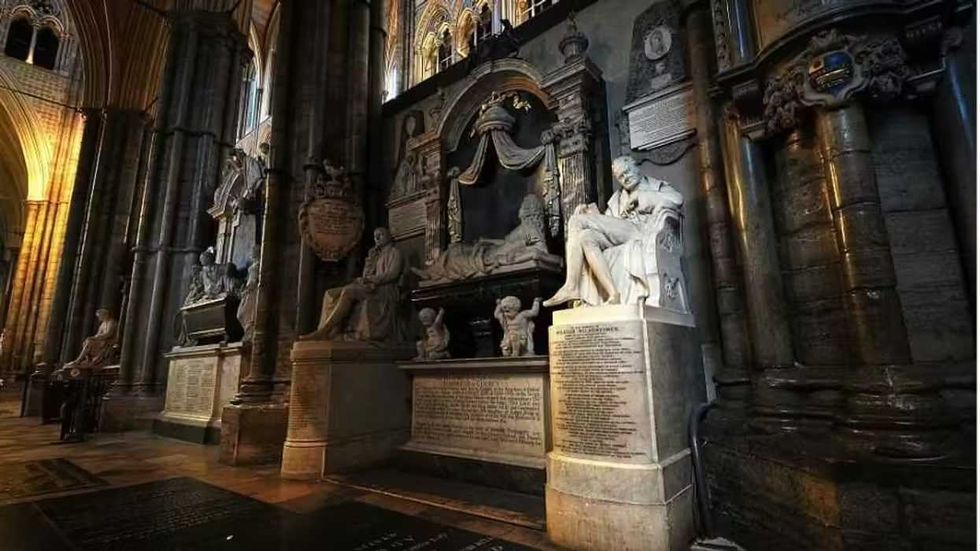
The British expended significant blood and treasure suppressing the slave trade after abolition. Parliament had already committed £20 million (roughly £2 billion in today's money — about $2.6 billion — and equivalent to around 40% of annual government expenditure at the time) to compensate slave owners for the loss of their “property.”
The government had to borrow heavily to finance the compensation, and much of that borrowing was later folded into other liabilities. A government bond containing some of the original slavery-compensation obligation was not finally paid off until 2015.
The Royal Navy’s West Africa Squadron, meanwhile, spent more than half a century hunting slave ships along the African coast. It captured roughly 1,600 vessels and liberated around 150,000 Africans.
The posting was notoriously brutal. West Africa was known among Europeans as the “White Man’s Grave,” where malaria, yellow fever, and dysentery killed sailors far more readily than combat. Thousands of British sailors died while serving on the station, most from tropical disease, as the squadron continued intercepting slave ships in some of the harshest conditions in the Royal Navy.
Against that history, the latest reparations estimate is breathtaking. Former International Court of Justice judge Patrick Robinson helped produce a calculation putting Britain’s liability at roughly £18 trillion — a sum that would lock the country into debt for generations.
Ongoing problem
Speaking of debt bondage, the International Labour Organization estimates that nearly 50 million people are living in modern slavery today — 28 million in forced labor and another 22 million in forced marriages.
Meanwhile, UNICEF has estimated that roughly 40,000 children — some as young as 7 — work in mines across southern Congo, many of them in the cobalt trade. Some labor underground in poorly reinforced tunnels where collapses can kill or maim them — digging minerals that feed the global battery supply chain so climate zealots in L.A. can drive around in virtue-signaling eco cars.
Where are the reparations for them?
Endless chain
When it comes to historical grievance and perpetual victimhood, two can play that game.
Jamaica spent centuries flooding Britain with rum. By the late 18th century, Jamaican distillers were shipping millions of gallons a year across the Atlantic, supplying nearly 90% of Britain’s imported rum. Think of the alcoholism. The cirrhosis. The drunken fistfights. The regrettable tattoos. Perhaps Britain should send Kingston the bill.
Absurd? Of course. That is the point. History is an endless chain of conquest, exploitation, migration, cultural exchange, brutality, and inheritance. Follow the logic of collective ancestral liability far enough and everybody eventually becomes both plaintiff and defendant.
Mottley herself is a formidable example of the ambiguity the reparations movement prefers to flatten. She attended Queen’s College in Barbados, one of the island’s oldest elite schools — a distinctly British colonial inheritance, founded in 1883 to provide an education modeled on Britain’s leading institutions. From there, she went to the London School of Economics.
Now she leads a movement that puts education and public instruction at the center of its reparations program, alongside demands for money, debt relief, and other forms of redress.
King Charles, meanwhile, is preparing for another Caribbean trip and Commonwealth summit this autumn, where Buckingham Palace says he will again acknowledge Britain’s role in slavery but will not issue an apology. The British government continues to reject paying reparations.
Good.
There is nothing wrong with studying slavery, mourning its victims, or acknowledging the wealth and institutions it helped create. But if Caribbean governments want to put a price tag on that history, Britain should answer with some history of its own.
More from this network:
Domains for Sale · GOTPeople.org · TheDSAPlatform · The Truth About Socialism
What's Your Reaction?
 Like
0
Like
0
 Dislike
0
Dislike
0
 Love
0
Love
0
 Funny
0
Funny
0
 Wow
0
Wow
0
 Sad
0
Sad
0
 Angry
0
Angry
0

I am just an average American. My teen years were in the late 70s and I participated in all that that decade offered. Started working young, too young. Then I joined the Army before I graduated High School. I spent 25 years in, mostly in Infantry units. Since then I've worked in information technology positions all at small family owned companies. At this rate I'll never be a tech millionaire. When I was young I rode horses as much as I could. I do believe I should have been a cowboy. I'm getting in the saddle again by taking riding lessons and see where it goes.
Premium domains for sale














Comments (0)