

Budget Chairs Push Reconciliation 2.0. Can It Get off the Ground?

Premium domains for sale
Freedom Is Back In Style
Republican Sen. Lindsey Graham says a party line budget bill could enact major conservative legislative goals, from funding the Department of Homeland Security (DHS) to requiring photo identification in elections.
Freedom Is Back
In Style
Premium domains for sale
But does his ambitious plan have buy-in from the House conservatives whose support it needs to pass?
“The Senate [Budget] Committee will expeditiously move toward creating a second budget reconciliation bill,” Graham, R-S.C., wrote on X Wednesday morning.
Budget reconciliation allows for Congress to enact major changes to fiscal policy and can be passed with a simple majority in the Senate.
Republicans used it in July 2025 to prevent the expiration of President Donald Trump’s 2017 tax cuts with the “big, beautiful bill.”
Graham is pitching another reconciliation bill to accomplish three goals: provide funding to the Department of Homeland Security (DHS) that Democrats are blocking in the Senate, fund the military, and enact a photo identification requirement in federal elections.
Conservatives have for months been calling for the passage of the SAVE America Act, a bill requiring photo identification and proof of citizenship in federal elections.
Jodey Arrington
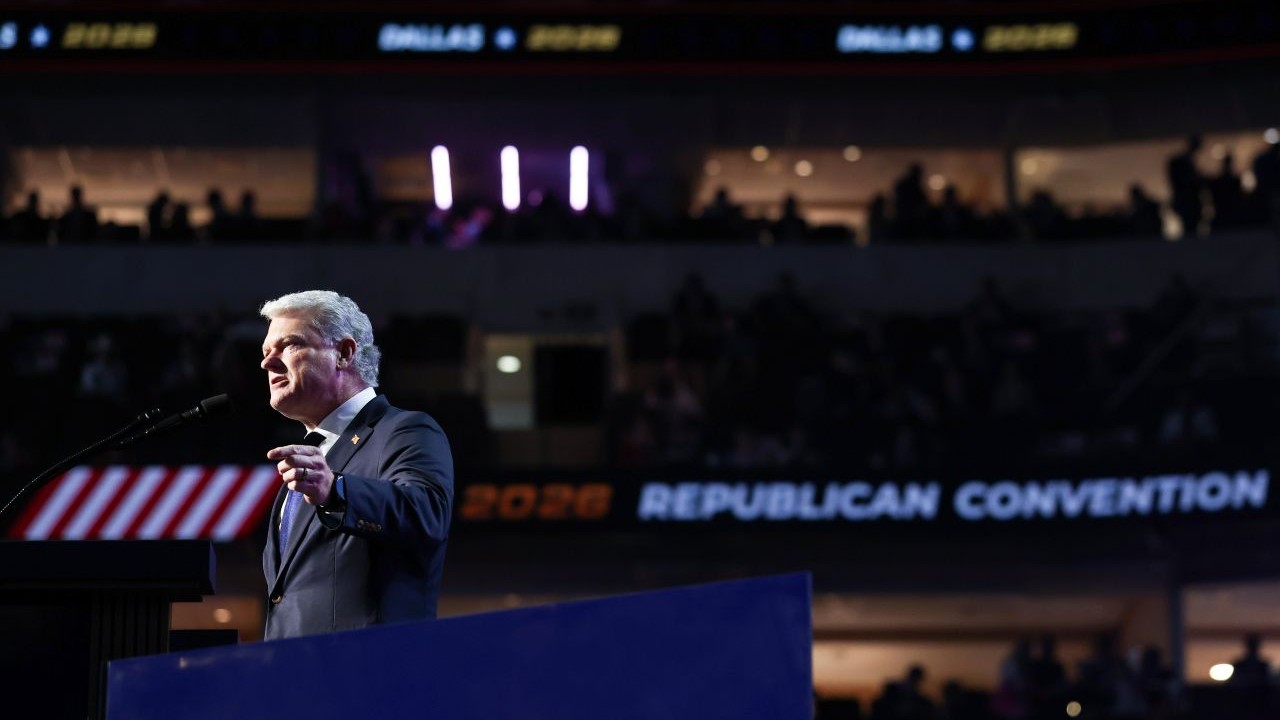
Graham’s House counterpart, budget committee chairman Jodey Arrington, R-Texas, told The Daily Signal on Wednesday that he is eager to pursue a reconciliation bill.
He argued Democrats’ refusal to work with Republicans on funding provides the “motivating dynamic” necessary for a narrow Republican majority to unite.
Arrington says there are three reasons for Republicans to act with urgency: the military wants support for the Iranian conflict, DHS is shut down without funding, and time is running out before the midterms.
“The closer we get to November, the harder it’s going to be to wrangle these wild bulls in there,” the West Texas congressman said, pointing to the House chamber.
“They just get wilder. … It becomes less likely to do something significant when you’re getting closer to November.”
Arrington revealed he would be meeting with Graham later on Wednesday to discuss advancing the plan.
In his vision, the bill would provide funding for the federal government while also targeting waste and fraud in federal programs.
He described himself as “more inclined on the fiscal reform side” while Graham is “more inclined on the defense spending side.”
He argued these differing approaches could help build a durable Republican coalition to pass an ambitious bill.
“The fiscal hawks in the chamber and the defense hawks will be able to lock arms and walk this thing forward together in a way that I think is going to be the kind of momentum you need when you have a one vote margin.”
Arrington called for targeting waste in dozens of government programs, as well as reviving provisions that were removed from the previous reconciliation bill, such as funding health care cost-sharing reductions (CSRs)
SAVE America in Reconciliation?
However, House members are generally skeptical reconciliation could be used to advance the goals of the SAVE America Act, since the rules of the process are meant to exclude provisions that are more policy-oriented than budgetary.
Graham “needs to show me how the SAVE America act, which is policy, can be in reconciliation,” Rep. Ralph Norman, R-S.C., a conservative hardliner on the House budget committee, told The Daily Signal.
“It’s got to be … a budget issue,“ Norman added. “I don’t know that it’s possible.”
Senate parliamentarian Elizabeth MacDonough, essentially the chamber’s referee, has in the past blocked the party in power from pursuing policies from enacting a nationwide $15 minimum wage to blocking federal funding of transgender procedure for minors.
“I think there are ways to put program integrity measures intro reconciliation, but you have to craft it in a way so that there’s a material budgetary impact,” Arrington told The Daily Signal of the SAVE America Act.
“I’m not going to predetermine what that would look like, but you have to craft it the right way,” he added.
Rep. Josh Brecheen, R-Okla., who also sits on the budget committee, told The Daily Signal in a statement he does “not want to overpromise and underdeliver by suggesting that the SAVE America Act can be enacted through reconciliation.”
Brecheen added he remains open to discussions with senators on how it could survive the parliamentarian but expressed doubts about its feasibility through reconciliation as opposed to a “talking filibuster” approach.
Rep. Bryan Steil, R-Wis., a SAVE America Act supporter who chairs the House administration committee, which handles federal election policy, acknowledged concerns about the parliamentarian potentially striking down a voter ID provision.
“Ultimately, it’s a play call by the Senate parliamentarian, which frustrates a lot of us here in the House,” said Steil on whether voter identification requirements could make it into law via reconciliation.
In the Senate, senators are able to modify and re-submit provisions to the parliamentarian until they pass muster.
In theory, Senate Majority Leader John Thune, R-S.D., could simply fire the parliamentarian, or the Senate could overrule her, although both of these options are exceedingly unlikely.
Thune has already indicated he intends to comply with MacDonough’s rulings.
Steil added that, if Republicans choose to use reconciliation to advance election provision, its efficacy depends on “how far can we go against the Senate parliamentarian.”
The post Budget Chairs Push Reconciliation 2.0. Can It Get off the Ground? appeared first on The Daily Signal.
More from this network:
Domains for Sale · GOTPeople.org · TheDSAPlatform · The Truth About Socialism
What's Your Reaction?
 Like
0
Like
0
 Dislike
0
Dislike
0
 Love
0
Love
0
 Funny
0
Funny
0
 Wow
0
Wow
0
 Sad
0
Sad
0
 Angry
0
Angry
0

I am just an average American. My teen years were in the late 70s and I participated in all that that decade offered. Started working young, too young. Then I joined the Army before I graduated High School. I spent 25 years in, mostly in Infantry units. Since then I've worked in information technology positions all at small family owned companies. At this rate I'll never be a tech millionaire. When I was young I rode horses as much as I could. I do believe I should have been a cowboy. I'm getting in the saddle again by taking riding lessons and see where it goes.
Premium domains for sale












Comments (0)