

California’s Lawsuit Industry Is Driving Businesses Away
Premium domains for sale
Freedom Is Back In Style
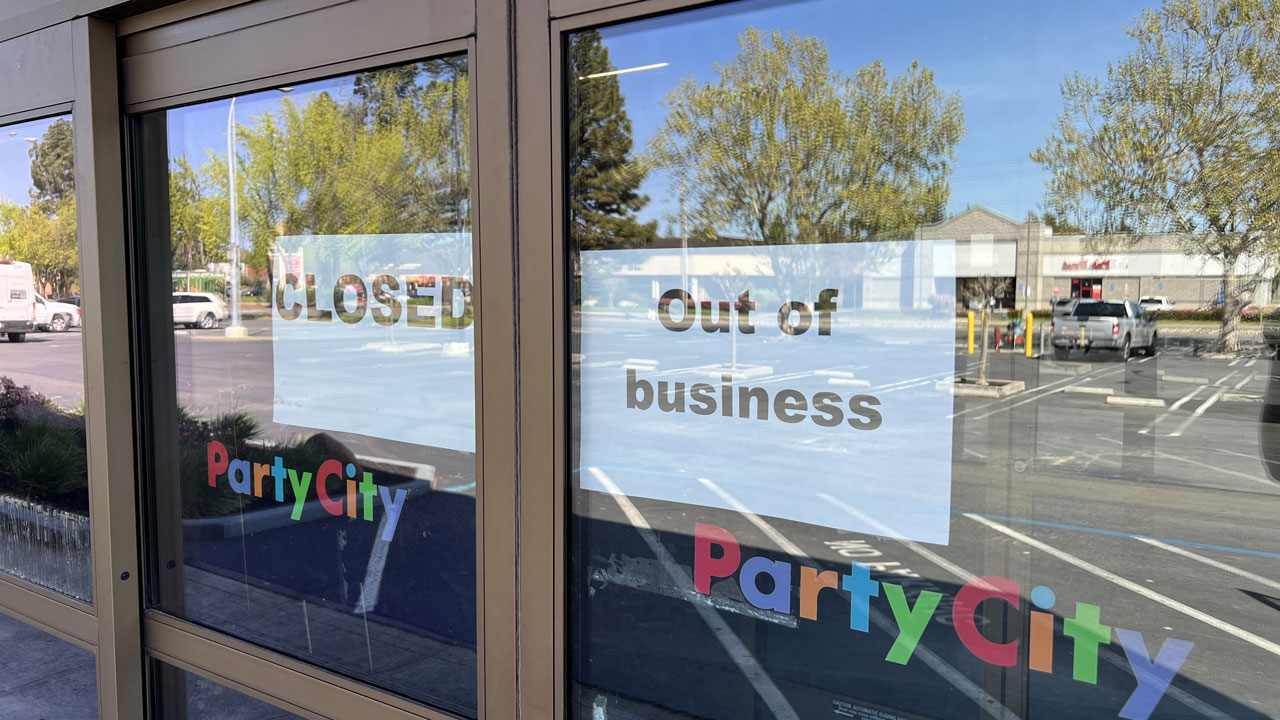
When it was reported that Paramount is considering leaving California, many politicians looked for ways to keep one of the largest moviemakers in Hollywood. But few looked for reasons why employers are packing their bags in the first place.
Freedom Is Back
In Style
Premium domains for sale
Chevron, Tesla, Oracle, and more Fortune 500 companies have already left for other states. And all cited an unfriendly business environment.
High taxes and onerous regulation are big parts of that story, but California’s legal environment has also chased big taxpayers out of the state.
The Golden State is a troubling example of what happens when workplace litigation becomes an industry unto itself. From the beginning of this year through August, nearly 2,000 California workplace disputes reportedly settled for a combined $1.63 billion. Some undoubtedly involved workers who had been genuinely wronged and were entitled to compensation.
But over the years, an enormous cottage industry has grown from workplace lawsuits and employment claims, in part because many employers acknowledge that even claims with some merit can cost enormous sums to defend.
Sometimes paying a settlement is simply cheaper than proving you did nothing wrong.
Such litigation creates a dangerous incentive and raises questions that receive far less attention than the size of the settlements: What obligation does a lawyer have to determine not merely whether a workplace claim can be brought, but whether it should be?
When did being a good lawyer become primarily about what you can do rather than what you should do?
Law schools still teach ethics. There are courses, professional codes, and elaborate rules governing what attorneys may and may not do.
But rules are not morality.
And somewhere along the way, too many have confused the two.
When a potential client walks into a lawyer’s office angry at a former employer, how often does the lawyer begin with the most important question: “What actually happened?”
And how often does the conversation become: “What can we turn this into?”
An employee leaves angry. Maybe she didn’t receive the promotion she wanted. Maybe he was fired for poor performance. Maybe nothing bad ever happened; it just wasn’t a good fit.
Then a lawyer enters the picture.
A workplace disagreement becomes employer retaliation. An offensive comment becomes harassment—and a lawsuit.
Real harassment exists. Real discrimination exists. People who have been mistreated are entitled to have their story heard.
That is precisely why dishonest claims should offend everyone.
Every manufactured accusation diminishes a legitimate one. Every lawyer who knowingly stretches the truth makes it harder for the next person who walks through the door with a real injustice.
And the damage extends far beyond the courtroom.
Businesses don’t have bottomless bank accounts.
Their revenue hires the next employee. It pays for health insurance. It gives someone a raise. It funds Christmas bonuses. It gives a young person an internship.
When that money disappears into unnecessary litigation, somebody pays.
The honest, hardworking secretary who earned a bonus may never get it because the business had to pay a settlement instead.
The employee who was never hired will never know why.
The mother whose raise disappeared will never see the settlement someone else got instead.
The entrepreneur who concludes California simply isn’t worth the risk may quietly take his moonshot somewhere else.
The moral obligation to resist this temptation is biblical. Exodus 23:7 commands: “Keep far from a false charge.”
Not merely: Do not lie. But instead: Keep far away from falsehood. Those words demand more than technical compliance.
American history contains a remarkable example of a lawyer who understood this.
In 1770, British soldiers fired into a crowd in Boston, killing five colonists.
John Adams opposed British policies. The dead were his fellow colonists. The soldiers represented the government he opposed.
But Adams did something extraordinary: He defended the British soldiers.
His friends were on one side. His political sympathies were on one side. His financial interests were on one side.
Justice was on the other. Adams chose justice.
He endured intense criticism and financial loss but later described his defense as one of the most “disinterested” actions of his life and one of the best services he ever rendered his country.
More than 250 years later, we remember him not because defending those soldiers was popular. We remember him because what he did was moral.
That is what our law schools should teach. Teach students the rules, certainly. Teach them procedure. Teach them how to construct an argument and how to dismantle one.
But teach them something more important: Teach them winning and justice are not synonyms.
Teach them the law gives them enormous power over another human being’s reputation, livelihood, and future.
And teach them that possessing the power to destroy someone does not necessarily give you the moral right to use it.
America desperately needs lawyers who will fight ferociously for people who have truly been wronged. But we also need lawyers with enough character to look at a potentially lucrative case and say: I could make money from this. I might even win. But it is not just.
Civilizations do not maintain justice through rules alone. Rules can be interpreted. Loopholes can be found. Words can be manipulated.
Ultimately, justice depends upon the character of the people entrusted to administer it.
Someday our children will inherit the legal culture we create.
They will inherit either a system in which law has become a weapon for extracting whatever one can get, or one still governed by men and women capable of placing truth above tribe, above money, and even above victory.
John Adams made his choice. Every lawyer eventually makes the same one.
And when that moment comes, the most important question will not be, “Can I win?” It will be: “Is it just?”
California is imploding in large part due to this legal environment. But if more people learned from these consequences of turning away from morality, American businesses and American workers would be better for it.
We publish a variety of perspectives. Nothing written here is to be construed as representing the views of the Daily Signal.
More from this network:
Domains for Sale · GOTPeople.org · TheDSAPlatform · The Truth About Socialism
What's Your Reaction?
 Like
0
Like
0
 Dislike
0
Dislike
0
 Love
0
Love
0
 Funny
0
Funny
0
 Wow
0
Wow
0
 Sad
0
Sad
0
 Angry
0
Angry
0

I am just an average American. My teen years were in the late 70s and I participated in all that that decade offered. Started working young, too young. Then I joined the Army before I graduated High School. I spent 25 years in, mostly in Infantry units. Since then I've worked in information technology positions all at small family owned companies. At this rate I'll never be a tech millionaire. When I was young I rode horses as much as I could. I do believe I should have been a cowboy. I'm getting in the saddle again by taking riding lessons and see where it goes.
Premium domains for sale






















Comments (0)