

China's hottest start-up thinks it can beat the West with a new idea of freedom

Premium domains for sale
Freedom Is Back In Style
There is a piano at the entrance of Moonshot AI, the Beijing start-up that released Kimi K3, the leading open-weights model, in July 2026. The conference rooms are named after bands. Employees wear slippers. The stated ethos is that no one tells you what to do, and when new employees arrive, no one does.
Freedom Is Back
In Style
Premium domains for sale
These details are meant to communicate a refusal of corporate life as it is usually practiced in China’s large technology firms, with their KPI rituals, their departmental territories, and their hierarchies of condescension. The symbols of institutional authority have been stripped away so thoroughly that what remains can look, to the uninitiated, like nothing at all.
A young employee cried after failing to produce a campaign that satisfied leadership.
In fact, Moonshot’s system is demanding, though the demands are of a mostly unspoken kind.
Moonshot has no departments in the ordinary sense, no managerial titles, no OKRs, no time clocks, no performance reviews. Roughly 300 employees organize themselves around problems rather than roles. More than half the employees have changed responsibilities multiple times; perhaps 80% are doing work significantly different from anything they have done before. The implicit unit of production is not the job but the bottleneck. When the company’s long-context research project, MoBA, stalled repeatedly, Moonshot did not assign blame or dissolve a team; instead, it temporarily routed expertise from across the organization toward the failure, rewrote the underlying logic, and returned to the project after multiple setbacks.
The company calls this way of working “generalization,” borrowing the term from machine learning, where it means the capacity to perform under conditions not represented in the training data. Applied to people, it means something like the readiness to become someone else.
The word Moonshot uses for the quality it most values in employees is “taste.” In context, taste is not merely aesthetic preference but the ability to detect which technical direction is fertile, which complexity is decorative, which benchmark improvement matters, which eccentric teenager is capable of important work. Taste selects architecture and colleagues. At least 100 recent hires arrived through employee referrals, a process jokingly called “person-to-person transmission,” and the network produced is unmistakable: roughly 80% introverts, roughly 80% graduates of China’s elite universities, average age below 30. The scent that enables frictionless coordination also makes everyone smell alike.
This concept is where the freedom, a term not often associated with China in the U.S., reveals its structure.
Escaping the Western model
Moonshot’s organization is formally flat, but five co-founders remain involved in frontline decisions, each reportedly interacting with 40 to 50 individual contributors. The distance between strategic intent and execution is short, as is the distance between a founder’s displeasure and an employee’s nervous system. At a late 2024 growth meeting, more than 30 young employees discussed advertising, user operations, and holiday campaigns in granular detail while co-founders participated, and the meeting ended shortly before four in the morning. A young employee cried after repeatedly failing to produce a campaign that satisfied leadership. This approach is founder micromanagement without the buffer of experienced middle managers, who have been removed on the theory that their authority was organizational overfitting.
Hierarchy has been compressed into founder judgment, peer reputation, technical evidence, and the elusive criterion of taste, which appeals to tacit knowledge. In a field where reliable metrics arrive after decisions must be made, tacit knowledge can be indispensable but also unchallengeable. When the decisive quality is deliberately inarticulate, exclusion becomes invisible, and disagreement can be reframed as proof that the dissenter simply does not understand.
RELATED: Why selling your face is big bucks in China
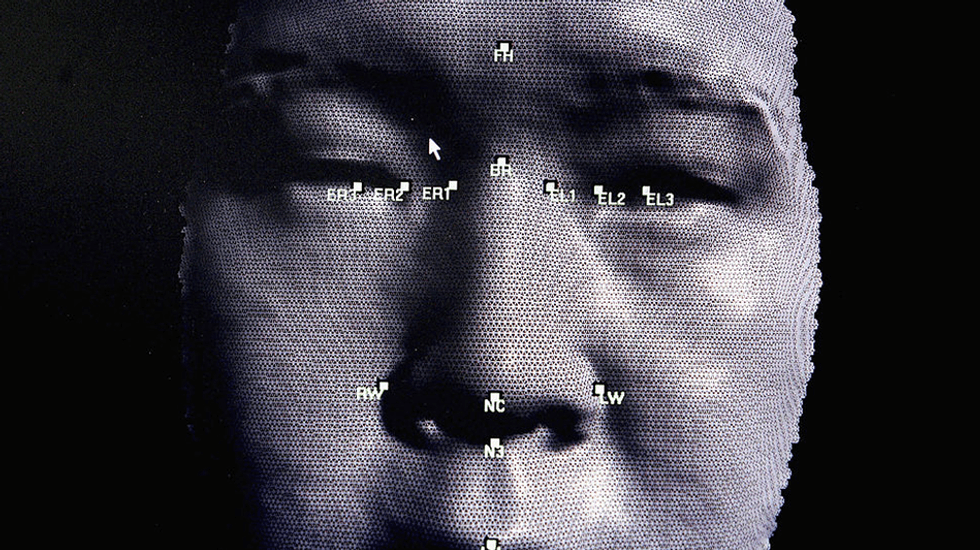 Ian Waldie/Getty Images
The company’s internal narrative attributes exceptional foresight to its founder, Yang Zhilin. One experienced hire described his existing intellectual framework “collapsing” before Yang’s vision of reinforcement learning. The organization’s unifying object, the model, gains force from founder credibility, and credibility is renewed with each frontier release: K2, K2.5, K2.6, and K3. Each model serves not only a commercial function but a legitimating one: It proves that the unusual organizational demands were justified. A prolonged period without results would make the costs of ambiguity, overwork, and intense selection much harder to bear.
K3 itself is a 2.8-trillion-parameter mixture-of-experts model. Only about 104 billion parameters activate for any given token; the rest wait, specialized and dormant, until the router calls them. Moonshot’s human organization works on the same principle: Intelligence is routed. Small groups assemble around the present problem, do the work, and dissolve.
The company sees this as an advance beyond the West's modern industrial division of labor, Taylorism, and of its bureaucratic knowledge firm.
Can it compete?
DeepSeek’s breakthrough in January 2025 supplied the external shock that made Moonshot reorganize into its current form. Before DeepSeek R1, Moonshot had drifted toward consumer advertising, spending tens of millions of yuan on user acquisition while the model itself received less organizational energy. DeepSeek demonstrated that a Chinese start-up could earn global prestige through engineering and open releases rather than marketing. One Moonshot employee’s formulation was blunt: “DeepSeek saved us.” The competitor had supplied evidence strong enough to overturn Moonshot’s prior strategy.
The correction was swift. Moonshot retreated from paid acquisition, renewed its focus on the model, embraced open weights, and reoriented its products toward agents, coding, and professional work. K3 arrived as vindication. Within days of release, demand exceeded forecasts and approached the limits of existing compute clusters. In response, Moonshot had to suspend new consumer subscriptions. The episode was strategically encouraging and operationally sobering: a successful product had created an infrastructure crisis precisely because its intended use worked.
Moonshot has replaced visible bureaucracy with invisible constraints of system prompts, agent traces, tool permissions, context windows, routing logic, and the model’s own learned behavior. Employees who once navigated reporting chains now navigate a founder’s attention. The forms have changed, but the pressure has not. Accounts of tears, sleeplessness, severe self-doubt, and inverted schedules recur in descriptions of life inside the company. They are narrated as evidence of resilience.
K3 demonstrates that Moonshot can build frontier models. It remains to be seen how well a system that depends on founder bandwidth, cultural homogeneity, abundant trust, and the nervous energy of 300 people who have been told they are geniuses can make the transition to a durable institution.
More from this network:
Domains for Sale · GOTPeople.org · TheDSAPlatform · The Truth About Socialism
What's Your Reaction?
 Like
0
Like
0
 Dislike
0
Dislike
0
 Love
0
Love
0
 Funny
0
Funny
0
 Wow
0
Wow
0
 Sad
0
Sad
0
 Angry
0
Angry
0

I am just an average American. My teen years were in the late 70s and I participated in all that that decade offered. Started working young, too young. Then I joined the Army before I graduated High School. I spent 25 years in, mostly in Infantry units. Since then I've worked in information technology positions all at small family owned companies. At this rate I'll never be a tech millionaire. When I was young I rode horses as much as I could. I do believe I should have been a cowboy. I'm getting in the saddle again by taking riding lessons and see where it goes.
Premium domains for sale






















Comments (0)