

Church Ladies’ War On Halloween Leaves Faith Out In The Cold
Premium domains for sale
Freedom Is Back In Style
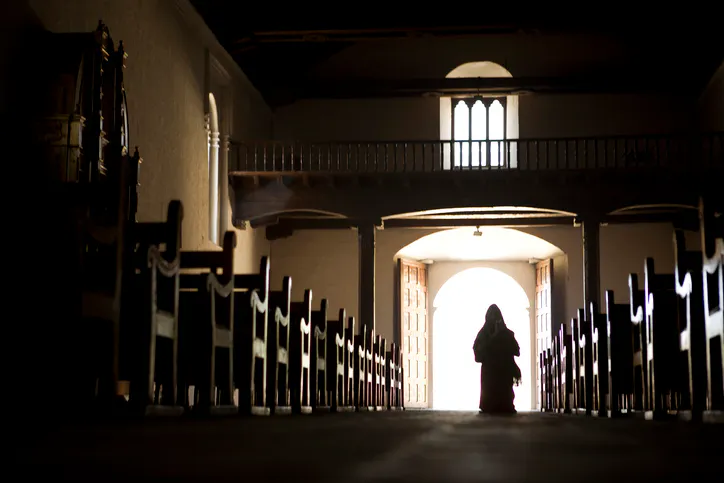
On the fourth floor of Saint Joseph’s Oratory in Montreal, a human heart sits in a glass case. It belonged to Brother André Bessette. It may still belong to him. André is a saint now, and the basilica stands on that hill largely because of him. When he died in 1937, at 91, Archbishop Georges Gauthier decided Andre’s heart should stay. It was a medieval custom from France and Italy, mostly reserved for kings. The archbishop rightly understood that a man who had spent decades as a doorkeeper and loved the people of Montreal was worthy.
Freedom Is Back
In Style
Premium domains for sale
I am a cook. When I stand in front of that heart, I think about how it got there. It did not arrive in the case on its own, after all. In the hours after he died, before the crowds came, someone opened his chest, cut through the great vessels, and lifted it out. I have done the same work on animals more times than I can count, and it isn’t pretty. But it is true, and I think it is healthy to know where things come from.
Because of that, not in spite of it, the heart moves me to pray in ways I can’t always reach in ordinary life. A kneeler sits in front of the case. On my last visit, I knelt there and prayed for my wife and son, whom I was missing badly, and I cried.
This week, Allie Beth Stuckey told her listeners that Christians shouldn’t be fans of horror. She explained that the Bible tells us again and again not to fear, and horror exists to make us afraid.
She has a point. I read and watch a lot of horror. I have written and sold a little of it, and I can tell you that much of what gets made now has lost whatever the genre was for. There is a whole market for films and books that are less art than gore pornography.
I am also the son of a Baptist preacher, and in 1999 I was the Southern Baptist Convention’s Bible quiz champion for the state of Florida. So I will admit there is a great deal of Scripture on her side. From the Old Testament to the New, we are told to guard our minds against needless fear, needless filth, and plain lies. Paul puts it best in his letter to the Philippians: “Finally, brothers, whatever is true, whatever is honorable, whatever is just, whatever is pure, whatever is lovely, whatever is commendable, if there is any excellence, if there is anything worthy of praise, think about these things.”
It is a good verse. As a boy, in a very Protestant way, I memorized it and swung it around without context. It wasn’t until my twenties, after some literary training, that I realized Paul wrote that letter from prison, not knowing whether Rome would kill him. With balls the size of cantaloupes, he tells the Philippians in the same letter that to die is gain. While staring his own death in the face, he wrote these things.
That kind of honesty, looking at real horror with a sober mind, sits at the center of Christian and therefore Western thought. And I think this is why my first reaction to her video was something like “Dear God, can you people please just be normal for one second.” Stuckey’s argument is strange because it has more in common with New Age bliss or Eastern Buddhism than with anything Christian or American.
This Saturday is Halloween. Across the country, children in cheap plastic costumes will walk up to strangers’ doors and say “Trick or treat.” When I picture America, I often picture this. Leaves on the sidewalks, families walking in the dark, a bowl of candy on every porch. I’m not sure whether it’s the cold or the costumes, but it makes me optimistic, and it makes me neighborly. It is a Norman Rockwell print that comes to life once a year.
I worry about it going away. Every year, there are more reasons to stay home. There are the doorbell cameras, the soulless cul-de-sacs, the neighbors whose names we can’t learn. In a world like that, I understand the urge to turn off the horror movie and pretend everything is fine. I understand why one might shut himself off from his neighbors and retreat into his own safe bubble. But we cannot do that.
Ghost stories are told around fires. Horror movies are watched in the dark, where a room full of teenagers jumps at the same moment. Fear was always meant to be shared. So is life. Alone, a frightening story has nowhere to go, and a lonely person can control only what he lets in.
The urge to make a morality out of what we consume is nothing new. I have seen 20 versions of it in my lifetime, and so have you. From heavy metal to Harry Potter, there is always someone in the corner promising that this one leads to hell. Jesus had an answer for this, and as a cook I am fond of it: “It is not what goes into the mouth that defiles a person, but what comes out of the mouth.” Still, Stuckey’s version feels particularly modern, the kind of thing that could only happen in a society that has come apart, where consumption is confused for action.
Michel Houellebecq is the great novelist of this condition. His best-known novel was published in English as “Atomised.” His characters live without God and without each other, useful to the world mainly as consumers, and he writes about them with serious horror and some humor. In his masterpiece “Submission,” the main character, who is a scholar of Huysmans (the French decadent who converted to Catholicism), lives a very lonely modern life, and without the communion of the saints, he cannot hear God’s voice. He goes to the Rocamadour, prays, and feels nothing.
It makes sense then that his first book was about the horror writer H.P. Lovecraft. Lovecraft’s monsters are ancient and vast and indifferent, and the universe they move through is empty of God. Houellebecq correctly understood Lovecraft as a lonely man in a rented room, drawing his loneliness at the size of the cosmos.
So what are we to do with these monsters? If not run from them?
G.K. Chesterton gave a helpful answer while writing to a fellow author of fairy tales. “The baby has known the dragon intimately ever since he had an imagination,” he wrote in 1909. “What the fairy tale provides for him is a St. George to kill the dragon.” Instead of giving the child a lock for his nursery door, Chesterton suggested we give the child a saint to fight the dragon.
The day after Halloween is All Saints. The day after that is All Souls, when the Church prays for its dead by name. The Christian universe is not empty. It is crowded. From the hills in Montreal to the streets of Jacksonville, Florida, the answer to fear is not a retreat into your own personal consumption but an embracing of community. Any suggestion that you should look away from horror, or retreat into fake worlds, should be ignored and dismissed with the stories and tales needed to properly manage the fear. Without them, we’re hopelessly alone.
***
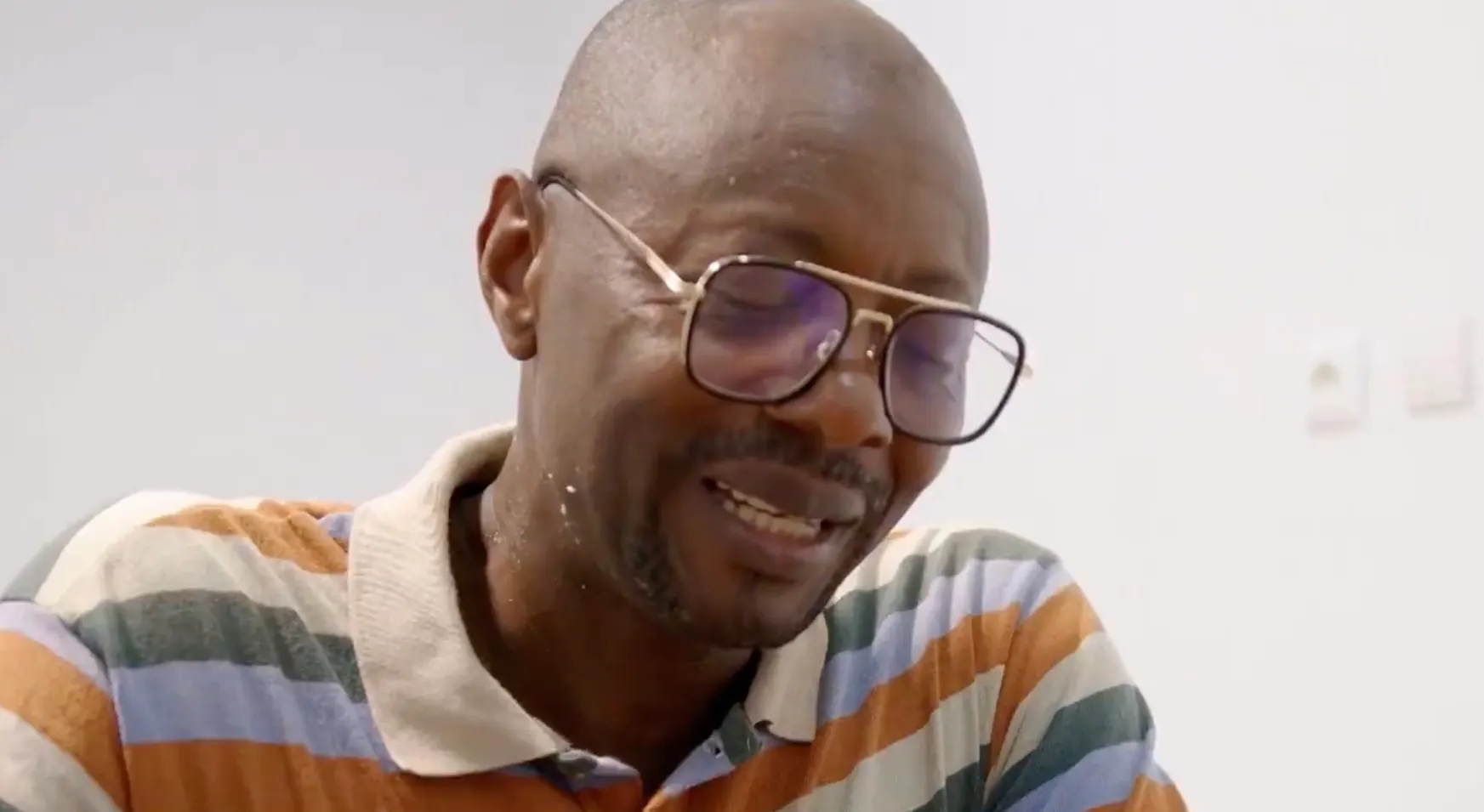
Bart Hutchins is the chef and owner of Butterworth’s in Washington, D.C. He’s on X @whiteguyfieri.
More from this network:
Domains for Sale · GOTPeople.org · TheDSAPlatform · The Truth About Socialism
What's Your Reaction?
 Like
0
 Dislike
0
 Love
0
 Funny
0
 Wow
0
 Sad
0
 Angry
0

I am just an average American. My teen years were in the late 70s and I participated in all that that decade offered. Started working young, too young. Then I joined the Army before I graduated High School. I spent 25 years in, mostly in Infantry units. Since then I've worked in information technology positions all at small family owned companies. At this rate I'll never be a tech millionaire. When I was young I rode horses as much as I could. I do believe I should have been a cowboy. I'm getting in the saddle again by taking riding lessons and see where it goes.
Premium domains for sale

















Comments (0)