

Conservative Justices Appear Skeptical Of Trump’s Birthright Citizenship Arguments
Premium domains for sale
Freedom Is Back In Style
The Supreme Court on Wednesday morning heard arguments on President Donald Trump’s executive order limiting birthright citizenship.
Freedom Is Back
In Style
Premium domains for sale
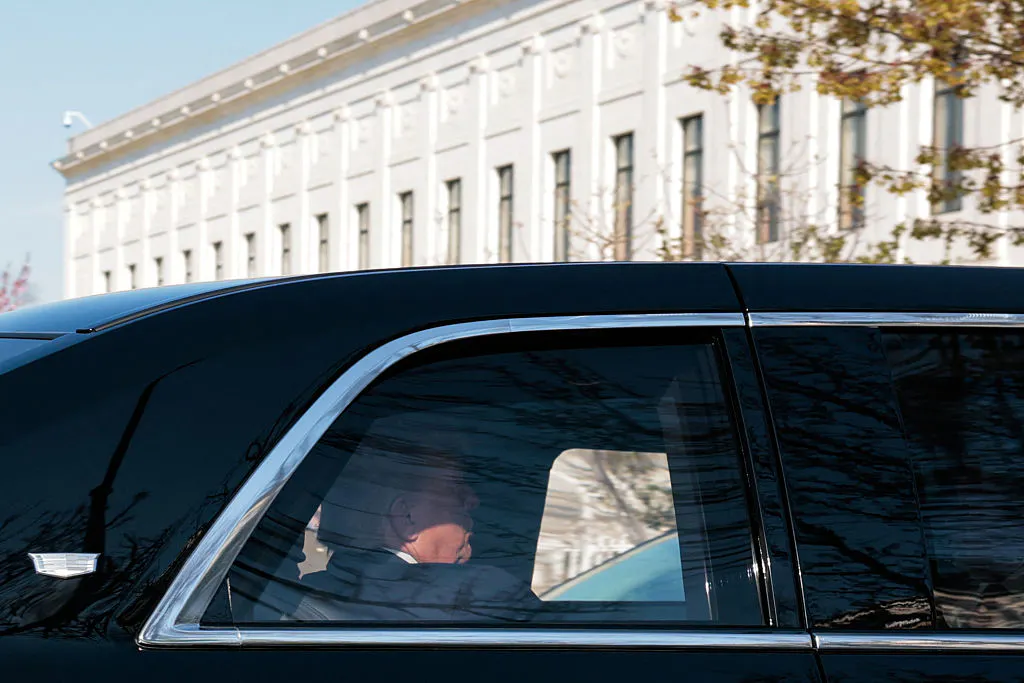
Trump attended part of the hearing, becoming the first sitting president in history to sit in on Supreme Court oral arguments. Trump sat in the hearing while Solicitor General D. John Sauer presented the administration’s argument and then left the Supreme Court once Sauer finished his argument.
“We are the only Country in the World STUPID enough to allow ‘Birthright’ Citizenship!” Trump posted on Truth Social shortly after the conclusion of the oral arguments.
The case centers on the Trump administration’s interpretation of the 14th Amendment, and the president’s attempt to clarify who qualifies as a person born in the United States and “subject to the jurisdiction thereof.” The White House argues that the 14th Amendment “has always excluded from birthright citizenship persons who were born in the United States but not ‘subject to the jurisdiction thereof.'”
Based on this understanding, Trump’s executive order states that a baby born to parents who were not American citizens or lawful permanent residents at the time of the birth should not automatically be granted citizenship. Trump’s order also states that a baby born to parents who were in the United States lawfully, but only on a temporary tourist or student visa, should not be granted citizenship.
The three liberal justices quickly signaled their opposition to Trump’s executive order, and Chief Justice John Roberts, along with conservative Justices Neil Gorsuch, Brett Kavanaugh, and Amy Coney Barrett, expressed some skepticism about the Trump administration’s historical arguments.
Roberts said he was confused by some of the Trump administration’s arguments, adding that Sauer was relying on “very quirky” exceptions to birthright citizenship, such as children born to enemies during an invasion or occupation or children born to foreign diplomats.
Roberts also pushed back on Sauer after the solicitor general argued, “It’s a new world where eight billion people are a plane ride away from having a child who’s a U.S. citizen.”
“It’s a new world; it’s the same Constitution,” Roberts replied.
Conservative Justice Samuel Alito signaled agreement with some of the Trump administration’s historical argument related to birthright citizenship questions addressed in the 1898 case United States v. Wong Kim Ark. In that case, justices ruled 6-2 that a man born in the United States to Chinese-citizen parents automatically became a U.S. citizen under the 14th Amendment. While the 1898 ruling ruled in favor of applying the 14th Amendment to babies of foreign citizens, the Trump administration has pointed the court’s description of foreign parents as “resident aliens” in defense of its argument that babies born to illegal immigrants are not “subject to the jurisdiction” of the United States.
At one point during the hearing, however, conservative Justice Neil Gorsuch expressed skepticism about the administration’s arguments on Wong Kim Ark.
“I am not sure how much you want to rely on Wong Kim Ark,” Gorsuch said.
Justices Gorsuch and Samuel Alito pressed ACLU lawyer Cecillia Wang on important questions around the term “domicile,” which was mentioned many times in Wong Kim Ark. The Trump administration argues that the Constitution’s framers understood that a person had to be domiciled in the United States to be a citizen.
Alito also acknowledged there is confusion around the phrase in the 14th Amendment, “subject to the jurisdiction thereof.”
“‘Subject to the jurisdiction thereof’ is the puzzle wrapped in an enigma wrapped in a mystery,” Alito said.
The Trump administration argues that the Constitutional phrase means that people who travel to the United States from foreign countries remain subjects of their home government, meaning their children should be exempted from birthright citizenship. Those challenging Trump’s order agree that “subject to the jurisdiction thereof” sets up exceptions for birthright citizenship, but those exceptions are limited to children of foreign diplomats and babies born to enemies during an invasion.
Trump’s birthright citizenship order was one of the many moves he made on his first day back in office last January to address illegal immigration. The president has argued that migrants often take advantage of birthright citizenship by giving birth to children on American soil after crossing the border illegally.
The 14th Amendment, which was ratified just three years after the end of the Civil War, clarified that the children born to African slaves were American citizens.
“Birthright Citizenship is not about rich people from China, and the rest of the World, who want their children, and hundreds of thousands more, FOR PAY, to ridiculously become citizens of the United States of America,” Trump said on Monday. “It is about the BABIES OF SLAVES!”
The president’s order was never allowed to go into effect, as it was blocked by federal courts around the country immediately after Trump signed it. Groups opposed to Trump’s interpretation of the 14th Amendment argue that birthright citizenship has always been understood to apply to anyone born in the United States.
This is a developing story and will be updated.
More from this network:
Domains for Sale · GOTPeople.org · TheDSAPlatform · The Truth About Socialism
What's Your Reaction?
 Like
0
Like
0
 Dislike
0
Dislike
0
 Love
0
Love
0
 Funny
0
Funny
0
 Wow
0
Wow
0
 Sad
0
Sad
0
 Angry
0
Angry
0

I am just an average American. My teen years were in the late 70s and I participated in all that that decade offered. Started working young, too young. Then I joined the Army before I graduated High School. I spent 25 years in, mostly in Infantry units. Since then I've worked in information technology positions all at small family owned companies. At this rate I'll never be a tech millionaire. When I was young I rode horses as much as I could. I do believe I should have been a cowboy. I'm getting in the saddle again by taking riding lessons and see where it goes.
Premium domains for sale


Comments (0)