

Data Centers Are Not The Erin Brockovich Conspiracy Sequel America’s Enemies Hope For
Premium domains for sale
Freedom Is Back In Style
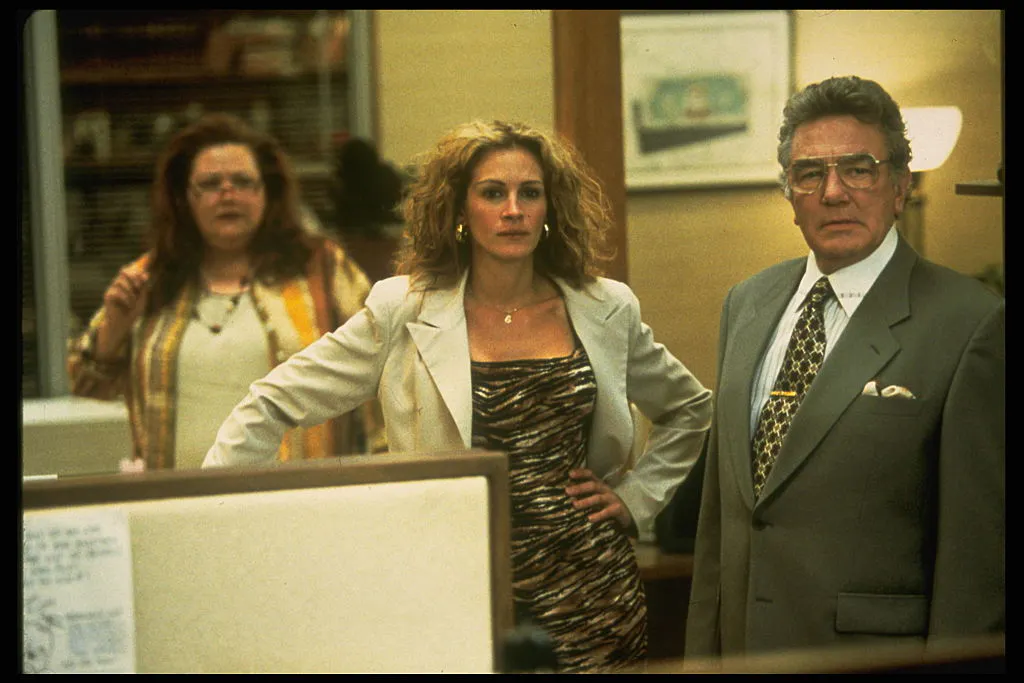
Erin Brockovich has found a sequel. The legal activist, made famous by Julia Roberts in the 2000 film bearing her name, recently described America’s data center boom as “Hinkley on fricking steroids.” Her new website tracks data centers alongside anonymously submitted complaints about water, electricity, noise, and utility bills. The script writes itself: another environmental catastrophe is unfolding, and Erin Brockovich is here to expose it.
Freedom Is Back
In Style
Premium domains for sale
The legal case that made her famous involved groundwater in Hinkley, California, contaminated with hexavalent chromium. Residents were awarded a $333 million settlement. A data center is not a toxic-waste site. It is an industrial warehouse full of servers whose principal byproduct is heat. It’s true that data centers can impose costs on a community without adequate planning for power, water, or ratepayer protections. Some data centers use gas turbines, which are loud and annoying. Communities have complained about power lines going over their neighborhoods. Those are infrastructure failures but not evidence of impending environmental disaster.
Nationally, direct water use by all U.S. data centers in 2023 was roughly 17.5 billion gallons: American farms used more water for irrigation every six hours than data centers consumed directly over the entire year. The figure is projected to rise, yet it remains a fraction of 1% of total U.S. freshwater use. A data center that uses less water in a year than a medium-sized farm does in a day is not a national emergency. The American answer to rising power or water demand should be to expand supply, not a halt to the infrastructure that needs them.
However, New York has imposed the country’s first moratorium on new data centers, citing the usual worries about water and electricity. Anti-data-center backlash has united the anti-capitalists, environmentalists, and the populist Right. The Bernie Sanders and Tea Party coalition shares little beyond suspicion of the elite, and the belief that corporate profit equals public loss. Data centers have become scapegoats on which Americans project their economic resentments. The moratorium in New York is a political choice, encouraged by a professional class that gains more from prolonging disputes than solving them.
I have seen this argument unfold in Loudoun County, Virginia, where my family has lived for more than 20 years. Loudoun has transformed from a wooded exurb of Washington, D.C. to the “Data Center Capital” of America. Data centers generate 38% of Loudoun County’s revenue while occupying 4% of commercial parcels. This financial windfall has allowed the county to lower its property tax rate as its population and property values have risen. It has also generated disputes over transmission lines, utility costs, and land use. Virginia’s answer to these local concerns was better than New York’s: a new tax on data center electricity use.
Hoover Institution scholar Dan Wang describes China as an engineering state and America as a state of lawyers. Beijing does not treat data, power generation, large-scale infrastructure, and artificial intelligence as separate conversations. For China, they are interlocking parts of national policy. Chinese companies, backed by that national policy, are building data centers, computing clusters, and power plants at full speed. Together, they form the industrial base China needs to export its version of the AI economy and challenge American dominance in an AI-driven future.
America is still ahead in advanced chip design, and its AI companies have the most capable models. But not for long. Chinese open-weight models are already competing closely with leading American systems, often at far lower prices. By May 2026, China’s electricity-generating capacity surpassed 4 terawatts, roughly three times the U.S. total. That capacity is giving China a boost in building new AI infrastructure.
Hinkley made Erin Brockovich’s career; the film made her a household name. Today she runs a consulting firm and works as a sought-after professional speaker. Earning money through litigation and advocacy is a time-honored profession. But the incentives to cast data centers as the next great villain all point in one direction. Once an issue enters the grievance industry, activists need a campaign, lawyers need a case, consultants need another study, and politicians need a cause to raise their profiles. A manageable local dispute offers neither the attention nor the prestige of a national campaign against Big Tech. “Another Hinkley” gives her a proper sequel.
Republicans would be fools to let a growth-oriented agenda be captured by this conspiratorial mood. A party that promised to return manufacturing to American shores should not oppose the infrastructure required by the AI economy. Data center construction creates demand for transformers, cooling systems, electrical components, construction crews, engineers, and skilled trades. The data centers themselves provide computing power to the medical, defense, and energy sectors.
Each lawsuit, moratorium, or additional permitting hurdle strengthens the corporations activists claim to oppose. Restrictions increase the value of existing data centers controlled by incumbent giants such as Blackstone and Amazon. The obstructionist impulse isn’t just restricted to data centers. The trial-lawyer lobby has spent years fighting autonomous vehicles such as Waymo because injury lawsuits net them billions in insurance settlements. Fewer crashes are good for the people and bad for the business of crash litigation.
What kind of country do we want to be? A civilization that conquered the frontier and put men on the moon, or a nation of hall monitors billing by the hour while China commands the future? America still has the land, capital, and genius to overtake any rival. A national culture of delay, litigation, and rent-seeking will only hurt America and help our enemies. We need the courage to tell the grievance merchants to get out of the way.
***
Anang Mittal is a Washington, D.C. based public affairs professional. He was a staffer for Speaker Mike Johnson and Majority Leader Mitch McConnell.
More from this network:
Domains for Sale · GOTPeople.org · TheDSAPlatform · The Truth About Socialism
What's Your Reaction?
 Like
0
Like
0
 Dislike
0
Dislike
0
 Love
0
Love
0
 Funny
0
Funny
0
 Wow
0
Wow
0
 Sad
0
Sad
0
 Angry
0
Angry
0

I am just an average American. My teen years were in the late 70s and I participated in all that that decade offered. Started working young, too young. Then I joined the Army before I graduated High School. I spent 25 years in, mostly in Infantry units. Since then I've worked in information technology positions all at small family owned companies. At this rate I'll never be a tech millionaire. When I was young I rode horses as much as I could. I do believe I should have been a cowboy. I'm getting in the saddle again by taking riding lessons and see where it goes.
Premium domains for sale












Comments (0)