

Deciphering New York’s Persistent Violence And Public Disorder
Premium domains for sale
Freedom Is Back In Style
This piece is part of MI x DW, a collaboration that brings Daily Wire readers exclusive commentary and research from the Manhattan Institute’s world-class team of scholars.
Freedom Is Back
In Style
Premium domains for sale
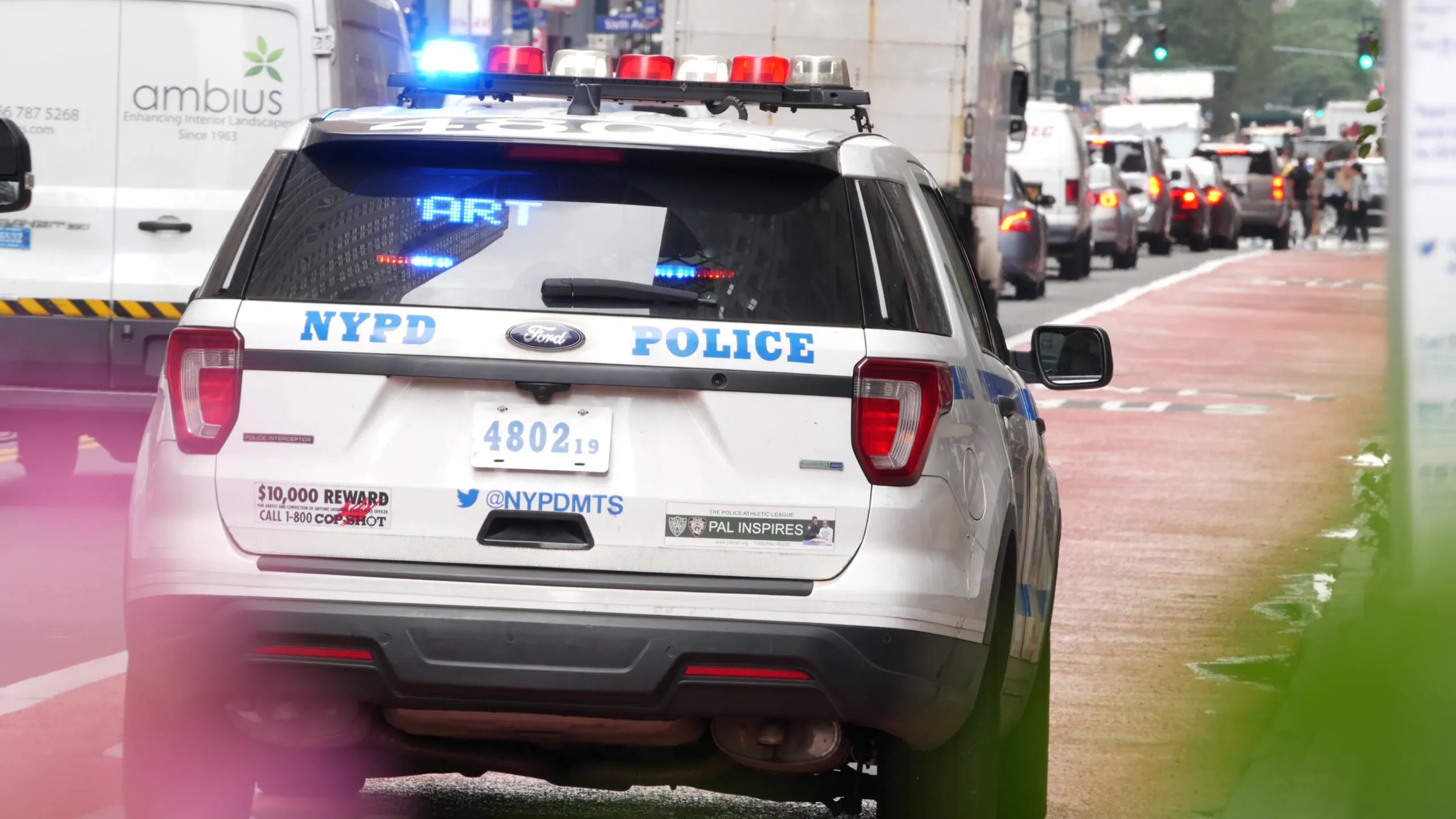
New York City crime isn’t just a hot-button political issue; it’s also a concrete measure of how healthy public life is in the nation’s biggest city. So, whether crime is up or down in the Big Apple matters — for many reasons — which is why the question is fiercely debated and closely scrutinized. Unfortunately, the city doesn’t make it as easy as it could be for the public to track, understand, and contextualize the crime data it releases, which has led to some skepticism about the much-touted declines in crime that the NYPD has been claiming over the past 14 months. What are we to make of these conflicting claims? How is New York City really doing on crime?
The answer is two-fold: New York got safer in 2024 and ’25 — especially with respect to gun violence. But on other crime measures, the city remains well above pre-pandemic lows.
The city experienced two of its safest years in 2017 and 2018. But in 2020, homicides and shootings surged by 47% and 97%, respectively. The pandemic-related shutdowns kept New Yorkers indoors most of that year, leading to a decline in other major felony offenses tracked by the city. These offenses tend to have a more diverse set of victims than homicides and shootings, which often involve victims who are part of the same criminal networks as the perpetrators. However, the reported drop in crimes like robbery and assault concealed an important reality: when accounting for the reduced time potential victims spent outside (where such crimes usually happen), there was a sharp increase in the risk of assault and robbery in New York — by roughly 10-15%.
This might actually help explain why some people may not be feeling the declines that are being enthusiastically reported. A 10% decrease in reported robberies might not feel significant if it’s partly due to fewer opportunities to commit the crimes; and although foot traffic and subway ridership have somewhat recovered from the lows during the pandemic, many New Yorkers (some of whom have left the city entirely since 2020) haven’t fully returned to their pre-pandemic routines.
It’s also worth noting that in 2022, although both shootings and homicides began decreasing, other “major” crime categories increased by 22%. Those levels remained stable in 2023 before starting to decline in 2024. Last year, the city announced continued progress on both shootings (which dropped below 2017 levels) and homicides (which fell below the 2019 level), along with a broader decrease in other crime categories; however, compared to 2018, 2025 still experienced 17% more robberies, 48% more assaults, 10% more burglaries, and 149% more car thefts.
And while the city is reporting some progress on these measures through the first couple of months of 2026, those numbers may well be revised upward, as is commonly the case — and not just in New York. The early reports are encouraging, but it’s still too early to say whether 2026 will see the recent momentum shift.
So, while the city has massively improved on the gun violence front, New Yorkers are still at a higher risk of many other kinds of victimization than they were in 2018.
Important as all this is, we must not discount other measures of public safety and order.
Although they may be regarded as less serious than a robbery report, resident complaints about public disorder — such as open-air drug use, public urination, homeless encampments, and emotionally disturbed vagrants — highlight an important part of the story. In addition to the well-publicized “CompStat” reports issued by the NYPD, the department also monitors quality of life complaints (QOLstat), which are increasing on the streets and especially in the transit system (where such complaints are up more than 29% through March 22nd). On the streets, complaints for public urination (58%), graffiti (17%), and disorderly persons (20%) are all rising.
This matters. Disorder has long influenced how the public perceives crime and safety. Recognizing this effect is a key part of the Broken Windows theory articulated by George L. Kelling and James Q. Wilson in their seminal 1982 article. The state of our public spaces shapes our perceptions of their safety and security. Just because an offense isn’t labeled a “major” crime by the agencies that track such things doesn’t mean it should be ignored in assessing a city’s overall safety.
The truth of the matter is that the NYPD and its partners have made genuine progress in their efforts to control and reduce the most serious crimes, but the nation’s largest city — now governed by the most anti-law-enforcement mayor of our time — is still far from out of danger. Whether New York can improve public safety will depend heavily on major decisions the mayor and city council must make in the coming months and years. Some healthy skepticism about the administration’s claims of success can help maintain pressure where it’s needed most.
***
Rafael A. Mangual is the Nick Ohnell fellow at the Manhattan Institute for Policy Research, a contributing editor of City Journal, and author of the 2022 book, Criminal (In)Justice.
More from this network:
Domains for Sale · GOTPeople.org · TheDSAPlatform · The Truth About Socialism
What's Your Reaction?
 Like
0
Like
0
 Dislike
0
Dislike
0
 Love
0
Love
0
 Funny
0
Funny
0
 Wow
0
Wow
0
 Sad
0
Sad
0
 Angry
0
Angry
0

I am just an average American. My teen years were in the late 70s and I participated in all that that decade offered. Started working young, too young. Then I joined the Army before I graduated High School. I spent 25 years in, mostly in Infantry units. Since then I've worked in information technology positions all at small family owned companies. At this rate I'll never be a tech millionaire. When I was young I rode horses as much as I could. I do believe I should have been a cowboy. I'm getting in the saddle again by taking riding lessons and see where it goes.
Premium domains for sale








Comments (0)