

Democrats Won Elections, but Voters Said ‘No’ to Higher Taxes
Premium domains for sale
Freedom Is Back In Style
Summary
Freedom Is Back
In Style
Premium domains for sale
- Democrats won the midterms big, but not on the issues.
- Tax increases were shot down by voters.
- States will be under pressure with larger budgets weighing them down.
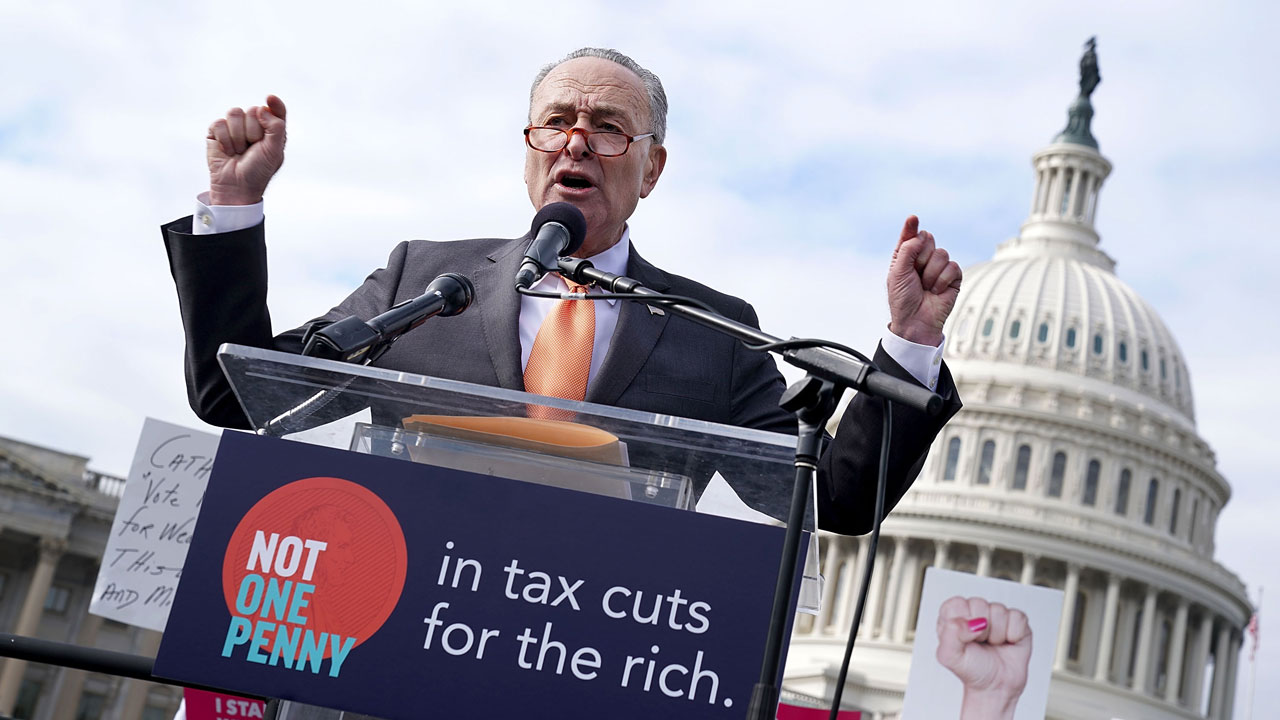
Voters in Iowa and North Carolina gave Democrats plenty to celebrate on Nov. 3. But on the same ballots, they also approved constitutional limits on future tax increases, making clear that winning an election does not give politicians a blank check to raise taxes.
In Iowa, Democrat Rob Sand defeated Republican Zach Lahn to become the first member of his party elected governor in the state since 2006. Yet 56% of voters also approved Amendment 1, requiring a two-thirds majority in both legislative chambers to raise state income tax rates.
Previously, a simple majority was sufficient. Under the new provision, raising those taxes will require 67 votes in the 100-member House and 34 in the 50-member Senate.
Republicans retained control of both chambers, but the restriction will apply equally if Democrats eventually take power.
That is not a ban on tax increases. Lawmakers can still approve them if they muster enough support. What has changed is the burden of persuasion: A narrow majority can no longer impose a higher income tax rate by itself.
North Carolina voters took a different approach, placing a ceiling on income tax rates rather than raising the legislative threshold.
Former Democrat Gov. Roy Cooper won a U.S. Senate seat by nearly 20 percentage points, and Democrats regained control of the state House. Yet nearly 62% of voters approved an amendment cutting the maximum allowable state income tax rate from 7% to 3.5%. More than 60% also backed a measure requiring lawmakers to limit increases in local government property tax levies.
When the income tax amendment came before the legislature in May, every Democrat who voted opposed it. Republicans passed the measure, which voters then approved in November despite the Democrats’ electoral success.
The new 3.5% ceiling goes into effect with the 2027 tax year. It does not itself cut taxes: The individual income tax rate is already scheduled to fall to 3.49%, and the corporate rate is below the new ceiling. Instead, it prevents future lawmakers from raising those rates above 3.5% without another constitutional change.
The real test of these amendments will come when budgets tighten.
Schools, roads, and law enforcement still need funding when revenues fall. Opponents argue that restricting tax increases leaves legislators fewer options for meeting those obligations. But raising taxes exacts a price of its own, especially on families and businesses already struggling to cover their own expenses.
Before asking taxpayers for more of their hard-earned money, state officials should have to explain how well they are using existing revenue. Which programs are working? Which could operate more efficiently? Which have escaped scrutiny because challenging them would be politically inconvenient?
The amendments also leave significant decisions in lawmakers’ hands. Iowa’s supermajority requirement does not cover every tax. North Carolina’s income tax ceiling leaves other revenue sources available, while the legislature must still decide exactly how to limit local property tax increases.
There is nothing inherently improper about using one of those other sources. In a recession or emergency, additional revenue may be justified. But if politicians respond to the amendments simply by moving the burden from income taxes to sales taxes, fees, or other charges, without making a serious effort to control spending, taxpayers will have reason to question whether their message was heard.
Such a shift could also change who bears the cost. A higher sales tax, for example, affects people differently from an income tax increase. Voters who supported one limit should not be expected to accept an increase elsewhere without a clear explanation of who pays, how much, and why.
Constitutional tax limits cannot determine spending priorities. That remains the responsibility of elected officials. But the amendments make it harder to treat higher income taxes as the automatic answer to a budget shortfall.
The temptation to raise taxes rather than confront difficult spending decisions is hardly unique to Iowa and North Carolina. Lawmakers across the country face that same pressure, regardless of which party controls the legislature.
Iowa and North Carolina have shown how voters can impose lasting limits on the government’s taxing authority, regardless of which party holds power. The question now is whether voters in other states will consider following their lead.
We publish a variety of perspectives. Nothing written here is to be construed as representing the views of the Daily Signal.
More from this network:
Domains for Sale · GOTPeople.org · TheDSAPlatform · The Truth About Socialism
What's Your Reaction?
 Like
0
 Dislike
0
 Love
0
 Funny
0
 Wow
0
 Sad
0
 Angry
0

I am just an average American. My teen years were in the late 70s and I participated in all that that decade offered. Started working young, too young. Then I joined the Army before I graduated High School. I spent 25 years in, mostly in Infantry units. Since then I've worked in information technology positions all at small family owned companies. At this rate I'll never be a tech millionaire. When I was young I rode horses as much as I could. I do believe I should have been a cowboy. I'm getting in the saddle again by taking riding lessons and see where it goes.
Premium domains for sale




















Comments (0)