

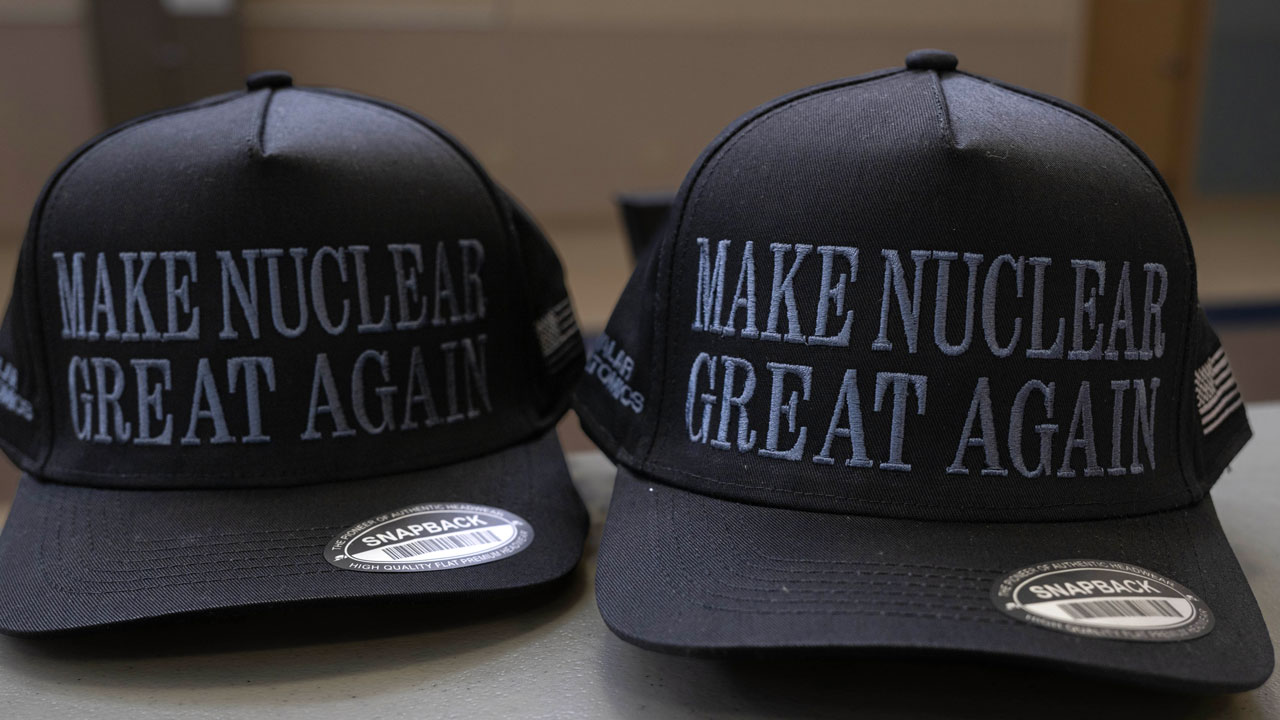
Every State Can Open Its Doors to Nuclear Energy
Premium domains for sale
Freedom Is Back In Style
States want nuclear energy. That makes sense.
Freedom Is Back
In Style
Premium domains for sale
They all face the same problem. States need energy now and lots of it. According to one industry analysis, electricity demand could grow by more than 55% by 2050. To put this into context, according to the Energy Policy Research Foundation, electricity production grew by a mere 0.5% from 2003 to 2023.
Change is obviously on the way.
What does this mean?
According to the U.S. Energy Information Administration, it means that we need to build a lot of power plants. Indeed, the EIA says the United States will have to increase electricity generation capacity by between 50% and 90% to meet this demand.
Currently, there are around 11,000 utility scale plants powering America’s modern economy and based on current projections we may need to nearly double that.
It gets even worse because under every EIA scenario, coal plants are retired almost out of existence—that is between 100 and 125 Gigawatts of capacity, gone. In other words, the United States will be fighting this fight with one of its mightiest arrows left in the quiver.
And why is this happening now?
One reason is that domestic manufacturing is on the rise and that requires more power. Then there is the broader movement towards electrification across the economy.
And of course, there is the boom in artificial intelligence and data centers, which is a primary driver. Data centers accounted for around 4% of summertime electricity demand in 2025 and that is projected to grow to 8.5% by 2027 and continue upwards to 17% by 2030.
State leaders are beginning to recognize their dire situation and looking for answers.
A top contender is nuclear energy. . After all, nuclear is extremely safe, very reliable, and its fuel, uranium, is readily available. Most importantly, in this situation, nuclear can produce a lot of energy for a long time. Even though only two new reactors have been built in the U.S. in recent decades, the technology still provides nearly 20% of the nation’s electricity.
The problem for states that want more nuclear energy though is that Washington seemingly holds all of the cards. The Nuclear Regulatory Commission oversees nearly all commercial nuclear operations. Though that was a problem for many years, it is changing. Congress has helped with key legislative efforts like the 2019 Nuclear Energy Innovation and Modernization (NEIMA) Act and the 2024 Accelerating Deployment of Versatile, Advanced Nuclear for Clear Energy (ADVANCE) Act and the Trump administration is pushing the regulatory reform envelope with a series of bold nuclear energy focused executive orders.
And now nuclear is back on the rise.
But just because Washington is acting doesn’t mean that there is nothing that states can do. There is a ton. While states do not get involved in reviewing reactor designs or construction permits, they do impact land use, zoning laws, energy production, and other environmental decision making.
So, what can states do specifically?
For starters, they need to get rid of any laws, regulation, mandates or policies that promote one energy source of another. They need to make clear that nuclear is welcome and all energy sources are free to compete. By explicitly removing anti-nuclear biases, a state will remove one of the key political risks that nuclear investors often face. Critically, this must also include any explicit or implicit moratoriums that remain in place.
Whether through public service commissions or other regulatory authorities, states often have substantial say over what power plants are built and what attributes power providers should prioritize. Where this is the case, states should prioritize reliability, availability, and cost over everything else.
New nuclear is naturally positioned to compete on two of these categories and can be competitive on cost. Nuclear also brings substantial environmental benefits since it uses very little land per volume of energy produced and emits almost nothing into the atmosphere.
States could also consolidate all nuclear related permitting under one office or authority. This could be a new office established for this purpose or identifying an existing office to take on the responsibility. One of the most time-consuming parts of any major, regulated project is navigating the bureaucracy, and nuclear is no exception. Given the high upfront cost of nuclear energy, anything that can shorten the permitting time frame by eliminating redundancy and confusion will be very valuable.
Further, rules should establish specific and reasonable timelines for all regulatory decision making. The goal should be to have all state regulatory business resolved within a year and that work should be able to be conducted simultaneously to the federal permitting process to the extent possible.
Another action could be to identify and prequalify sites for nuclear energy development. This could be at existing nuclear sites, the sites of old coal plants, industrial parks, or any place else deemed appropriate.
By being proactive and doing the preliminary site work to establish that a nuclear plant can be built on specific sites, states would eliminate a substantial risk from the nuclear site developer.
Going a step further, states could develop a combined power and industry permitting process for these sites. Such a process would allow for a project that includes an industrial facility, like a data center, plus a nuclear power plant to be permitted in a single, efficient regulatory process.
Developers should then be able to decide if their power plant is connected to the grid or operates specifically to power the industrial facility. The latter, sometimes called Consumer Regulated Electricity, could save significant time and money because it should avoid substantial federal regulation since it wouldn’t be connected to any interstate electricity grids. This approach would relieve substantial demand pressure on the legacy grid and amplify the benefits of federalism by allowing states to innovate more modern approaches to regulating major infrastructure projects.
An emerging nuclear industry needs a capable workforce, and states can help by promoting workforce development through their high school, community college, and university systems.
A growing nuclear industry needs workers and states can have substantial influence on ensuring that their educational system can provide it. For example, they can ensure that high schools have state-of-the-art vocational training for the trades needed for modern construction.
It means that they work to connect industry representatives to community college administrators to ensure that their schools are developing programs that give students the skills needed for the industry, and it means ensuring that their universities have robust nuclear and electrical engineering programs.
And lastly, for states that really want to take matters into their own hands, they should demand greater authority to regulate nuclear energy.
The federal Atomic Energy Act provides an opportunity for the Nuclear Regulatory Commission to relinquish some of its regulatory authority to the states, which it already does on a very limited basis through something called the Agreement State program.
States that participate in the program must demonstrate to the NRC that they have the regulatory structures and expertise to safely provide oversight. The program has been successfully operating since 1962 on a limited basis.
Given the decades of experience that nuclear operators and regulators have at this point, there is no reason that the program could not be expanded to include at least some aspects of the commercial power generation side of the nuclear industry.
To do this, states would need to establish their own regulatory infrastructure and expertise. While this may seem impractical at first, some states have already begun moving in that direction. For example, legislation recently moved partially through the political process in Florida to establish a regulatory authority and Utah and Texas recently filed a lawsuit alleging that the NRC does not hold regulatory authority over certain small reactors.
While transferring all regulatory authority over commercial nuclear power to the states might not make sense, identifying some areas where authority could be expanded probably does.
Though Washington retains much power over the nation’s commercial nuclear industry, states do have a significant say. In the past, much of their authority over land use, siting and zoning, and energy use decisions were used to stop nuclear energy development. Now is the time to use those same tools to revolutionize nuclear energy.
More from this network:
Domains for Sale · GOTPeople.org · TheDSAPlatform · The Truth About Socialism
What's Your Reaction?
 Like
0
Like
0
 Dislike
0
Dislike
0
 Love
0
Love
0
 Funny
0
Funny
0
 Wow
0
Wow
0
 Sad
0
Sad
0
 Angry
0
Angry
0

I am just an average American. My teen years were in the late 70s and I participated in all that that decade offered. Started working young, too young. Then I joined the Army before I graduated High School. I spent 25 years in, mostly in Infantry units. Since then I've worked in information technology positions all at small family owned companies. At this rate I'll never be a tech millionaire. When I was young I rode horses as much as I could. I do believe I should have been a cowboy. I'm getting in the saddle again by taking riding lessons and see where it goes.
Premium domains for sale



















Comments (0)