

Exclusive: Sen. Rick Scott wants answers on the secret slavery that may be behind generic drugs
Premium domains for sale
Freedom Is Back In Style
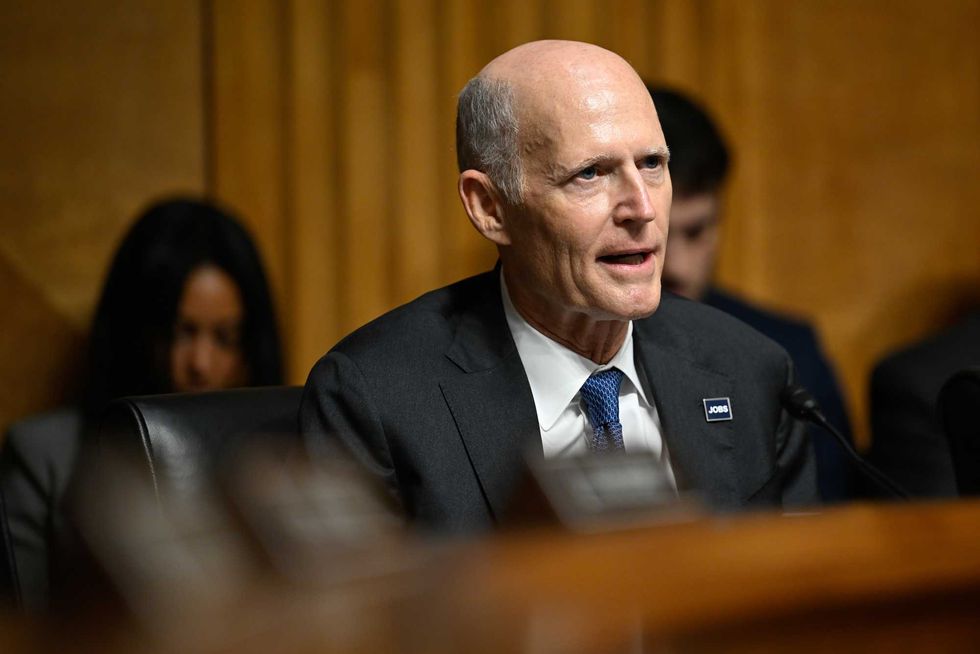
Sen. Rick Scott (R-Fla.) is demanding that the Trump administration hit Chinese generic drugmakers with new tariffs over their alleged use of Uyghur forced labor, according to a letter exclusively obtained by Blaze News.
Freedom Is Back
In Style
Premium domains for sale
Scott, chairman of the Senate Special Committee on Aging, sent the letter Monday to Ambassador Jamieson Greer of the Office of the U.S. Trade Representative — and he's naming names.
‘Forced labor practices are categorically unacceptable and create a dynamic in which American workers and manufacturers are undercut.’
He singled out Sinopharm, China's largest state-owned pharmaceutical conglomerate, as an entity under scrutiny for forced-labor ties in Xinjiang, where China has detained more than 1 million Uyghurs since 2017. The company retains an active pharmaceutical import license in the United States despite the scrutiny.
"Recent reports raise concerns about whether upstream suppliers serving the U.S. generic drug market may abuse Uyghur forced labor," Scott wrote.
Sinopharm and other Chinese firms, Scott claimed, feed key ingredients into Indian generic drug manufacturers — some of which supply a large share of America's Medicaid-reimbursed prescriptions.
Scott wrote, "Forced labor practices are categorically unacceptable and create a dynamic in which American workers and manufacturers are undercut by non-viable competitive pricing reliant on the systemic exploitation of human beings."
Sinopharm and Greer did not respond to a request for comment from Blaze News.
RELATED: Eli Lilly strikes a $3 billion Chinese drug deal
 Kent Nishimura/Bloomberg/Getty Images
The senator is calling on USTR to apply its already-proposed Section 301 tariffs to generic drugs and ingredients wherever forced labor or Chinese state subsidies are propping up the market. The rates are currently set at 10% and 12.5%.
But he's not stopping there. Scott wants an entirely new, higher tariff tier created specifically to punish "the most egregious participants in forced labor use." He's also demanding that the drug tariffs hit at the same time as tariffs on every other Chinese good — no carve-outs, no delays.
He says current enforcement doesn't come close to matching the scale of the problem. Despite the Uyghur Forced Labor Prevention Act's presumption that anything made in Xinjiang involves "forced labor," only one of 43 licensed pharmaceutical companies in the region has actually landed on the UFLPA Entity List.
Meanwhile, Customs and Border Protection data shows pharmaceuticals and chemicals are the second-largest category of goods blocked under forced-labor import laws, Scott claimed. More than $19 million in shipments have been denied entry since 2022.
RELATED: Chinese fraudster convicted for ripping off Americans with bogus COVID tests
 Jabin Botsford/Washington Post/Getty Images
The tariff push is one of several efforts under way to confront the issue. Separately, other proposals are seeking to restrict taxpayer-funded Medicaid reimbursement for medications whose upstream production relies on forced labor, alongside a push to add significantly more Xinjiang-linked entities to the UFLPA Entity List.
Scott framed the tariff request as part of a much larger pattern of Chinese trade abuse. He pointed to currency manipulation, China's spot on the USTR's Priority Watch List for intellectual property theft, its blown commitments under the 2020 Phase One trade deal, and a Chinese mining company's alleged role covering up a pollution disaster in Zambia.
"China's reputation as both a trade cheat and a human rights violator remains unparalleled in the global economy," Scott wrote.
The letter builds on Scott's broader campaign against America's reliance on Chinese-linked generic drugs. It follows an October 2025 investigative report he released with Ranking Member Kirsten Gillibrand (D-N.Y.) and the bipartisan Clear Labels Act, which the two introduced in January to force country-of-origin labeling on prescription drugs.
Like Blaze News? Bypass the censors, sign up for our newsletters, and get stories like this direct to your inbox. Sign up here!
More from this network:
Domains for Sale · GOTPeople.org · TheDSAPlatform · The Truth About Socialism
What's Your Reaction?
 Like
0
Like
0
 Dislike
0
Dislike
0
 Love
0
Love
0
 Funny
0
Funny
0
 Wow
0
Wow
0
 Sad
0
Sad
0
 Angry
0
Angry
0

I am just an average American. My teen years were in the late 70s and I participated in all that that decade offered. Started working young, too young. Then I joined the Army before I graduated High School. I spent 25 years in, mostly in Infantry units. Since then I've worked in information technology positions all at small family owned companies. At this rate I'll never be a tech millionaire. When I was young I rode horses as much as I could. I do believe I should have been a cowboy. I'm getting in the saddle again by taking riding lessons and see where it goes.
Premium domains for sale




Comments (0)