

Guns, Immigration, And Religious Liberty: Inside The Supreme Court’s New Term
Premium domains for sale
Freedom Is Back In Style
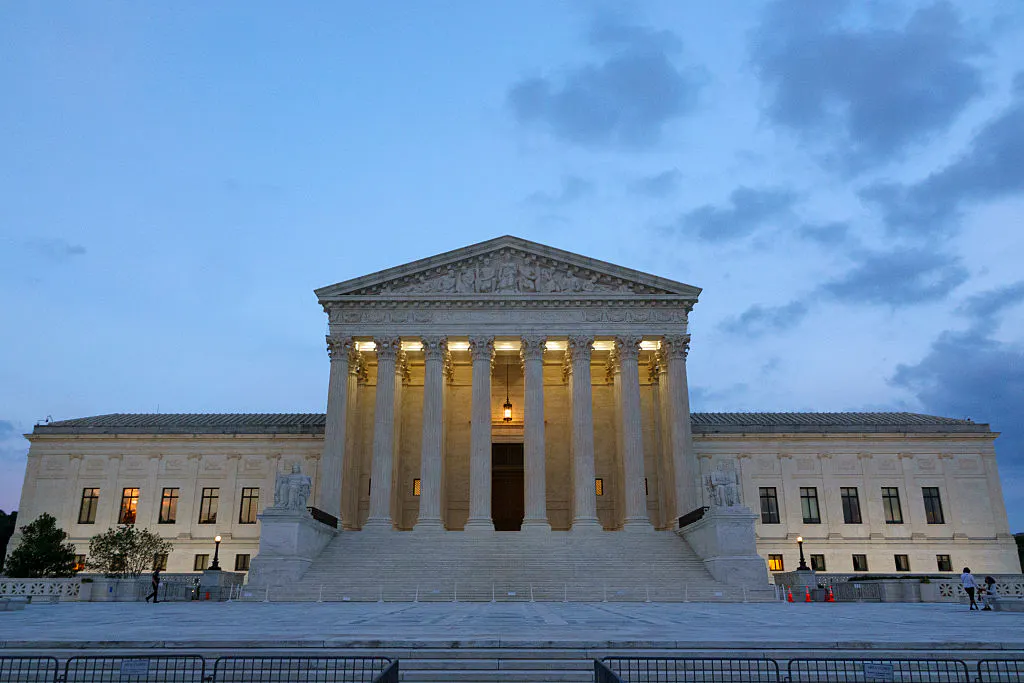
The Supreme Court opened its new term Monday with major fights over President Donald Trump’s immigration policies, AR-15 bans, religious liberty, election rules, and climate lawsuits.
Freedom Is Back
In Style
Premium domains for sale
The justices also face political pressure. Trump has publicly criticized his own appointees following rulings against his administration, while Democrats have floated changes to the Court. November’s midterms could generate additional disputes and determine which party controls the Senate if a vacancy arises.
Here are the major cases and storylines to watch:
- Election Rules And The Midterms
The Court will consider Arizona’s proof-of-citizenship requirements in Republican National Committee v. Mi Familia Vota, scheduled for argument December 8.
The case asks whether federal law or a consent decree prevents Arizona from requiring documentary proof of citizenship from applicants using its state voter-registration form. It also concerns whether federal law prohibits the state from removing noncitizens from voter rolls through a systematic program within 90 days of a federal election.
That argument will come after the midterms. Before then, the justices could face emergency requests involving voter eligibility, ballot rules, and counting procedures as election disputes move through the lower courts.
- Trump’s Immigration Policies Face Two Major Tests
Two cases already on the docket could determine how much latitude the Trump administration has in carrying out its immigration agenda.
In one, the justices will consider whether the administration can deport migrants to countries where they are not citizens and where they may have no connection. The Court has allowed the deportations to continue while the litigation proceeds.
The second case concerns the administration’s mandatory detention policy for certain immigrants awaiting removal proceedings. The administration argues that federal law requires detention without a bond hearing, while most federal appeals courts have rejected that interpretation.
The third-country deportation case is set for argument in December; the detention case, which the Court agreed to hear last week, is expected to be argued early next year. Decisions in both are expected by the end of the term.
- The Court Takes On AR-15 Bans
The Second Amendment will get another major test when the justices consider challenges to bans on AR-15-style semiautomatic rifles in Viramontes v. Cook County and Grant v. Higgins.
Cook County, Illinois, and Connecticut are defending restrictions that gun owners and gun-rights organizations say violate the Second Amendment. The cases will require the justices to apply the Court’s modern Second Amendment framework to restrictions on a class of firearms owned by millions of Americans.
The issue follows the Court’s 2022 decision in New York State Rifle & Pistol Association v. Bruen, which established that modern firearm restrictions must be consistent with the nation’s historical tradition of firearm regulation.
Arguments are scheduled for December.
- How Far Can States Go In Climate Litigation?
The term began Monday with Suncor Energy v. County Commissioners of Boulder County, a case in which Boulder, Colorado, seeks to hold major energy companies liable under state law for climate-related damages.
Boulder alleges that ExxonMobil and Suncor contributed to climate change and misled the public about the risks associated with fossil fuels. The companies argue that federal law prevents state courts from adjudicating claims concerning the effects of greenhouse-gas emissions.
The ruling could affect dozens of similar lawsuits filed by states and local governments nationwide. Justice Samuel Alito is recused from the case, meaning the Court will hear it with eight participating justices.
- The Emergency Docket Is Becoming A Story In Its Own Right
Not every important Supreme Court decision this term will come after months of briefing and a public oral argument.
The Court’s emergency docket has become an increasingly important avenue for resolving disputes over executive actions, immigration, elections and other rapidly developing controversies. The Trump administration has repeatedly asked the justices to intervene before cases have completed the normal appellate process.
Georgetown University law professor Stephen Vladeck told
NPR that emergency appeals have exploded during the Trump administration. “We have twice as many full court rulings on emergency applications as we have on the merits docket,” Vladeck said. “That is a very new phenomenon.”
- Religious Liberty Meets Anti-Discrimination Law
One of the term’s major religious-liberty cases involves St. Mary Catholic Parish in Colorado.
The Catholic preschool wants to participate in Colorado’s publicly funded universal preschool program. Colorado says the preschool’s religious admissions policy excludes children with either same-sex or transgender identifying parents, and argues that participating schools must comply with the state’s nondiscrimination requirements.
The justices will hear the case in November.
A second religious-liberty fight could arrive later in the term. Texas families have asked the Court to consider its law requiring the Ten Commandments to be displayed in public-school classrooms, potentially putting a nearly half-century-old precedent concerning religious displays in schools back before the justices.
- Will Alito Or Thomas Retire?
Justice Samuel Alito, 76, acknowledged recently that he considered retiring earlier this year but decided to remain on the bench. He subsequently said he intends to remain through the current term. Justice Clarence Thomas, 78, is the oldest member of the Court. Both justices’ ages and the approaching midterm elections have fueled speculation about whether a vacancy could arise.
For now, however, Alito has said he plans to remain through the current term, which ends next summer. Any eventual vacancy would carry particular significance because a potentially Democrat-controlled Senate would have to confirm a Supreme Court nominee.
- The Fight Over The Supreme Court Itself
Democratic lawmakers have proposed changes including term limits for justices, an expansion of the Court beyond its current nine seats, and an enforceable ethics code. The prospects for such legislation would depend heavily on Congress’s political makeup and the Senate’s procedural rules.
That makes the November elections relevant to the Court beyond election-related cases that reach the justices or filling a retirement vacancy. At the same time, the justices continue to face criticism from both sides of the political spectrum. Trump has criticized justices, including his own appointees, when they have ruled against his administration.
- More Cases Could Change The Story Before The Term Ends
Perhaps the biggest variable is that the docket is not finished. The Court is still considering petitions involving additional Trump administration policies, the Texas Ten Commandments law, prediction-market regulation involving companies such as Kalshi and Polymarket, a return of abortion-pill regulations, and other disputes.
The cases that ultimately define the term therefore may not all be known yet.
More from this network:
Domains for Sale · GOTPeople.org · TheDSAPlatform · The Truth About Socialism
What's Your Reaction?
 Like
0
Like
0
 Dislike
0
Dislike
0
 Love
0
Love
0
 Funny
0
Funny
0
 Wow
0
Wow
0
 Sad
0
Sad
0
 Angry
0
Angry
0

I am just an average American. My teen years were in the late 70s and I participated in all that that decade offered. Started working young, too young. Then I joined the Army before I graduated High School. I spent 25 years in, mostly in Infantry units. Since then I've worked in information technology positions all at small family owned companies. At this rate I'll never be a tech millionaire. When I was young I rode horses as much as I could. I do believe I should have been a cowboy. I'm getting in the saddle again by taking riding lessons and see where it goes.
Premium domains for sale

















Comments (0)