

HEAR IT: Chilling Audio Reveals What Happens When Ships Test U.S. In The Strait
Premium domains for sale
Freedom Is Back In Style
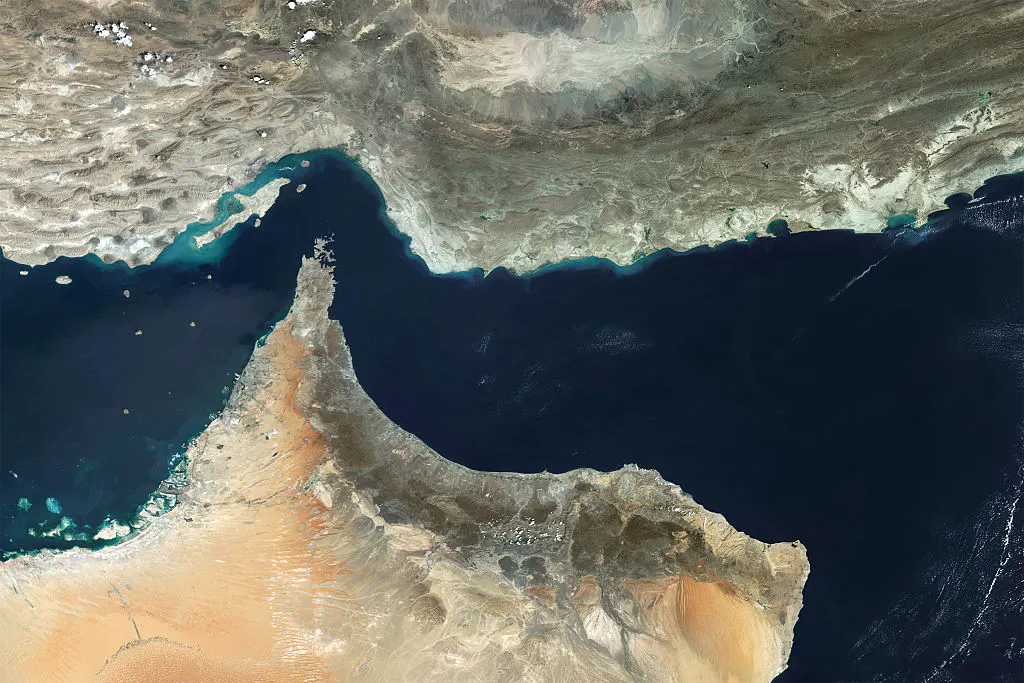
The U.S. Navy has spent months enforcing a blockade against vessels entering and leaving Iranian ports in the Strait of Hormuz. Newly released audio offers a glimpse into what that enforcement sounds like on the water.
Freedom Is Back
In Style
Premium domains for sale
The recordings capture U.S. forces warning commercial vessels that they are approaching the blockade, ordering crews to change course, and, in some cases, warning that American forces are preparing to fire.
The exchanges also reveal the confusion that can accompany the operation, with crews struggling to identify which vessels the Navy is addressing and some foreign crews attempting to understand warnings delivered in English.
Dozens of recordings have been shared by mariners operating in the Persian Gulf and Gulf of Oman, collected and reviewed by the Wall Street Journal. The recordings span several months of the blockade, which the U.S. resumed July 14 after an initial enforcement effort began in April.In one exchange, a U.S. Navy vessel warns a commercial ship that it is continuing toward Iran.“I am preparing to fire at your engine room. You have 15 minutes to clear your crew from your engine room. Over.”
The response is confused. “U.S. Navy, repeat the name. Repeat the name of the vessel.”The exchange continues as the Navy attempts to identify the vessel it is ordering to stop.
In another recording, an American military aircraft warns a ship that it is noncompliant. “Echo Echo, this is Warcat three three, you are noncompliant by continuing towards Iran. You have been warned several times, I am preparing to fire at your engine room, you have three minutes to clear your crew from your engine room.”
In another example, on July 25, the U.S. Navy warned the Panama-flagged bulk carrier Liao Fan after it had stopped at the Iranian port of Bandar Abbas. The ship’s Chinese captain explained in broken English that the vessel had already departed Iran and was anchored at Khor Fakkan, a United Arab Emirates port outside the strait.
The captain said his company had contacted the Iranian Navy but had not received permission to return to Iran. “Turn back now, brother. This is not the time to call the shipowner. The U.S. really will fire on you,” another Chinese mariner warned him over the radio.
The U.S. ultimately did not attack Liao Fan. The ship eventually made it through the blockade and was later tracked off Malaysia. Other vessels were not as fortunate.
On July 24, the U.S. Navy gave the sanctioned liquefied-petroleum-gas tanker Lavine 15 minutes to clear its crew from the engine room. Nearby mariners initially appeared confused about which vessel the Americans were addressing.
Exactly 15 minutes after the warning, Lavine issued a distress call. The following day, U.S. Central Command said American forces had disabled the ship after its crew repeatedly attempted to violate the blockade and ignored warnings.
In another incident, the crew of the container ship Vela Nova was close to abandoning the vessel after it was struck by U.S. forces on Aug. 11. The captain of a nearby ship, Courtesy K, offered to approach and rescue the crew, but CENTCOM later informed the vessel’s flag state that American authorities were arranging salvage operations and that its assistance was not needed.
The blockade has involved far more than warnings over the radio. CENTCOM announced on Monday that American forces had redirected 130 commercial vessels since enforcement resumed July 14 and disabled three ships that refused to comply. The command said U.S. forces had destroyed 13 commercial vessels over the preceding 12 weeks, describing them as either violating the blockade or participating in the Islamic Revolutionary Guard Corps’ shadow network.
The Journal reported that more than 270 vessels had been redirected as of Monday when counting the blockade’s earlier phase, while almost two dozen vessels had been either disabled or destroyed completely.
The operation has also cut deeply into Iran’s ability to export oil. According to ship trackers cited by the Journal, no known tanker carrying Iranian crude has crossed the U.S. blockade line since July.
Defense Secretary Pete Hegseth said Sunday that the blockade remains firmly in place, saying that Iran has been unable to get oil through the strait and that President Donald Trump retains further military options if Tehran continues challenging the operation.
More from this network:
Domains for Sale · GOTPeople.org · TheDSAPlatform · The Truth About Socialism
What's Your Reaction?
 Like
0
Like
0
 Dislike
0
Dislike
0
 Love
0
Love
0
 Funny
0
Funny
0
 Wow
0
Wow
0
 Sad
0
Sad
0
 Angry
0
Angry
0

I am just an average American. My teen years were in the late 70s and I participated in all that that decade offered. Started working young, too young. Then I joined the Army before I graduated High School. I spent 25 years in, mostly in Infantry units. Since then I've worked in information technology positions all at small family owned companies. At this rate I'll never be a tech millionaire. When I was young I rode horses as much as I could. I do believe I should have been a cowboy. I'm getting in the saddle again by taking riding lessons and see where it goes.
Premium domains for sale













Comments (0)