

How Far-Left Groups Plotted To Kill A Bipartisan Deal And Hide Strategy From Dems
Premium domains for sale
Freedom Is Back In Style
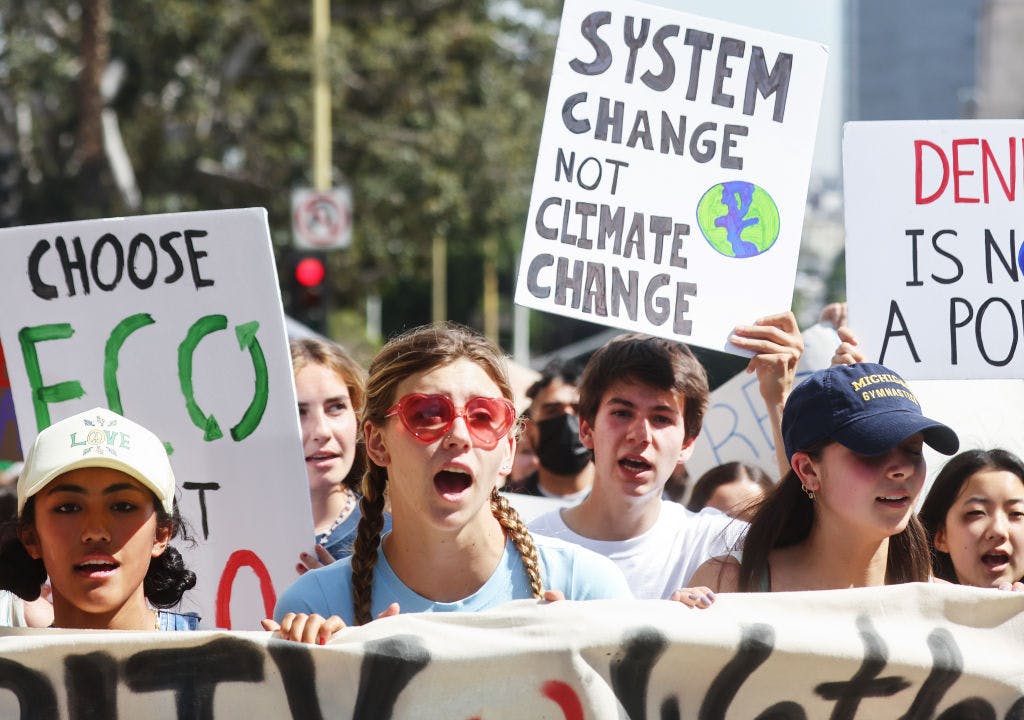
Far-Left environmental groups sought to organize opposition to a bipartisan Senate permitting reform bill and keep their strategy from the Democratic lawmakers who negotiated it, according to a leaked transcript of a coalition call reviewed by The Daily Wire.
Freedom Is Back
In Style
Premium domains for sale
“We really have to have a pretty clear agreement by all parties that this is an effort to stop this bill, not to make it better,” Brett Hartl, government affairs director at the Center for Biological Diversity, said during the call.
The call, organized in part by the Sierra Club, drew 89 participants as environmental organizations debated how to respond to the Bipartisan American Affordability and Jobs Act of 2026. The legislation, introduced on September 30, was negotiated by Sens. Mike Lee (R-UT) and Shelley Moore Capito (R-WV) alongside Sens. Martin Heinrich (D-NM) and Sheldon Whitehouse (D-RI).
The bill would overhaul federal environmental review and permitting procedures, establish deadlines for reviews and legal challenges, and provide greater certainty for projects that have already secured permits and financing. Its supporters argue that the changes would reduce delays, expand energy infrastructure, and help lower costs while retaining environmental and historic preservation safeguards.
“Our tactics and information cannot get back to Dan Dudis and Whitehouse and Heinrich and others,” Hartl said, referring to Whitehouse’s staff director and the two Democratic senators involved in the negotiations. “If your organization is gonna come out as neutral or in some other role, I think I have to just ask that you leave,” Hartl said.
Hartl later confirmed the transcript’s authenticity to Punchbowl and defended his remarks.
“I don’t want our strategy being relayed back to them, and now it is,” he told the outlet. “Someone on the call decided to betray all of us.”
Much of the opposition centered on provisions intended to make federal permits more durable and restrict the ability of courts and future administrations to revisit approved projects.
During the call, Erik Schlenker-Goodrich of the Western Environmental Law Center argued that the bill would limit environmental groups’ ability to engage in environmental lawfare against energy projects while constraining future administrations’ authority to reverse decisions made under President Donald Trump. He objected to the requirement that states and tribes meet a “clear and convincing” evidentiary standard to impose certain conditions on federal permits under Section 401 of the Clean Water Act. Schlenker-Goodrich described the standard as a “very problematic and steep legal burden.”
“Essentially what this bill does is it hamstrings our ability to go after projects,” Schlenker-Goodrich added.
Ashley C. Nunes of the Center for Biological Diversity further raised concerns about provisions affecting who could bring legal claims and the deference courts would give to federal agencies. Other participants criticized provisions that would narrow opportunities for public comment and limit the circumstances in which environmental reviews could be challenged.
The bill would impose a 150-day deadline for certain legal challenges alleging that an environmental review failed to comply with the National Environmental Policy Act (NEPA). It would also establish other procedural restrictions intended to reduce prolonged litigation over federal authorizations.
Schlenker-Goodrich also objected to the legislation’s effect on future energy policy, arguing that the changes could make it harder for a future Democratic administration to shift federal policy toward renewable energy.
“Those authorities for a new administration to tilt the scales in favor of renewables have gone away,” he said.
The bill’s project-certainty provisions similarly drew criticism from participants who argued that approved permits would become too difficult to revisit. During the call, an advocate with the National Wildlife Federation warned that once a project received authorization and a record of decision, the legislation would sharply restrict subsequent changes.
“Once a project is authorized and there’s a ROD, there are no changes whatsoever, period, to anything. Ever at any time ever,” the participant said, referring to a formal step in the federal environmental review process.
The legislation, however, does not simply prohibit every subsequent change under every circumstance. Its stated purpose is to provide greater certainty for permitted projects, while the sponsors describe exceptions for extraordinary circumstances, violations of law, and court orders.
The call also featured criticism of the bill’s proposed changes to NEPA which requires federal agencies to evaluate the environmental effects of certain proposed actions. Stephen Schima of Earthjustice described the legislation’s environmental review provisions as problematic, citing changes to the scope of reviews, public input, and judicial oversight.
“RIP NEPA,” Schima said, before describing the reforms as “really truly awful.”
The controversy comes as lawmakers attempted and seemingly succeeded to secure a bipartisan agreement on a permitting system that has drawn criticism from energy producers, clean-energy developers, labor unions, and business groups.
The bill’s supporters argue that lengthy environmental reviews and litigation can delay power plants, transmission lines, renewable energy projects, and other infrastructure needed to meet rising electricity demand.
The American Clean Power Association, which represents clean-energy interests, endorsed the legislation, saying its technology-neutral approach and permitting certainty could help accelerate clean-energy deployment. The American Petroleum Institute also backed the package, arguing that it would modernize environmental reviews and reduce unnecessary litigation.
Labor organizations, manufacturers, and other groups have likewise supported the measure, citing the potential for new construction, investment, and jobs.
In the October 9 statement, Heinrich’s office listed support from organizations including the Citizens Climate Lobby, the Climate Leadership Council, and the American Clean Power Association, alongside unions and industry groups.
The bipartisan agreement also includes provisions aimed at expanding and modernizing the electric grid, accelerating the development of geothermal energy, and requiring data centers to pay the full costs of their associated transmission needs rather than shifting those costs to households and small businesses.
The bill’s supporters say those provisions are especially important as electricity demand rises, including from data centers and new industrial facilities.
The bill’s sponsors have described the measure as a compromise that would speed permitting while maintaining key environmental safeguards. Whitehouse has also indicated that a manager’s amendment could be assembled as the legislation advances, leaving open the possibility of further changes.
More from this network:
Domains for Sale · GOTPeople.org · TheDSAPlatform · The Truth About Socialism
What's Your Reaction?
 Like
0
Like
0
 Dislike
0
Dislike
0
 Love
0
Love
0
 Funny
0
Funny
0
 Wow
0
Wow
0
 Sad
0
Sad
0
 Angry
0
Angry
0

I am just an average American. My teen years were in the late 70s and I participated in all that that decade offered. Started working young, too young. Then I joined the Army before I graduated High School. I spent 25 years in, mostly in Infantry units. Since then I've worked in information technology positions all at small family owned companies. At this rate I'll never be a tech millionaire. When I was young I rode horses as much as I could. I do believe I should have been a cowboy. I'm getting in the saddle again by taking riding lessons and see where it goes.
Premium domains for sale





















Comments (0)