

Why ‘The Social Reckoning’ Fails To Live Up To Its Predecessor
Premium domains for sale
Freedom Is Back In Style
The legacy sequel is a tricky business. The stereotype is that they’re abominations. Think “Zoolander 2” or “Blues Brothers 2000”: artistically void cash grabs made with little passion, lacking the charm and heart of the originals. Some, however, live up to the hype of their beloved originals, like “Top Gun: Maverick,” or stand on their own as phenomenal films in their own right, such as “The Hustler” follow-up “The Color of Money.”
Freedom Is Back
In Style
Premium domains for sale
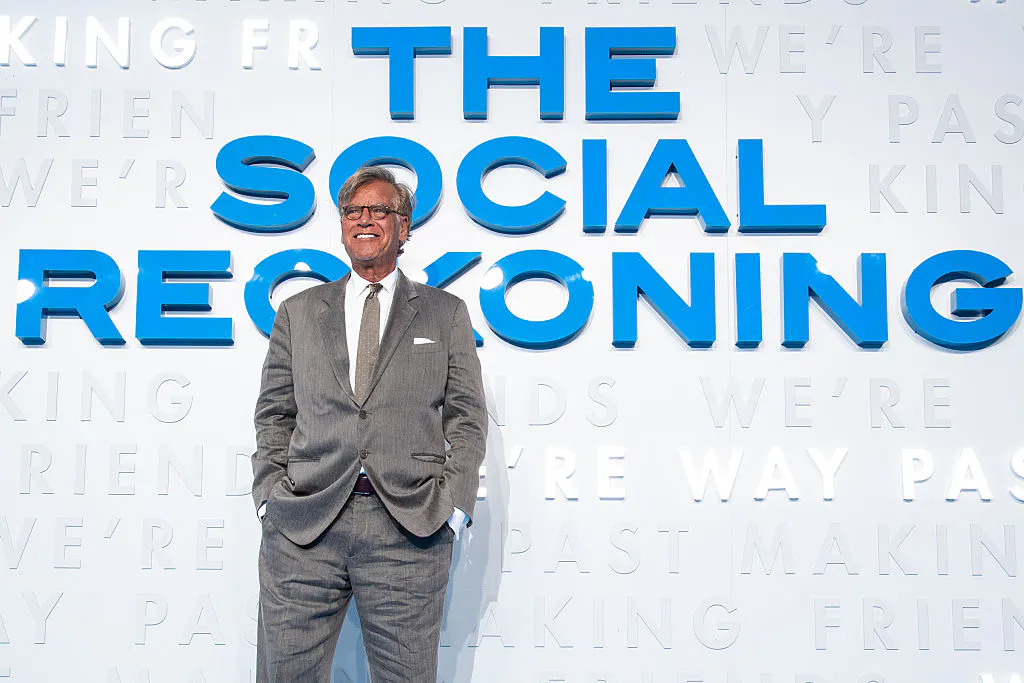
“The Social Reckoning” is Aaron Sorkin’s follow-up to the lauded 2010 film “The Social Network,” which told a loosely factual tale of Facebook’s founding. The sequel tells two stories: Facebook employee Frances Haugen’s work with Wall Street Journal writer Jeff Horwitz to release The Facebook Files in 2019 and Mark Zuckerberg in “likability training” to prepare for Congressional testimony in 2021.
It’s perfectly serviceable, not completely unwatchable but far from excellent. “The Social Network” is compulsively rewatchable, with a perfect collection of talented artists performing in top form, including stunning direction from David Fincher, a sparkling script by Sorkin, a spectacular cast, and a moody score by Trent Reznor and Atticus Ross. “Reckoning,” by contrast, isn’t a bad way to spend two hours, but it will likely be forgotten this time next year.
Fincher’s direction was sorely missed. His cool, tense direction softened the exaggeratedly quippy dialogue that defines Sorkin’s oeuvre. The interplay between their vastly different styles was electric. Sorkin, taking on directing duties, was already fighting an uphill battle, as he lacks Fincher’s mastery and is far less virtuosic behind the camera than he is with a pen.
But even his script was lackluster for the usually strong screenwriter. The dialogue lacks both the subtlety and wit of the original film. One would wonder how it’s the same writer. Even the signature banter that peppers previous projects is noticeably muted. Scenes often play like supercuts of the most didactic, overwrought speeches from “The West Wing” or “The Newsroom” but without the signature humor to offset.
Several sequences feel like shallow, inferior versions of vastly superior scenes in the previous film. The bouncing back and forth between the 2019 whistleblower sequences and the 2021 hearing prep brings to mind the dual timelines of the lawsuit depositions and college years, but here it reads as compulsory rather than artistic. Whereas in “Network” the dual timelines fed into each other to strengthen the narrative and re-contextualize the character development, in “Reckoning” they are tangentially related at best.
Somehow even worse than the dialogue was the integration of the politics. “The Social Reckoning” is an inherently political film — focusing on whistleblowers, journalism, political extremism, free speech, and government regulation — and the script is filled with speeches and exchanges where characters forcefully state their positions at each other in what is meant to resemble debate.
However, the film assumes audiences will agree with its criticisms of Facebook’s political ad censorship and free speech, so it doesn’t try to make a strong argument to convince viewers who may take the opposing side. In extended sequences between Mark, recast as Jeremy Strong, and Bill Burr, horrifically miscast as the voice of reason and former friend, Strong can explain his personal and political justifications, while Burr’s shallow truisms are so obvious they don’t even need explanation.
The poor writing extends to the characters, leaving the talented cast floundering with boring material.
Jeremy Strong’s take on Mark Zuckerberg feels like a fundamentally different person than Jesse Eisenberg’s 16 years ago, but that comes down to the script even more than the performance. Sorkin leans into the awkward, cold robot of certain meme-generating Congressional testimony rather than granting Zuckerberg any dimensionality. A few glimmers shine through, such as the one passing mention of his wife and children’s pain upon seeing all the online hate that comes his way, but any nuance or humanity comes from Strong’s expressive eyes.
Jeremy Allen White and Mikey Madison are left with fairly one-note, functional protagonists, with a couple of quirks in place of a personality. They both give authentic, grounded performances, but can’t bring much life into such cardboard cutouts. Madison, especially, is treated fairly fetishistically by the camera, especially as her character disguises herself by dressing for a hook-up when meeting with White.
If White and Madison were half as interesting as characters in the 2010 film or “The West Wing,” it would be a far more enjoyable movie. The pair also have fairly strong chemistry, to the point that I searched whether Horwitz and Haugen ever dated after leaving the theatre. A rom-com together would be a much better use of their talents.
Similarly, this film could have largely benefitted from Reznor and Ross’s talents. Alexandre Desplat, who wrote the score, was absurdly ill-suited for this film. It’s sweeping and more than a little cheesy, better fitting for melodrama than thriller. While he’s done excellent work in the past, including winning well-deserved Academy Awards for “The Grand Budapest Hotel” and “The Shape of Water,” this score is not likely to earn the composer any accolades.
“The Social Network” was lightning in a bottle, every aspect firing on all cylinders to create a classic. “The Social Reckoning” is doomed to be forgotten.
***
Paulina Enck is a media specialist in Washington, D.C.
More from this network:
Domains for Sale · GOTPeople.org · TheDSAPlatform · The Truth About Socialism
What's Your Reaction?
 Like
0
Like
0
 Dislike
0
Dislike
0
 Love
0
Love
0
 Funny
0
Funny
0
 Wow
0
Wow
0
 Sad
0
Sad
0
 Angry
0
Angry
0

I am just an average American. My teen years were in the late 70s and I participated in all that that decade offered. Started working young, too young. Then I joined the Army before I graduated High School. I spent 25 years in, mostly in Infantry units. Since then I've worked in information technology positions all at small family owned companies. At this rate I'll never be a tech millionaire. When I was young I rode horses as much as I could. I do believe I should have been a cowboy. I'm getting in the saddle again by taking riding lessons and see where it goes.
Premium domains for sale












Comments (0)