

How Hollywood Slop And Morally Gray Villains Killed The Superhero Genre
Premium domains for sale
Freedom Is Back In Style
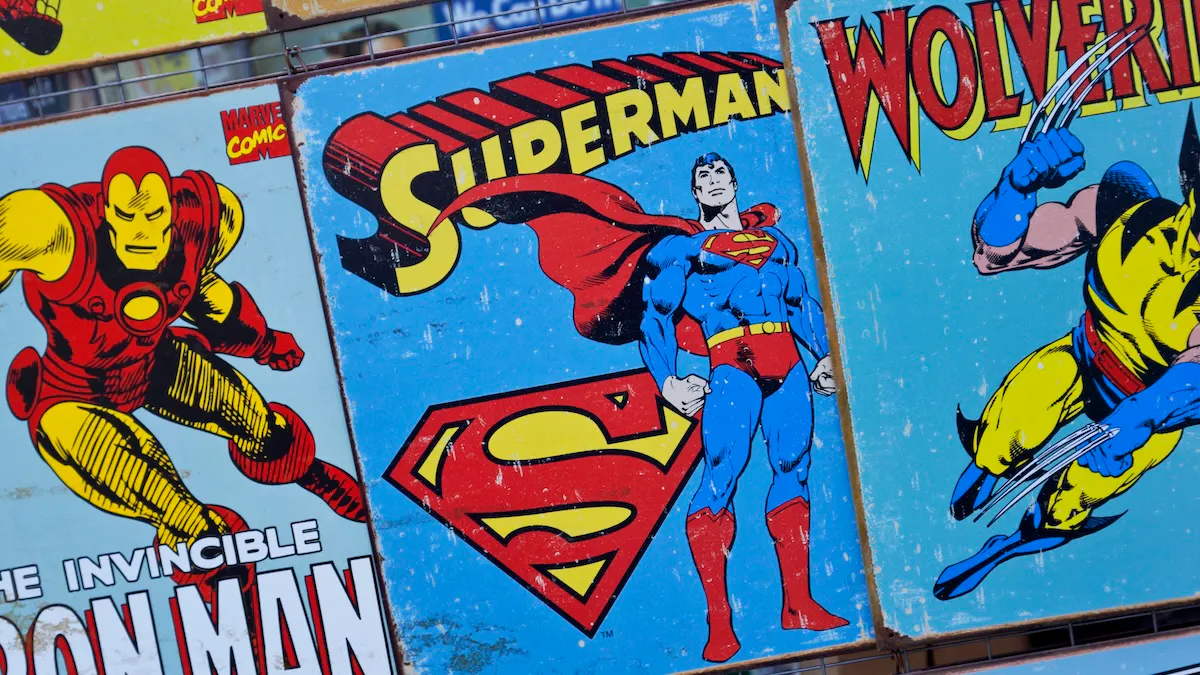
The supremacy of superhero movies has come to an end: American moviegoers have superhero fatigue. In August, Marvel announced a slew of new releases, including another reboot of the “X-Men” and a second television series featuring Paul Bettany’s Vision. Paired with a re-release of “Endgame,” these titles were criticized by fans for rehashing the same characters and plot lines. The culture has slowly been turning away from superhero movies. At its height during the 2010s, the superhero genre made between $6 and $8 billion annually. In comparison, 2025 was the worst-performing year for superhero movies since 2011.
Freedom Is Back
In Style
Premium domains for sale
After the Marvel Cinematic Universe had a legendary run in the 2010s, with movies like “Avengers: Endgame” raking in over a billion dollars, the fad fizzled out in the 2020s. For many, the notion of a cinematic universe became too overwhelming, as it required audiences to watch dozens and dozens of movies to understand characters’ relationships and situations. For others, the genre had become stale, with narrative arcs sticking to a similar format from film to film. Some people complained about the kinds of heroes being portrayed, as attempts to expand the cinematic universe required both Marvel and DC to reach deeper into their archives to find fresh characters; others complained that they were sick of seeing the same faces over and over again, such as Robert Downey Jr., who played Iron Man in the namesake 2008 film and returned this year to play a different character, Dr. Doom.
Beneath each of these complaints lies a deeper concern about how Hollywood has decided to portray heroes. One of the reasons why superhero movies became so popular in the 21st century was their ability to humanize larger-than-life characters. “Iron Man” became a hit because Tony Stark’s billionaire-playboy attitude gave him an oddly relatable edge. Every iteration of Spiderman, from Tobey Maguire to Tom Holland, showed him grappling with the tension between power, responsibility, and personal troubles, like getting a girlfriend and keeping your grades up. Both Peter Quill and Stephen Strange acted like jerks, and by the time “Captain America: Civil War” rolled around in 2016, even the all-American hero’s ethics were up for debate.
Superhero movies gradually abandoned the premise that there are clearly defined good guys and bad guys. As the heroes became morally gray, the villains became likable and charming. Despite being the primary adversary in the “Avengers,” Loki was given a strange redemptive arc that left many audiences wondering whether his attempt to overthrow Earth was really that bad. In “Black Panther,” the villainous Killmonger was described by his actor, Michael B. Jordan, as “strategic, thoughtful, patient.” Even the pinnacle of MCU malevolence, Thanos, had his plan to wipe out half of all life justified by a Marxist-adjacent desire to redistribute resources.
Subversive storytelling muddies the definition of “good” and “bad” characters, and that’s what most of these comic book movies initially clung to. At the time, it felt fresh. Christopher Nolan’s “Dark Knight” trilogy had done something similar in the mid-2000s, to the tune of billions of dollars in success. Studios assumed people were tired of the good guy versus bad guy trope that had been circling Hollywood since its inception. While that may have been true for a little while, the endless attempts to blur the lines between heroes and villains eventually felt stale.
The 2020s haven’t been particularly kind to the superhero genre: 2023’s “The Marvels” was a certified box office bomb, reportedly losing $237 million; 2021’s “Black Widow” failed to cover its production costs at the box office, and the same year “The Eternals” lost Disney an estimated $50-$60 million. Sony’s infamous 2024 failure, “Madame Web,” lost the studio as much as $100 million. Each of these movies followed the now decade-old trend of spotlighting flawed heroes and finding grains of good in every villain.
Audiences are naturally drawn to clearly defined stories about good versus evil. During World War II, stories that depicted the bravery of American soldiers were extremely popular. In midcentury America, westerns that showed cowboys facing off against bank robbers and invaders were all the rage. In the 1970s, timeless box office hits like “Jaws” and “Star Wars” showed the power of good triumphing over evil. The inversion of traditional heroism popped up in cinemas during the tail end of 1960s cultural changes. 1967’s “Bonnie and Clyde” depicted the criminal couple as cool and romantic. At the time, it was groundbreaking, but nearly 50 years later, it has become the blueprint for storytelling.
Superhero movies are incredibly important. Human beings like to know that there is something good and true worth striving toward. When they are repeatedly told that goodness and success are out of reach, it is demoralizing. Young Americans are in the midst of a crisis: 67% of young men feel like they have “no control” over their lives and almost half of all Zoomers experience mental health issues. Now, more than ever, young people need to be exposed to heroes. They need to see positive depictions of great men doing good things so they can be encouraged to emulate that greatness. Superhero movies are fun and often funny, but they serve a greater purpose: to represent that good will overcome evil. For a culture that feels like it has no control over its future, we may need a superhero now more than ever.
***
Brooke Brandtjen is a writer and journalist from Wisconsin who focuses primarily on culture, politics, and religion. She is a senior contributor at New Guard Press, a publication she joined while attending Hillsdale College.
This article is part of Upstream, The Daily Wire’s new home for culture and lifestyle. Real human insight and human stories — from our featured writers to you.
More from this network:
Domains for Sale · GOTPeople.org · TheDSAPlatform · The Truth About Socialism
What's Your Reaction?
 Like
0
Like
0
 Dislike
0
Dislike
0
 Love
0
Love
0
 Funny
0
Funny
0
 Wow
0
Wow
0
 Sad
0
Sad
0
 Angry
0
Angry
0

I am just an average American. My teen years were in the late 70s and I participated in all that that decade offered. Started working young, too young. Then I joined the Army before I graduated High School. I spent 25 years in, mostly in Infantry units. Since then I've worked in information technology positions all at small family owned companies. At this rate I'll never be a tech millionaire. When I was young I rode horses as much as I could. I do believe I should have been a cowboy. I'm getting in the saddle again by taking riding lessons and see where it goes.
Premium domains for sale














Comments (0)