

How Marco Rubio Is Remaking The Western Hemisphere
Premium domains for sale
Freedom Is Back In Style
America’s backyard looked very different just a year and a half ago. A region long neglected by the foreign policy establishment in Foggy Bottom is finally receiving the focus its strategic importance demands. This renewed focus reflects an America First foreign policy approach that recognizes the Western Hemisphere’s importance to U.S. national security, economic stability, and regional cooperation. Americans are better off for it.
Freedom Is Back
In Style
Premium domains for sale
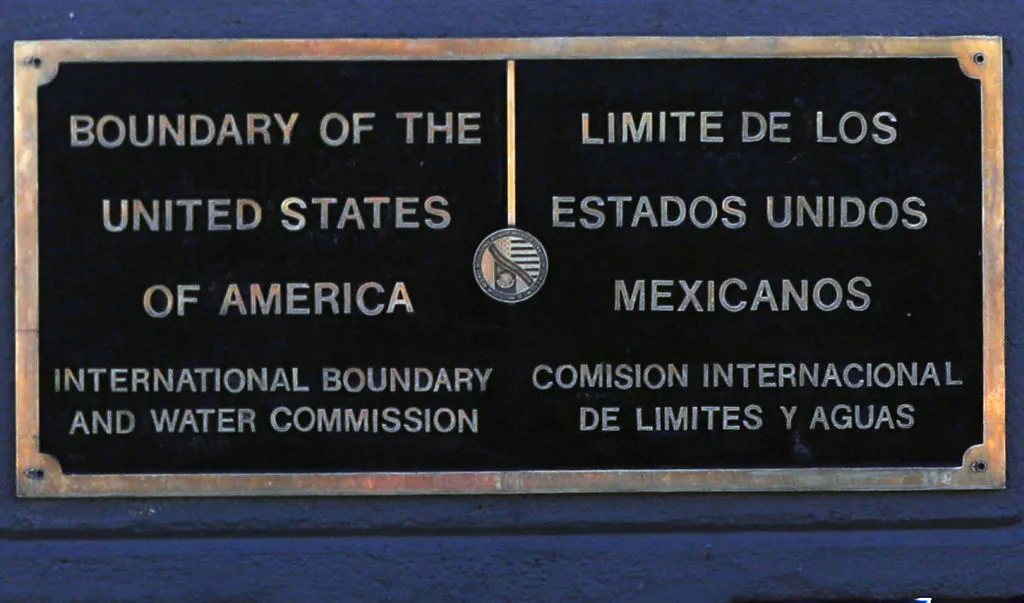
On the eve of President Trump’s return to the Oval Office, the region was destabilized by criminal cartels, despotic rule, and the mass movement of peoples. The crises brewing in Central and South America did not stay south of the Rio Grande.
Fentanyl and other deadly narcotics surged into our country through a porous southern border, claiming the lives of hundreds of thousands of Americans over the course of former President Joe Biden’s term alone.
Millions upon millions of migrants transited through Central America to the banks of the Rio Grande, marking what would become the largest wave of illegal mass migration in American history, with migrant corridors such as the Darien Gap staffed by international organizations that facilitated their northward travel.
An oil-rich nation of more than 30 million people was ruled by a corrupt drug-trafficking despot who imprisoned political opponents, staged sham elections, funneled criminals and drugs to our border, and bolstered the communist regime that threatens America’s national security from just 90 miles off our shore. Meanwhile, the Cuban communist regime continued its decades-long influence operation to sow dissent in the United States, free from scrutiny until now.
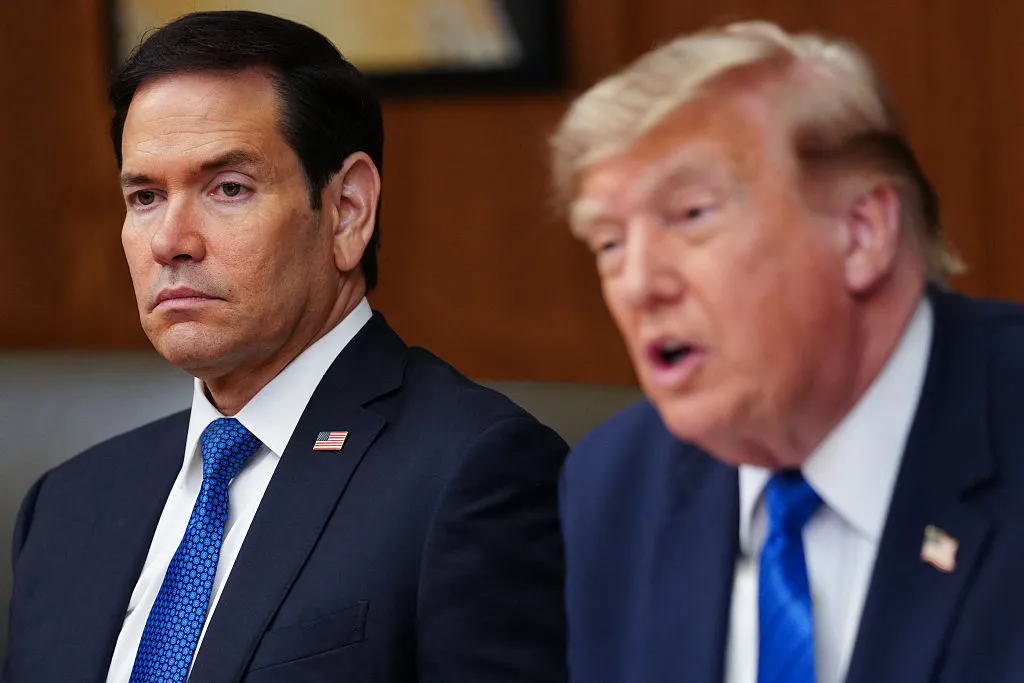
Now, after a year and a half of Marco Rubio’s leadership as the Secretary of State, the Western Hemisphere is being fundamentally reshaped, and America has again assumed its leading role. Under this leadership, America First foreign policy has prioritized regional security, stronger partnerships, and U.S. interests throughout the hemisphere.
The drug cartels and criminal gangs that just years ago smuggled deadly narcotics to our border and terrorized towns like Aurora, Colorado, have been designated Foreign Terrorist Organizations by Rubio’s State Department, allowing other agencies to take decisive action to combat the criminal enterprises that have for so long plagued the United States.
Through the Shield of the Americas – the international anti-cartel coalition – the United States is combating the scourge of narco-terrorism alongside its 18 partner countries. In this new era of security cooperation, American intelligence, technology, and support are being leveraged in the fight against some of the world’s most ruthless terror groups and criminal syndicates.
The United States has undertaken joint operations with Ecuador, repositioned drones to the region, conducted counter-narcotics joint training, and struck narco-terrorist drug boats – all while a growing number of nations have publicly authorized joint counter-cartel operations – to confront a threat that has terrorized our region for years.
The effort has been bolstered by a wave of conservative victories across Latin America, with the leaders of Colombia, Chile, Bolivia, Ecuador, Honduras, and Costa Rica now joining Javier Milei in Argentina and Nayib Bukele in El Salvador.
But the most dramatic development came just three days into 2026, when Nicolas Maduro was apprehended in Caracas, putting an end to the rule of a drug-trafficking despot who oppressed his own people, fueled narco-terrorism, and cozied up to adversarial regimes.
The oil that once fueled the communist regime in Havana is now benefiting the United States and the Venezuelan people alike thanks to a legendary deal that gives an American company access to 17 oil fields with more than 65 billion barrels worth of proven reserves – securing a vital supply chain for the United States while ousting the Chinese and Russian entities that previously looted the nation’s oil.
The Trump administration has clearly recognized the region’s strategic importance in the U.S.’s broader geopolitical competition with China, and the Venezuela oil deal is only one way it has worked to counter Chinese Communist Party influence. This approach reflects a central priority of America First foreign policy: strengthening American economic and national security by reducing strategic dependencies and countering the influence of foreign adversaries in the Western Hemisphere.
The CCP suffered a major blow when Panama – home to one of the world’s most vital trade arteries – announced it would leave the CCP’s Belt and Road Initiative just days after Rubio’s visit in early 2025. Just weeks later, BlackRock, a U.S. company, bought two Chinese-owned ports in the all-important Panama Canal.
The moves were opening salvos in a larger U.S. effort to inoculate the region against Chinese influence. The State Department is now assembling a coalition to build a resilient critical-minerals supply chain to prevent dependence on the CCP through the Pax Silica initiative.
Some of Latin America’s largest economies – including Argentina and Chile – along with Panama, Costa Rica, and El Salvador, have joined the United States in securing this supply chain, integral to the future of technology and defense, from Chinese influence.
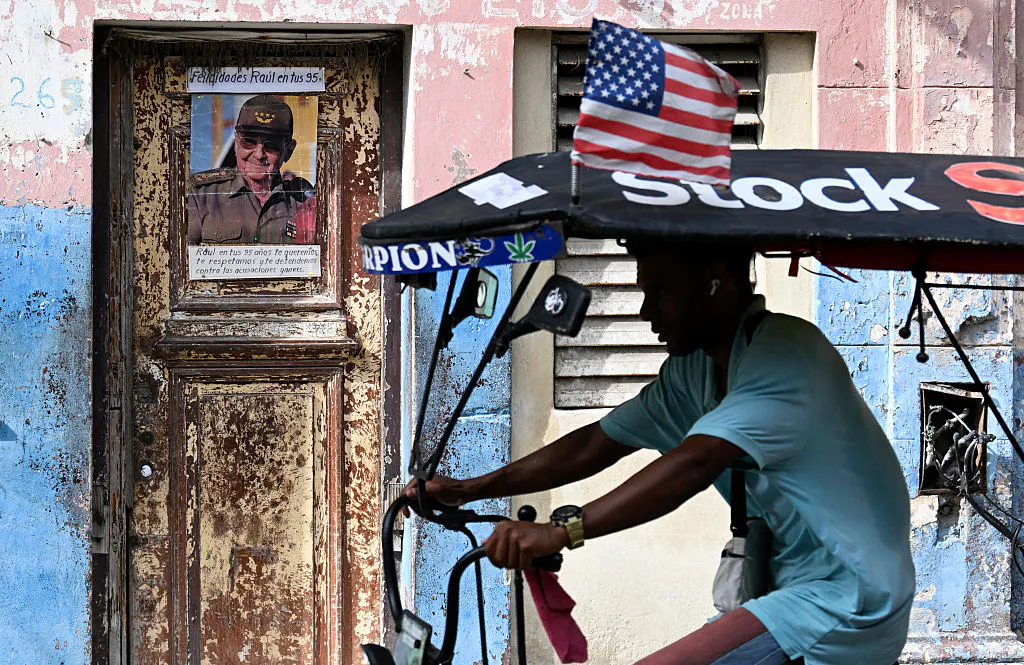
Now a communist regime that supports our adversaries and has plagued the United States for decades is watching the walls close in. The Cuban regime suffered a crushing blow when Maduro – who supplied the Cuban communist regime with the majority of its oil imports – was taken out in January. But Havana’s struggles have only intensified since Maduro’s ouster.
A continuous barrage of sanctions has taken aim at the regime’s economic lifelines – and the network that carries out sophisticated influence operations inside America.
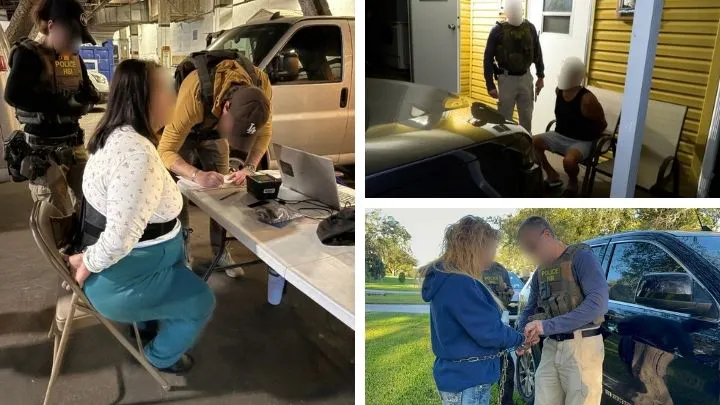
Those who travel to the island in support of the revolutionary communist movement may, for the first time, face real scrutiny from the United States government, as certain activists discovered when they were detained and had their devices seized upon landing in the U.S. after a trip to Cuba to celebrate Fidel Castro’s 100th birthday.
Rubio says that the island “will be on an irreversible glide path toward a different future” by the end of the president’s term. But after less than two years with Rubio as Secretary of State, the whole region can look forward to a better future, and the American people will be better off.
***
Alfonso Aguilar serves as the Director of the Hispanic Leadership Coalition at the America First Policy Institute.
More from this network:
Domains for Sale · GOTPeople.org · TheDSAPlatform · The Truth About Socialism
What's Your Reaction?
 Like
0
 Dislike
0
 Love
0
 Funny
0
 Wow
0
 Sad
0
 Angry
0

I am just an average American. My teen years were in the late 70s and I participated in all that that decade offered. Started working young, too young. Then I joined the Army before I graduated High School. I spent 25 years in, mostly in Infantry units. Since then I've worked in information technology positions all at small family owned companies. At this rate I'll never be a tech millionaire. When I was young I rode horses as much as I could. I do believe I should have been a cowboy. I'm getting in the saddle again by taking riding lessons and see where it goes.
Premium domains for sale



Comments (0)