

How Private Equity Is Ruining HVAC
Premium domains for sale
Freedom Is Back In Style
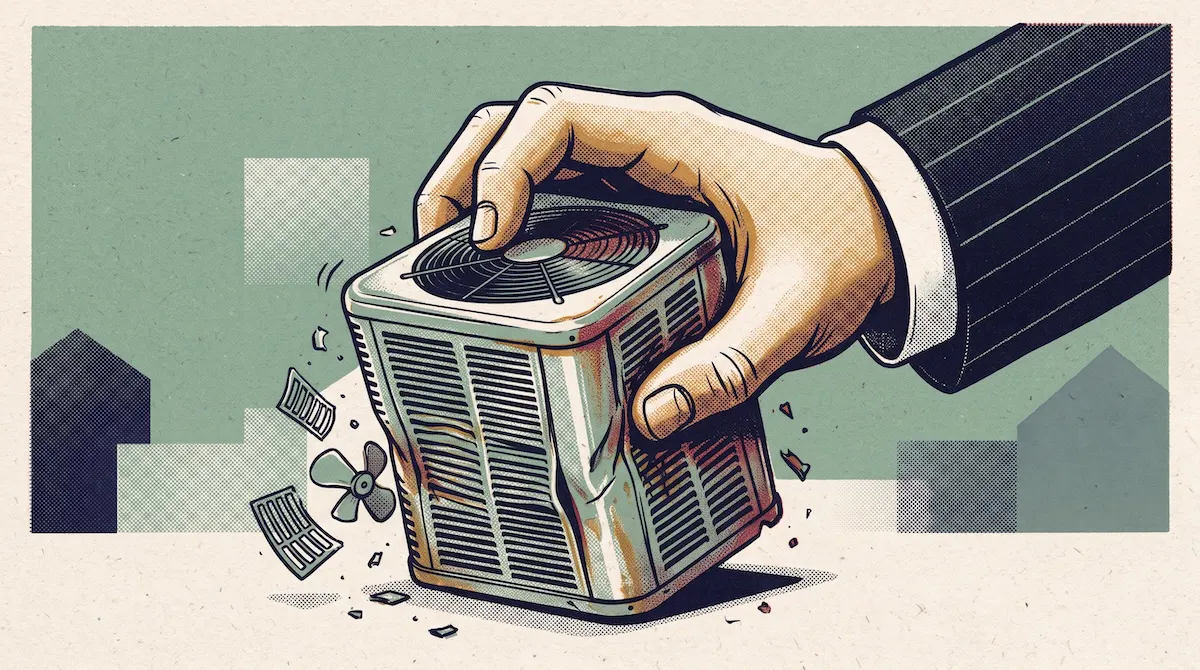
Whether you’ve noticed it or not, it’s virtually guaranteed that your home repair bills (particularly involving HVAC and plumbing) have increased dramatically in the past few years. And when I say dramatically, I’m talking about a rate that exceeds inflation by more than 25% — and probably more like 40%.
Freedom Is Back
In Style
Premium domains for sale
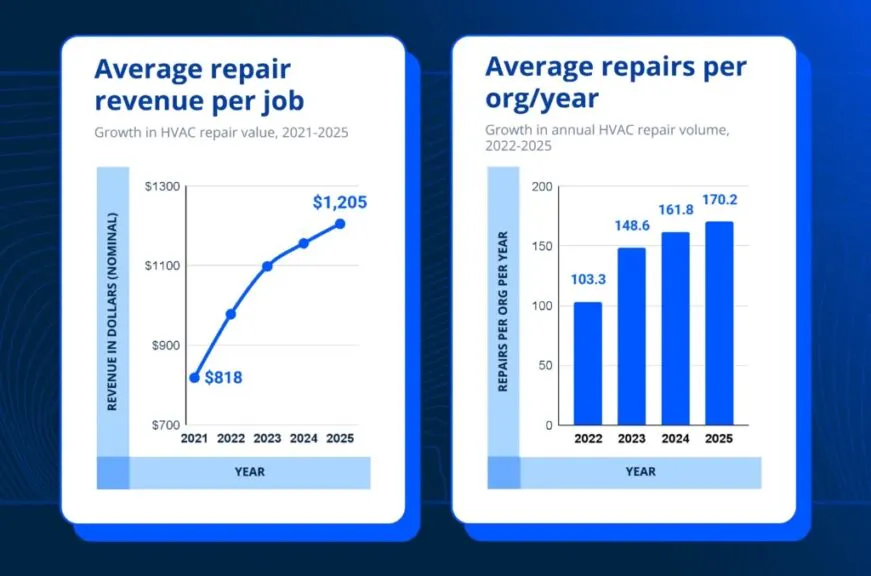
According to one estimate, average repair revenue per job in the HVAC industry jumped from $818 in 2021 to more than $1,200 in 2025. Even as average repair costs for HVAC contractors fell by around 26% in the fourth quarter of 2025 (compared to late 2023), average ticket prices — the amount customers have to pay — continued to increase. And you can’t “shop around” to beat these prices.
Odds are, when you try to find a better deal, you’re finding everyone is charging the same rate. It’s yet another ongoing, ever-increasing maintenance cost that’s destroying the finances of homeowners. And for millions of young people, it’s yet another reason to avoid buying a home in the first place.
To understand what’s going on here, I need to begin with the following footage, shot by Inside Edition a couple of years ago in New Jersey. They exposed an HVAC company called “Gold Medal Service,” which sent a technician to their decoy house and tried to charge more than $1,000 for a non-existent leak in their air conditioner.
This is basically “To Catch a Predator HVAC edition”:
So “Gold Medal Service” couldn’t even bring themselves to respond to this report (Apparently, after the report aired, they put out a post suggesting it was misleading in some way, although it clearly wasn’t). Their technician just runs out of the home and flees in his van, leaving his tools behind. Really, the only thing about this segment that could’ve been improved is having the police waiting outside the house to arrest this guy. That was a feature of “To Catch a Predator,” and they need to bring it back for stings like this.

But the really amazing thing about this report is not that an HVAC technician was caught trying to rip off a customer. That comes with the territory. The really extraordinary thing is that “Gold Medal Service” was not actually impacted by this report in any significant way. Believe it or not, they’re still in business. And they have some very strong financial backing from a private equity-backed portfolio company called Strikepoint Group Holdings.
On the website of this private-equity-backed company, they boast that Gold Medal Service was “founded in 1994” and that “Gold Medal technicians are known for getting the job done right every time and are the most trusted when it comes to heating, cooling, plumbing, and electrical services.” The slogan says they’ve been “trusted for generations.”
It doesn’t seem like it could possibly be real, but it is. This company was exposed in front of an audience of millions. They tried to scam a reporter who caught them with hidden cameras. And despite that, they’re still in business and still enjoy the backing of a large private-equity firm.
Not only that — they’re pretending as if they have a sterling reputation for “getting the job done right every time.” The private equity firm is trading on this firm’s reputation from 1994 — before it was owned by private equity and before they scammed the news reporter — even though this company is obviously complete trash now. “Brazen” does not begin to describe this.
But the important lesson here is that “Inside Edition” did not simply expose one bad HVAC company. They actually exposed a much larger scam, which is almost certainly affecting you — because it’s spread all over the country, across the vast majority of suburbs and virtually every city.
To understand what’s going on here — and how to find a way to reverse the trend — we need to begin with a demonstration. Imagine you’re living in the Detroit-Ann Arbor area. Your air conditioning just went out, and you want to hire a locally-owned and operated, reliable HVAC company with a good reputation. You go online, find a company called FLAME, set up a service appointment, and this van shows up outside your house:
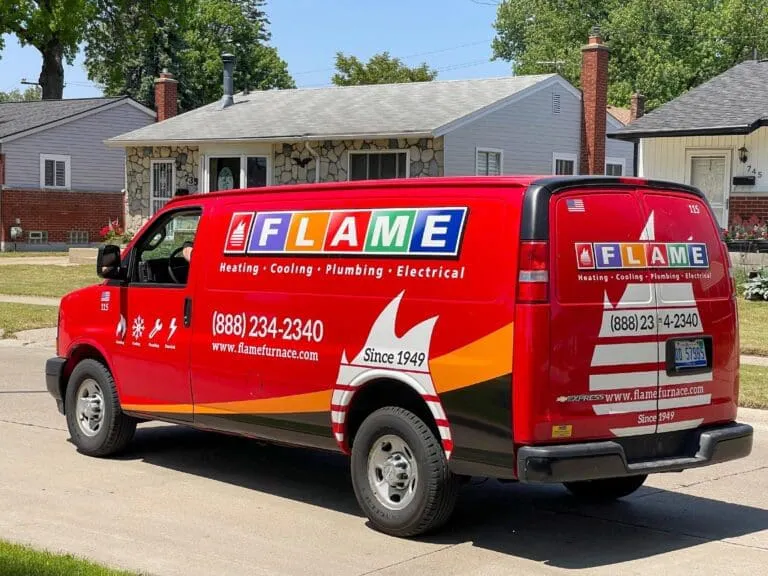
As you can see, it’s a nice, bright-red van, and it looks like it’s professionally maintained. Plastered on every side of the truck, you’ll see the words “Since 1949” — letting you know that these people have been on the job for a very, very long time. And indeed, that was a big part of the reason you selected these people in the first place.
All over their website, they advertise that they’ve been in business since the 1940s:
“Since 1949 … FLAME Heating, Cooling, Plumbing & Electrical offers residential and commercial services throughout the Detroit metro area, including Macomb, Oakland, St. Clair, Wayne, and Washtenaw counties. Above all, we believe in delivering excellent and reliable service to our customers. We have more than 135 employees and 95 vehicles on the road to adequately meet the needs of our community.”
So that sounds like a good option. It’s a big fleet, lots of employees, and they have tons of experience. Pretty much since the end of the Second World War, they’ve been repairing air conditioning units in your neighborhood. And of course, no one stays in business that long unless they’re good at what they do. Plus, they have a reputation to protect. So, it stands to reason you can trust them.
On top of that, FLAME even puts out really quirky ads highlighting their individuality and irreverent sense of humor. There’s nothing corporate about them:
It’s great stuff. As the technician gets to work on your air conditioning, you feel confident that you’ve selected a quality local company to fix your AC.
Then, you notice another van pull up to your neighbor’s house across the street. It looks like this:
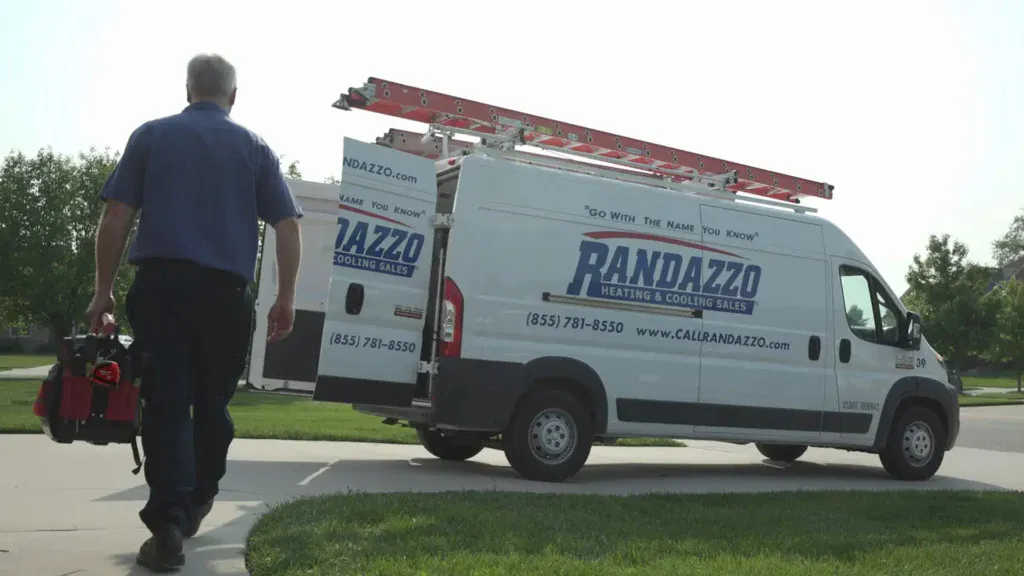
It belongs to a company called Randazzo Heating, Cooling, and Electrical. Emblazoned on their van, you’ll find the slogan: “Go with the name you know.” You start to wonder if maybe you shouldn’t have gone with Randazzo, since apparently, it’s the name “people know.” You pull out your iPhone, go to Randazzo’s website, and this is what you see on their “About Us” page:
Randazzo Heating, Cooling, and Electrical is a Michigan-based company, keeping Michigan residents comfortable since 1988. … Our team believes in setting the highest heating and cooling industry standards, leading with innovation and integrity, and breaking all barriers. Our team is a large family. Together, through Christ, all things are possible.
This is obviously a very different message from the one you saw on FLAME’s website. At FLAME, they’re bragging about how they’ve been around since the 1940s, and how they have a ton of vehicles and employees. But Randazzo doesn’t care about any of that. They’ve only been around since the 80s. Instead, Randazzo cares about their Christian faith, and how, with God’s help, they can innovate, meet high standards, and maybe even fix your air conditioning.
Let’s say you’re a Christian. This message might appeal to you for obvious reasons. And then, right as you’re having these thoughts — because apparently everyone’s AC just broke — yet another van pulls up to a neighbor’s house:
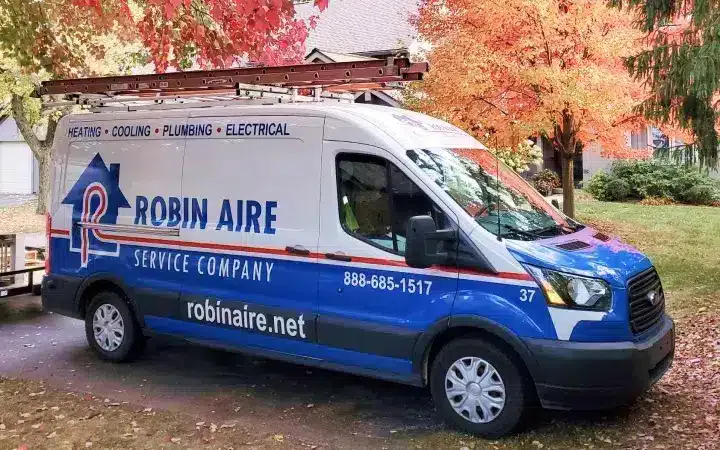
“Robin Aire Service Company” does the same kind of work — HVAC, plumbing, electrical, and so on. Their van is a little more plain than the others — there’s no slogan or anything — but on some level, you can appreciate that. After reading all this marketing language, you’re in the mood for an HVAC company that doesn’t stand on ceremony.
So you go on their website, and you come across a nice big Robin Aire team photo, with everyone looking like they’re in good spirits. The website goes on to talk about all the community service that Robin Aire does:
It has always been a priority to give back and help others in need, which is why we participate in various community activities. We are a proud partner of Lennox’s Feel the Love Program, which brings heating and cooling equipment to deserving families who need a helping hand.
So that’s a unique perk of going with Robin Aire. Unlike the other companies, they give back to the community. You have so many choices — and they all seem like great options.
Right then, your FLAME technician emerges from your backyard with a grim expression. “I’m sorry, sir,” he tells you. “You’re looking at a major repair here — at least $2,000. You might be interested in buying a new unit altogether, to save on future costs.”
You’re crushed to hear this. You don’t have the money. And frankly, you don’t necessarily trust the guy. After all, he has every incentive to upsell you on an expensive repair (or replacement) that you don’t need. So you tell the repairman to come back another day. Then you set up two more appointments — one with Randazzo, and one with Robin Aire. It seemed like a smart way to scope out the market. Maybe the Christian warriors at Randazzo Heating Cooling and Electrical can find a way to do the repair for cheaper. Or maybe the public servants at Robin Aire could come through.
But as these technicians from the other two companies show up (in this hypothetical scenario), they all tell you the same thing. You’re looking at a $2,000 bill, minimum. So reluctantly, you break out the checkbook. You really don’t see any other option. You’ve compared all your options, and you’re left with no other choice. The market has spoken.
Except in this hypothetical case — the market did not, in fact, say anything. That’s because all three of these companies — which are real companies that all work in the same service area in Michigan — are owned by the same gigantic private-equity-backed institution called Heartland Home Services (Heartland is specifically backed by a private equity firm called “The Jordan Company”, which manages tens of billions of dollars in assets).
To be clear, the private equity firm acquired all of these HVAC companies recently — within the last decade. They acquired FLAME and Robin Aire in 2021, and Randazzo in 2017. In other words, a large private equity company swooped in and acquired these HVAC companies — and dozens of others — which serve the exact same region.
But the private equity company did not unify the branding of these companies, or do anything to indicate they were under new management. Instead, the whole point of the deal was to purchase the “reputation” of these individual companies, while also eliminating competition in the market and giving customers the illusion of choice.
To do that, they try to make each company look distinct — on their vans, on their websites, etc. But in reality, they all have the same owner. So if hypothetically you shopped around at all three of these companies, you were really talking to the same people.
Almost no other industry works like this. I guess it’s common in the glasses industry, where Luxottica basically owns all of these smaller brands that pose as independent entities (like Ray-Ban, Oakley, and so on). And it’s common with funeral homes too, believe it or not. But for the most part, this isn’t how it works.
When Apple buys a smaller company, as it did with “Siri,” for example, everyone understood that Apple had taken over the brand. When Amazon bought Whole Foods, they didn’t try to hide it — they actually started including Amazon return stations in every store. When Sirius bought XM Radio, they kept their name “Sirius.” And on and on.
Generally, when one company acquires another, they don’t go out of their way to hide their connection to the company they’ve purchased. They might keep the existing brand, sure — that happens all the time (like Disney with Lucasfilm, for example). But private equity is doing something very different with these HVAC companies. It’s keeping these smaller companies around and pretending they’re still independent.
Heartland is just one example of a private-equity-backed firm doing this, but it should be mentioned that it’s a massive operation. They own “24 brands across 7 states including Illinois, Indiana, Kentucky, Michigan, Missouri, Ohio, and Wisconsin,” according to their website. And again, this is just one private-equity-backed firm.
The same exact scenario is playing out thousands of times, all over the country, every year — and it’s accelerating. According to PitchBook, private-equity investors have “purchased nearly 800 HVAC, plumbing and electrical companies since 2022.”
Adam Hanover, who serves as chairman of a private-equity-backed company called Redwood Services, told The Wall Street Journal that “Everybody and their uncle owns an HVAC business in the private-equity space today.”
To be clear, I’m not against capitalism. I don’t oppose the idea of big corporations buying smaller ones. I don’t even think “private equity” is always a bad thing in every context — they saved Arby’s, which is the best fast food restaurant in the world. Never let anyone tell you otherwise. And yes, there are some benefits to having one big, well-funded company take over and manage a bunch of independent operations.
When private equity takes over, the HVAC companies tend to get better scheduling systems with better technology. The technicians tend to get better deals on their health insurance. Along the same lines, backend costs tend to get cheaper, due to “economies of scale.” It’s expensive for a small mom-and-pop operation to have an accounting department, for example.
But if Heartland adds one more HVAC business to its portfolio, it doesn’t really increase its middle-management costs at all — the existing accounting department can take care of it. In theory, those savings could be passed on to customers.
The problem is that, in reality, savings are not being passed on to customers. Quite the opposite. As private equity has moved in and taken over the HVAC industry, competition has disappeared, and costs have spiraled out of control. One of the main ways private equity companies have increased the margins of these HVAC companies is by pressuring customers into paying for more expensive installations or repairs than they need. They want you to pay to replace your entire unit rather than get a repair because it’ll dramatically improve their margins.
They also push customers to sign up for regular service plans and warranty visits, because for investors, one of the single most important metrics is “recurring revenue.” If they can convince you to pay them for basically doing nothing — just coming out and taking a look at your equipment when it’s running fine already — then they’ll do it. Because many of their customers are old, and generally try to be agreeable people, these sales pitches are usually successful.
Given the quality of the installations these private equity-backed companies are performing, the warranty is actually a smart investment. According to some HVAC engineers, private equity companies will encourage their employees to complete as many installs as possible — even if they’re so shoddy they’ll require follow-up service appointments. This is reporting from The American Prospect. It’s about Jeff Howard, who works as an HVAC engineer in Indiana:
Howard was optimistic when he moved to Williams Comfort Air, a regional firm he had long admired. But it was soon acquired by the Wrench Group, a private equity–owned rollup of home services companies. “You saw this big shift in focus to just replace more boxes, and not care about the clients, not care about the employees,” Howard told the Prospect, after leaving earlier this year. “There was a mass exodus of talent and technicians.” … … “When Wrench took over, it was hey, we now have all these problems from installs we’re just throwing in,” he said. He estimated that warranty calls doubled. He ended up in a spat with leadership, he said, after going on several warranty calls for equipment that had been badly installed. “They upsized the equipment, oversold it, said it was going to take care of all their problems … I ended up going in, ripping it all out,” he said. “They didn’t like that at all, so that’s when they started trying to demote me.” Ultimately he left, he said, with multiple other employees fed up with new management. Of the private equity management, he said, “They abuse the people that actually know how to do things and fix things.
I saw a similar experience on the HVAC subreddit, which read:
Month before Apex [a private-equity-backed company] took over, we had full systems going for 6k-13k. … right after they took over the price book changed. Full systems were going for 16k-23k. Dual caps went from $220 to $384. Plus it’s all about financing and next day install. Gotta put the pressure on and don’t let them figure out the whole price.
So they go out of their way to close a sale, whether or not the customer actually needs the install (which costs a ton more money than it ever did before). And as we covered earlier, if you want to fire these people and find another company — good luck. Odds are, the next company you find will be owned by the same private equity firm.
To be fair, there are some other factors at play here, especially when it comes to the cost of HVAC repairs. For one thing, HVAC equipment prices have jumped by more than 60% over the past 6 years, compared to 31% for general consumer prices:
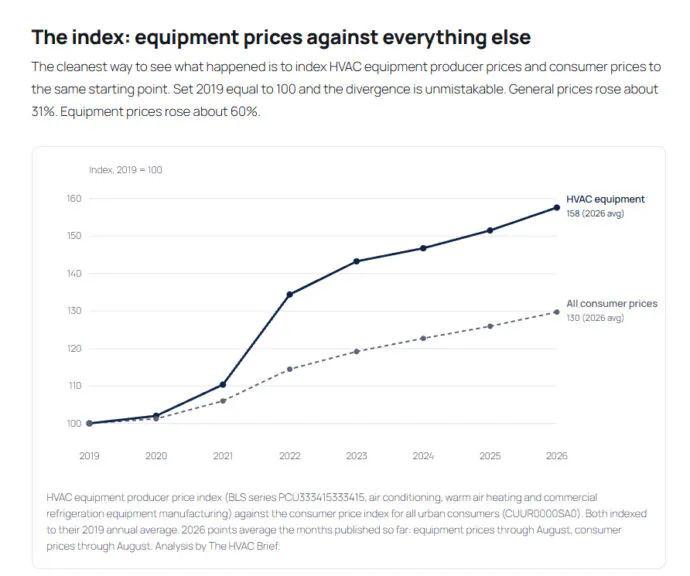
And while you might hear a regulatory explanation for this — an EPA rule restricted the use of “high global warming potential refrigerants,” which raised costs — the truth is that rule only took effect after the biggest price increases in HVAC equipment were already recorded. Other contributing factors included the expiration of a tax credit for heat pumps as well as rising wages for contractors in general.
The other point I need to make is that, of course, even before private equity swooped in to dominate the HVAC industry, plenty of these repairmen were criminals already. I’m not saying that private equity invented the concept of a corrupt repairman. What you should probably do, if you’re getting any kind of expensive repair done — no matter who’s doing it — is make sure you have cameras documenting everything that happens.
As CBS Los Angeles found, you might catch your repairmen just walking past your AC unit, staring at it occasionally — and then claiming that it’s broken. The particular outfit featured in the video, as best I can tell, has no connection to private equity. Neither does this guy in the video, although he’s easily the single most shameless HVAC scammer ever recorded on camera. Truly, this is a next-level performance you’re about to witness:
At least he’s honest. And to give him some credit — he also put in the work to go down there and break the AC unit completely. The other guys couldn’t even be bothered to do that. They just glanced at the AC unit from a safe distance. But this particular HVAC scammer apparently sabotaged the equipment, going above and beyond the call of duty. And he fully admitted what he was doing, on camera. The only thing that’s questionable here is that he went through all this trouble for what, $320? So that’s only about $120 more than the amount he “should have charged,” according to this news station. And that doesn’t really make any sense, frankly. If you’re going to go through the trouble of sabotaging an AC unit, you might as well say they need to do a total replacement for $2,000 or something. Why would you commit a felony for $120?
That’s an amateur mistake, if we’re being honest. And it’s precisely the kind of mistake that private equity can fix. Private equity-backed HVAC companies would not miss this opportunity. There’s just no way. They’d milk that fake-broken AC for all it was worth.
So just to be clear — before you get the pitchforks out — I don’t mean to suggest that all HVAC guys are like this. I don’t mean to smear the good name of the entire HVAC industry — plenty of people have good experiences. And I also should acknowledge that, with all the money flowing into the industry, HVAC now offers a great opportunity for young people to earn a living without incurring massive college debt. This is from the Wall Street Journal article I mentioned earlier. It focuses on a 43-year-old man named Aaron Rice:
Aaron Rice has two logos tattooed on his left leg: one from the plumbing business he co-founded more than a decade ago, and another from the private-equity-backed company that recently bought it. … In Rice’s case, he struggled with addiction and had spent five years in prison for selling meth before co-founding his plumbing business in 2012 with his business partner, Mike Nagal. It specialized in sewer inspections and repair. At the time that they sold the company, it had 18 employees and was bringing in about $3 million in revenue a year. … Rice continues to work as a sewer department manager at Rite Way, and plans to stay with the company until he retires in seven years at age 50—something he’s looking forward to. His co-founder has remained with the company, too. “I want to hunt, fish, drink beer and cook meat,” Rice says, adding that selling his company has given him greater peace of mind for his family.
Well, you can’t fault Aaron Rice’s ambition there. He’s got it all figured out. And look, we’ve discussed many times how college is a scam now — and how students are graduating with $150,000 in debt with a useless English degree or whatever — that it’s important to mention that an alternate career path is available. We can talk about the problems with the industry, and how private equity is making it worse, while also acknowledging that employees in this field are now making more money than they used to.
You can have a very lucrative career, beginning at a relatively young age, if you choose to pursue it. You can become an entrepreneur. You can start your own company, as this guy Aaron Rice did. He evidently made mistakes in his life — he was addicted to drugs and spent 5 years in prison for dealing meth — but he was able to become wealthy, in large part, because of the massive infusion of capital into the HVAC industry. The WSJ article continues:
Workers benefit financially, too, says Graham Weaver, founder of private-equity firm Alpine Investors, based in San Francisco. Alpine, an early investor in HVAC companies, says technicians at the HVAC businesses it acquires get a 20% pay bump in the first year after a company is sold, mostly through a combination of higher wages, bonuses and commission. The company has rolled up more than 200 companies across 43 states into a larger service platform, Apex, which did a combined $2.2 billion in business in the past year. … Still, some workers say that when private equity buys up their companies, they wind up pushing new systems on customers, rather than simply fixing what’s not working. The pressure to make sales is less satisfying than doing real repair work, some sounding off in online forums say.
This is the tradeoff that a lot of HVAC technicians are facing right now. The job pays more, but it’s less interesting. It feels like you’re a salesman, rather than a technician. On the bright side, there are more opportunities to start a business and sell it. But on the other hand, if you do that, then your company will almost certainly turn into a husk of its former self — trading on your reputation, while it scams customers for every dime they’re worth. And then you’ll spend the rest of your life “hunting, fishing, drinking beer and cooking meat,” just like Aaron Rice — which is probably going to get boring very quickly.
In the meantime, as you pass the decades with your fish, your meat, and your Bud Light, you’ll find yourself asking the question: “What if I hadn’t sold? What if I had built the world’s biggest HVAC company instead, without giving it away to private equity? What if we created a reliable, honest, efficient, low-cost repair company with a stellar reputation, across all 50 states, without ever defrauding a single customer?”
This is a novel business model in the industry, admittedly. But it’s worth a try. And now that everyone’s aware of what private equity is doing — now that it’s clear they’re secretly running many of the HVAC companies in the country — there’s a real market opportunity for a company to buck the trend. For the first HVAC company owner who’s willing to put down the beer and the smoker, and to suspend retirement and really take on private equity, the market is clearly there for the taking.
And every homeowner— myself included — will be lining up to hire them. We’ll run their ads on every show. They’ll be offering a service that’s desperately needed — and one that private equity vultures, it seems, are unwilling to provide.
More from this network:
Domains for Sale · GOTPeople.org · TheDSAPlatform · The Truth About Socialism
What's Your Reaction?
 Like
0
 Dislike
0
 Love
0
 Funny
0
 Wow
0
 Sad
0
 Angry
0

I am just an average American. My teen years were in the late 70s and I participated in all that that decade offered. Started working young, too young. Then I joined the Army before I graduated High School. I spent 25 years in, mostly in Infantry units. Since then I've worked in information technology positions all at small family owned companies. At this rate I'll never be a tech millionaire. When I was young I rode horses as much as I could. I do believe I should have been a cowboy. I'm getting in the saddle again by taking riding lessons and see where it goes.
Premium domains for sale





















Comments (0)