

I Had A Rare Spinal Cord Cancer. Genetic Screening Would Have Erased Me.
Premium domains for sale
Freedom Is Back In Style
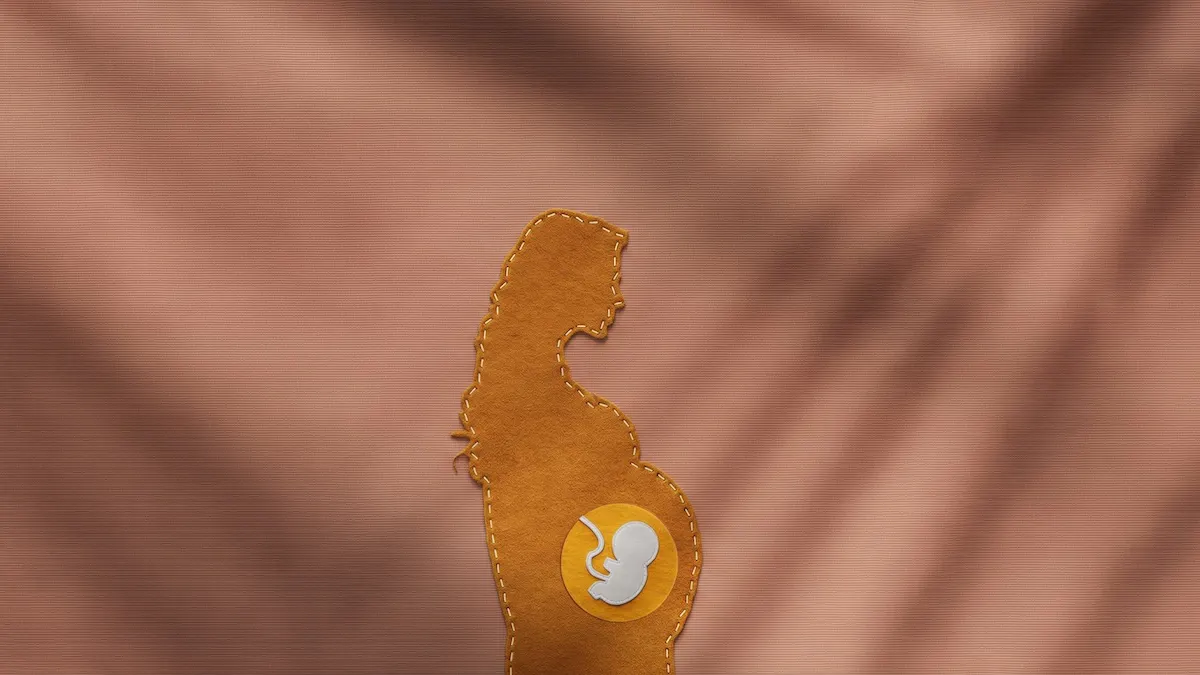
If my parents had had the chance to see my future before I was born and someone had offered them a way to eliminate my risk of a paralyzing spinal cord cancer, of course they would have taken it. What loving parent wouldn’t want to protect their child from pain? But what if that “choice” wasn’t about preventing cancer at all, but about choosing a different baby altogether — one who wasn’t me? That’s not medicine; that’s erasure.
Freedom Is Back
In Style
Premium domains for sale
This is the future some technologists are promising. Recently, a company called Orchid made headlines for offering full genome sequencing of embryos, the broadest form of preimplantation genetic screening to date.
Its CEO, Noor Siddiqui, recently gave a TED Talk and put it bluntly on X: “What if your baby never walks? What if they are never able to live independently? What if you could have stopped it…but chose not to? You optimize everything—career, diet, skincare—but you’re going to chance it on your child’s genome?”
At first glance, this might sound compassionate: sparing children from devastating disease. But listen closely, and you’ll hear echoes of an older — and much darker — logic.
In 1927, Supreme Court Justice Oliver Wendell Holmes wrote in Buck v. Bell, “Three generations of imbeciles are enough,” upholding the forced sterilization of people deemed “unfit to reproduce.” Doctors sterilized thousands of poor women, black Americans, and people with disabilities under state laws justified by the science of the day: eugenics. The idea was simple but cruel: Some lives were less worth living, and less worth passing on.
We recoil at those words now. And yet, the same worldview persists under the sheen of biotech innovation. In 2020, The Atlantic published an article titled “The Last Children of Down Syndrome,” describing how Denmark’s universal prenatal screening has nearly eliminated births of children with Down syndrome. Siddiqui calls genetic diseases, like Down syndrome, a “typo” on their DNA. It is not a leap of science fiction to imagine parents or even the government using Orchid’s tools the same way, systematically narrowing the range of who is “allowed” to be born.
It is laudable to alleviate suffering, to seek cures, to heal when we can. But there is a profound moral difference between alleviating suffering and eliminating the people who suffer. That line is not blurry.
We face this same ethical tension later in life, too. Consider the health care rationing metric called “quality-adjusted life years,” or QALYs, which places greater value on a year of life lived without disability than on the life of someone like me. This calculus makes disabled people less worthy of treatment — not because our lives are shorter, but because the system sees us as less valuable.
People on both sides of the political aisle believe in this ideology of optimization. In fact, President Donald Trump’s “Most Favored Nation” drug pricing model is importing QALY health care rationing to the United States.
This is not to sugarcoat the suffering that comes with illness or disability. Caregiving is messy. Interdependence is costly. Disability is painful. Not a day goes by that I don’t long to run in the yard with my children or wake up without pain. But even with these burdens, my life is worth living — not because it is optimal, but because it is human.
That is what companies like Orchid miss when they market children’s genomes as if they were consumer tech. A child is not a startup to optimize. We cannot reduce human value to risk scores, health profiles, or projected IQ.
The real measure of human progress is not how efficiently we prevent imperfection. It’s whether we can build a world where we welcome, support, and dignify our neighbors. The value of existence doesn’t lie in optimization. It comes from the irreducible worth of every human life.
***
Rachel Barkley is director of Able Americans.
This article is part of Upstream, The Daily Wire’s new home for culture and lifestyle. Real human insight and human stories — from our featured writers to you.
More from this network:
Domains for Sale · GOTPeople.org · TheDSAPlatform · The Truth About Socialism
What's Your Reaction?
 Like
0
 Dislike
0
 Love
0
 Funny
0
 Wow
0
 Sad
0
 Angry
0

I am just an average American. My teen years were in the late 70s and I participated in all that that decade offered. Started working young, too young. Then I joined the Army before I graduated High School. I spent 25 years in, mostly in Infantry units. Since then I've worked in information technology positions all at small family owned companies. At this rate I'll never be a tech millionaire. When I was young I rode horses as much as I could. I do believe I should have been a cowboy. I'm getting in the saddle again by taking riding lessons and see where it goes.
Premium domains for sale














Comments (0)