

Inside Speaker Johnson’s Private Capitol Tour: Faith and America’s Founding
Premium domains for sale
Freedom Is Back In Style
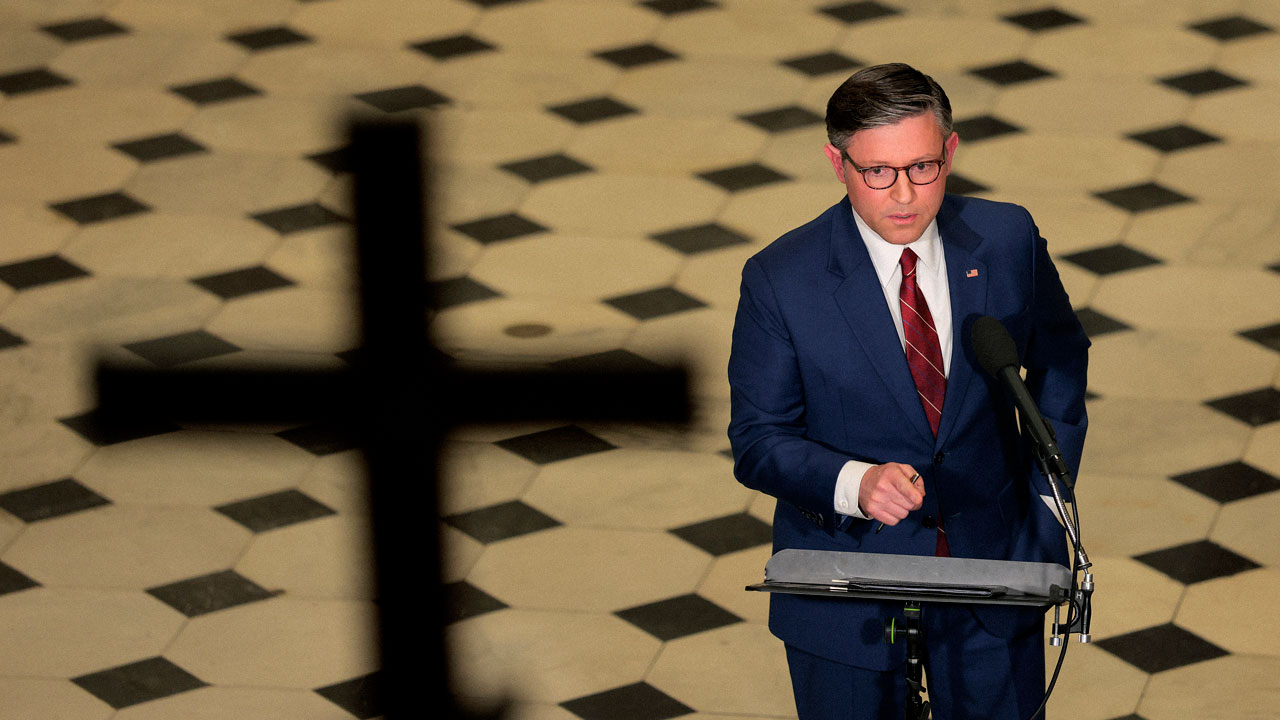
House Speaker Mike Johnson led a private tour of the U.S. Capitol recently, emphasizing the role of faith in America’s founding 250 years ago.
Freedom Is Back
In Style
Premium domains for sale
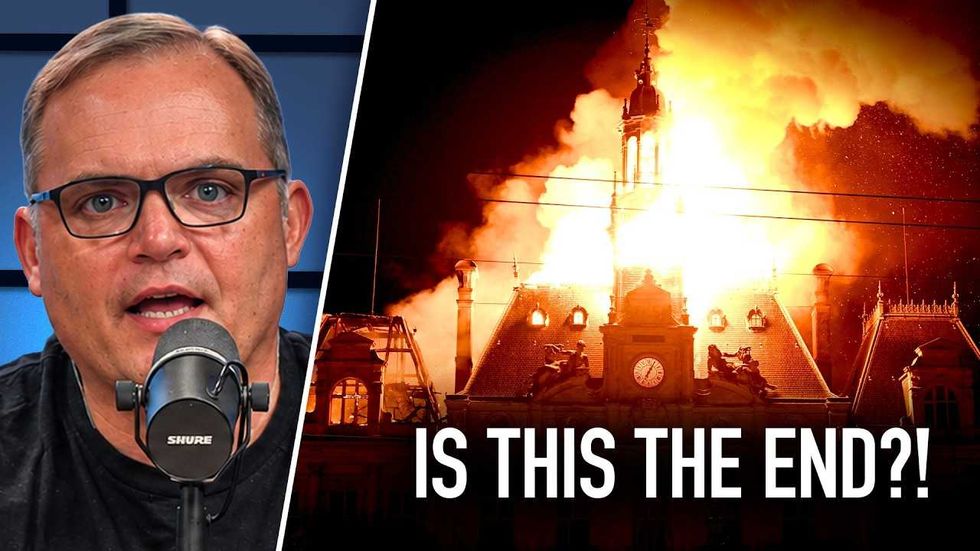
Frank Turek, founder and president of the Christian ministry CrossExamined.org, recorded portions of Johnson’s May 20 tour and shared clips on his show, “I Don’t Have Enough Faith to Be an Atheist.”
As busy as he is as House speaker, Johnson doesn’t give many personal U.S. Capitol tours. Addressing the group at the outset, Johnson framed the tour around the country’s religious heritage, saying the “common thread” uniting Americans was a “commitment to our faith and to our Creator,” which he tied to the upcoming 250th anniversary.
The Speaker’s Prayer
Johnson acknowledged the unwarranted controversy of his May 17 prayer at the Rededicate 250 celebration. He noted that “All I did was pray. … OK, 10 minutes.”
During his prayer, Johnson expressed that our rights come from God.
MS NOW host Katy Tur criticized Johnson afterward, sparking a media firestorm over her comments.
“What about this passage from Mike Johnson declaring that our rights do not derive from government, they come from you, our Creator and heavenly father,” Tur said. “Is this him putting God over the Declaration of Independence?”
Johnson told the tour group, “In the prayer I literally quoted the Declaration, second paragraph, right?” alluding to the portion that states we are endowed by our Creator with certain unalienable rights.
Touring the Capitol
Throughout the tour, Johnson repeatedly pointed to what he described as religious symbolism embedded across the Capitol, particularly on the House floor. He said his goal was to show visitors the historical and symbolic connections between faith and the nation’s political institutions.
“What I wanted to do tonight … is take you right in the middle of it, on the House floor, and spend some time looking at all the symbols that remind everybody what our foundation is,” Johnson said.
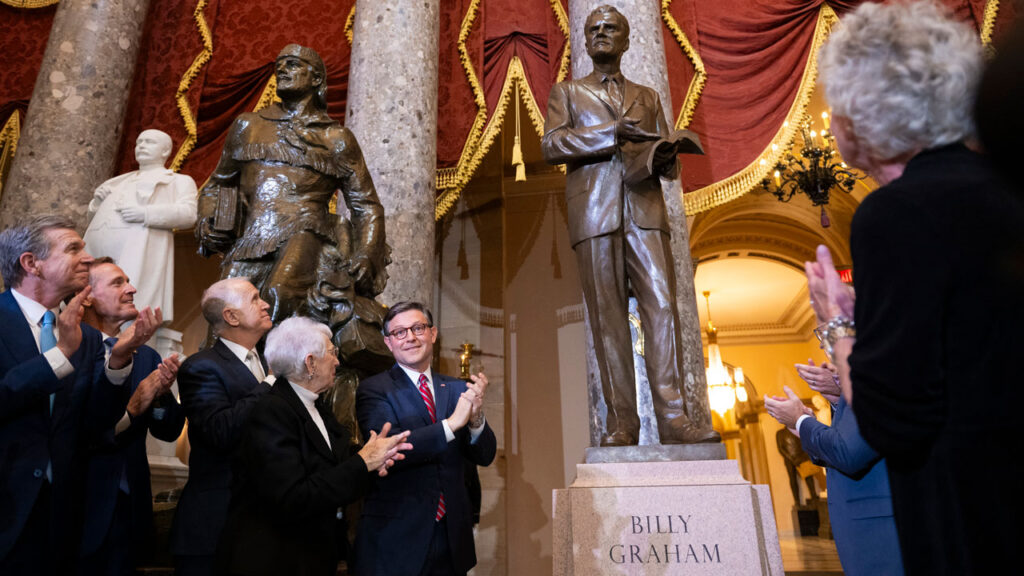
As the group went into the Capitol crypt, the speaker pointed to statues, including one of his favorites, the late Rev. Billy Graham.
Before the dedication ceremony of North Carolina’s Billy Graham statue, the famous preacher’s son, Franklin Graham, brought Johnson his father’s study Bible. Johnson used the Bible during the dedication ceremony and cited scripture from the pages where Graham had written notes.
Recognition of Faith
During the tour of the Rotunda, Johnson discussed the historical paintings and the symbolism of the Capitol dome, which he described as a globally recognized representation of freedom.
“We’re the most free, most successful, most powerful, most benevolent nation that has ever been,” Johnson said, pointing to the country’s history as evidence of its foundational ideals.
When explaining the paintings in the Rotunda, Johnson said, “In every one of these portraits there’s some recognition of the faith—the deeply embedded religious and moral tradition of our country.”
The tour continued through Statuary Hall, where Johnson discussed how America’s sixth president, John Quincy Adams, had a lasting impact on the country’s 16th president, Abraham Lincoln, in their quest to end slavery. He used the example to highlight what he described as the importance of individual responsibility and faith in public life.
“We’re supposed to be faithful in the little things God puts before us today, and we trust him with the rest,” Johnson said.
As Johnson went through each room in the Capitol, he returned to a consistent theme: how the nation’s founding principles are closely tied to religious belief and moral tradition.
More from this network:
Domains for Sale · GOTPeople.org · TheDSAPlatform · The Truth About Socialism
What's Your Reaction?
 Like
0
Like
0
 Dislike
0
Dislike
0
 Love
0
Love
0
 Funny
0
Funny
0
 Wow
0
Wow
0
 Sad
0
Sad
0
 Angry
0
Angry
0

I am just an average American. My teen years were in the late 70s and I participated in all that that decade offered. Started working young, too young. Then I joined the Army before I graduated High School. I spent 25 years in, mostly in Infantry units. Since then I've worked in information technology positions all at small family owned companies. At this rate I'll never be a tech millionaire. When I was young I rode horses as much as I could. I do believe I should have been a cowboy. I'm getting in the saddle again by taking riding lessons and see where it goes.
Premium domains for sale








Comments (0)