

Is The American War Machine Dead?
Premium domains for sale
Freedom Is Back In Style
Since the 20th century, America has been at the center of global affairs, making decisions that have shaped the power structure and socioeconomic outlook not only of the United States but also of Europe, Asia, and Africa. These decisions aren’t purely reactionary, but often involve anticipating future alliances and threats and recognizing when America is at a crossroads. Henry Kissinger, a man who stands out as someone who made a deep and lasting impact on America’s global position as a superpower and who shaped foreign policy for decades after Richard Nixon left office, perhaps anticipated the current crossroads America once again finds itself with the Trump administration regarding China, Iran, and Russia – and the opportunities and risks. Trump, Kissinger said, had the “possibility of going down in history as a very considerable president,” and this moment in time offers an “extraordinary opportunity” for the future. But the question remains: Is the U.S. up to the challenge? Have we relied too heavily on a world lulled into the complacency of modernity, technology, and precision? Have we taken for granted the force and weaponry needed to maintain a global order with America at the helm? The Daily Wire discusses these questions with Matthew Kroenig, senior fellow with the Atlantic Council’s Scowcroft Center for Strategy and Security. He was appointed by the U.S. Congress as a commissioner on the Congressional Commission on the Strategic Posture of the United States, and previously served in the Department of Defense and the intelligence community during the Bush, Obama, and Trump administrations.
Freedom Is Back
In Style
Premium domains for sale
***
Ben Domenech: Matt, I want to talk to you for a number of reasons, but primarily because of this story that has gone very viral this week, including a report about the president and a potential conflict that he had over the idea that American munitions — our capabilities – have been seriously degraded. I know this has been one of your hobby horses for a while, regarding America’s lack of really standing things up the way they ought to. Tell me what’s really going on here.
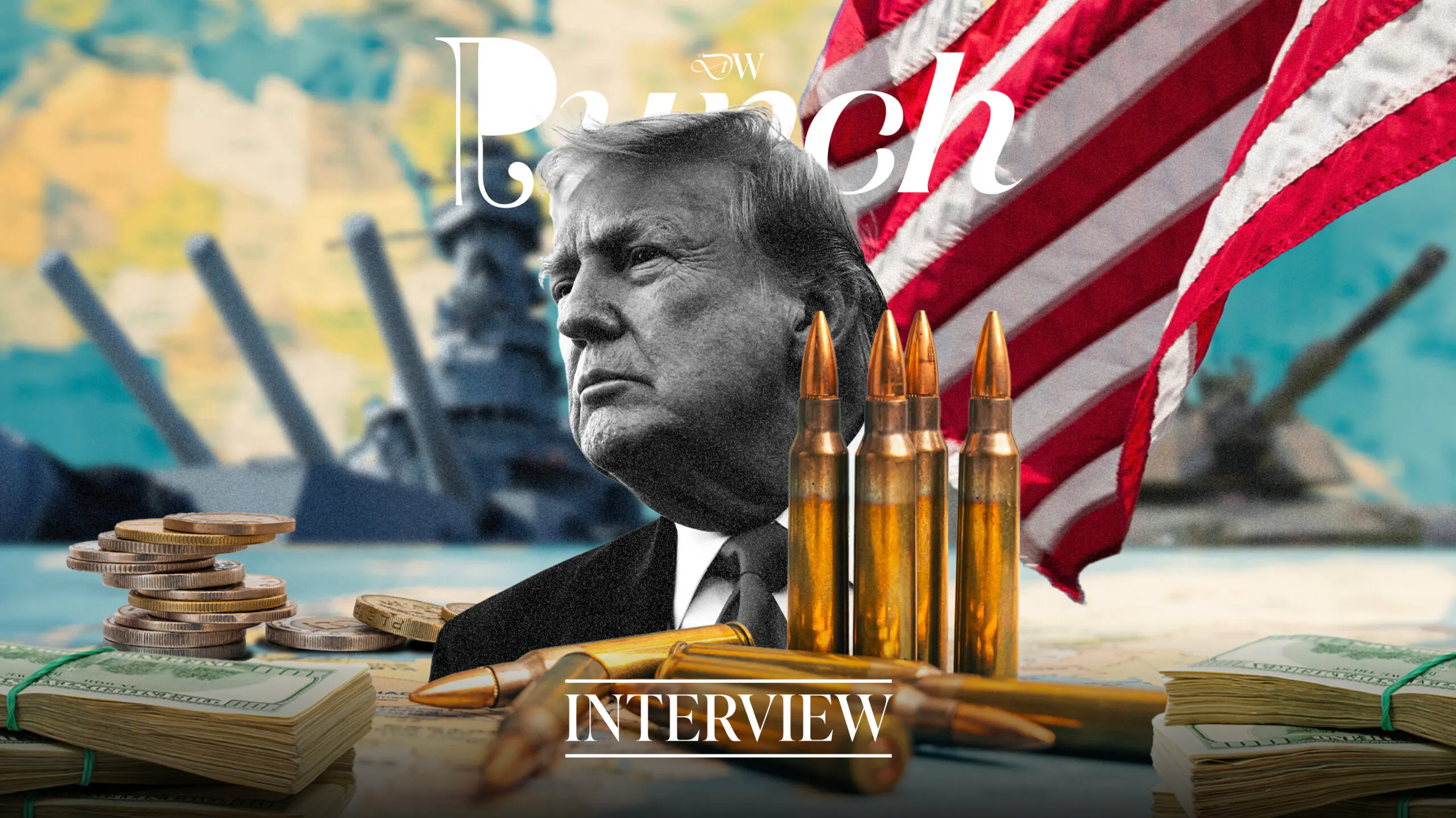
Matthew Kroenig: The first thing I’d say is the exact stockpile numbers are classified, so nobody in the public knows exactly what these are. And two, the story resulted from someone linking it to the press, so the administration is denying that we’re running low. And so there is some uncertainty just about the baseline facts. But I guess the bigger point is that this really starts in the 1990s, when we had the peace dividend and the Cold War was over. Our major defense contractors shrunk from 51 companies to five, unlike during the Cold War, when we stockpiled weapons for World War III. We didn’t do that anymore in the ’90s, 2000s, and 2010s. If you’re bombing pickup trucks in Iraq and Afghanistan every few weeks, you don’t need large stockpiles. But now with the return of major power conflict in Ukraine and Iran, and then especially for a China contingency, you do need larger stockpiles.
So many experts, including me, realized even before Iran and Ukraine that our defense industrial base, our munition stockpiles, were nowhere near where they need to be. And then, having given and sold a lot of munitions to Ukraine, which I think was the right thing to do, but it did deplete munitions. And now with the war on Iran, it’s not a surprise to me that we’re running low on some of these critical munitions.
BD: So forgive me for asking a very basic question. What is the process like for creating these munitions for us?
MK: We have these big defense contractors that produce these munitions, and we’re talking about Patriot missile defense interceptors; the Ukrainians and our partners in the Middle East shoot incoming missiles. We’re talking about PrSM [Precision Strike Missile] — an Army strike missile. So things like that. We do have our major defense contractors producing these, but until recently, it was like the rest of the global economy and essentially using just-in-time production. If you need a missile, Lockheed will produce a missile; they weren’t making these stockpiles. And so we recognize there’s a problem, which is the first part of fixing it. And the president has asked for the biggest defense budget in history for 2027, $1.5 trillion. That will help. The Pentagon has made revitalizing the U.S. defense industrial base a major priority, so that’ll help. We recognize there’s a problem, yet we’re still not producing at the scales we need.
And just to get back to your point about how these are made to produce in larger numbers, many of these companies would need to open additional assembly lines. Those are major upfront cost investments. In the past, these companies have said, “Well, we’re not going to open major new production lines without long-term contracts,” which they weren’t getting from the Pentagon or from other allies. Now I think industry’s seeing the demand signal that yes, you are going to need more munitions for the foreseeable future. So they are starting to make these investments, but it takes time from the decision to produce more to actually cranking out more missiles and everything else.
BD: Who makes them?
MK: Different munitions are made by different companies, but you have five U.S. primary defense contractors now. RTX, formerly known as Raytheon, underwent a recent merger. Northrop Grumman, Lockheed Martin, General Dynamics, and Boeing. And then the old joke is that they’re produced in all 50 states because there are Senators from all 50 states — so it is divided. But some of the major production facilities are in Southern states like Alabama and Arkansas. But also, really, it is spread throughout the country, including California. In the Northeast, you have Philadelphia, which has a shipyard; you have submarine yards: General Dynamics Electric Boat in Connecticut and HII Newport News Shipbuilding in Virginia. So it’s really spread all over the country.
BD: The thing that is a problem when it comes to ship making, et cetera, is the lack of people with capable knowledge. Is that a problem here, or is this more just a situation where companies, per your earlier answer, have neglected building out the assembly lines, or, for lack of a better term, simply because they didn’t have the kind of contracts that could guarantee payment for it?
MK: Great question. There are a number of challenges, and workforce — which is maybe the biggest, definitely one of the biggest because how many of your readers want their kids to become welders? Probably not that many. They probably want their kids to go to college and work a white-collar job. And so we don’t have people who have the skills. So again, there’s a recognition that we have a problem. In fact, many of these defense contractors work with high schools and technical schools near their plants in many cases. They implemented training and vocational programs. So we’re working on it. But many Americans don’t want to go into this work, and many American parents don’t want their kids to go into this work. So that is a problem. Another potential solution is to automate more and use robotics.
Hanwha, a South Korean company, for example, is way ahead of the United States in many ways, automating a lot of this production. You go to the Philly shipyard, there’s a lot of banging, a lot of noise. You go to a shipyard in South Korea, it’s pretty quiet. It’s just the robots doing their things.
BD: One of the things that I am curious about related to this is how much of this is a problem that has been created by those within the defense industry who have suggested that we need to use various weaponry that is very expensive, that requires more production in terms of time and the pathway that it takes in order to get to the front versus using weaponry that has been used in the past to great effect, particularly in Afghanistan, to deal with different problems that is essentially much more low tech and much more low priced. How much of this is something that is a created problem by the influence of defense contractors and lobbyists?
MK: It’s a self-created problem, but not just from defense contractors and lobbyists, also from Congress, and from within the Department of Defense. So let me make a couple of points. One, you’re right that there’s been a focus on these exquisite high-end capabilities that if you were in a war with China, especially in the opening days, you would want aircraft that could penetrate Chinese air defenses. You would want precision missiles you could fire from standoff ranges. But after those early phases and an extended conflict as we’re seeing now in Ukraine and in Iran, you don’t always need the exquisite stuff. And especially with this revolution in military affairs, we’re seeing these cheap drones having a pretty devastating effect on the battlefield. I think that’s a problem. We’re too focused on the high-end capabilities. Whereas now I think most experts think we need a high-low mix: we do need some of those exquisite capabilities, but we also need the drones and the dumb bombs.
I would say, though, that’s not just driven by the defense contractors; it’s also driven by the services in DOD and the acquisition process. So they’d say, “We want an aircraft that’s stealthy, that’s fast, and that has long range.”
The defense companies would start building them, and they’d say, “Oh, we want an additional requirement now. We want it also to be able to do this.” So that adds more time and cost. Another challenge is oversight by Congress, which, in general, is a good thing. But in this space, a negative consequence has been that if an acquisition officer in the Pentagon is seen as wasting money or there’s a project that takes too long, Congress asks questions; they put in place new regulations. And so that means these acquisition officers become really cautious. They don’t want to lose their job. They don’t want to get into legal trouble. And so they play it safe. Whereas, arguably, you’d want that person to be flexible, innovative, and willing to take risks. Why go to Lockheed Martin for this thing when I can get it off the shelf from a new tech company in Silicon Valley? So, I think many people are to blame for the problem we find ourselves in.
BD: The appetite for funding this level of a defense buildup is obviously one that is overwhelmingly ensconced in the Republican Party. If Republicans lose in November, potentially losing both the House and the Senate, do you think this is a situation where they would be able to ram something like this through? Or is this the kind of thing that’s going to die on the vine based on what happens in November?
MK: A good question. I think they may be able to get it through, although the deal Democrats have always made is, okay, we can increase defense spending, but for every dollar of increased defense spending, we want increased spending on domestic and social welfare programs. And so that’s a deal that Republicans have been forced to make in the past and may be forced to make again, but with big negative consequences, especially for the deficit and the debt.
BD: When it comes to the debate about this type of defense spending, the role of Senator Lindsey Graham, who recently passed, was always one that was pretty critical in pushing things over the line within the Republican conference. Is there concern now that in his absence, this is a conference that might drift in the direction of other Republican voices who have suggested that we actually spend too much on defense and that we should be concentrating more on domestic spending?
MK: Senator Graham was one of the most influential voices in the Senate in recent years, and it’s a huge loss, I think, for Congress and for the country — really for the defense of the free world — that he’s no longer with us.
I’m cautiously optimistic because you’re right: there are voices that are more isolationist and say we’re spending too much. But I think if you look at the majority of Republicans in the Senate, they’re maybe not as charismatic, influential, or as close to the President as Senator Graham was. But I think in terms of policy, they’re kind of where he is. And people like Tom Cotton, Dave McCormick, Deb Fisher — strong on strategic forces — and others who I think do understand that this is a dangerous moment and that the United States is not where it needs to be, and we’re going to have to spend more to get there. One data point that may be of interest to your readers is $1.5 trillion, the defense budget Trump has called for fiscal year 2027, which would be the largest in absolute numbers.
But as a percent of GDP, it is actually below where we were during the Cold War. During the Cold War, we spent an average of about 7% of GDP on defense. And in the Biden years, we were under 3%. And even with this Trump buildup, it would still be below 5%. So some big absolute numbers, but as a percent of GDP, reasonable and less than some of our NATO allies are currently spending.
BD: About those NATO allies — the Europeans have certainly had less than good relations with the president during his second term on a number of different points. At the same time, it seems the head of NATO and other key figures within NATO have actually been very supportive of his advocacy for them to spend more money and have urged them to do so. Yet some of our closest allies within the region, including, of course, the U.K., have been loath to increase their defense spending to the levels that we would like to see. What do you think is going to happen within the next couple of years when it comes to that defense spending? Do you think that at the end of this second Trump term, he will have been able to achieve the kind of NATO spending that he would’ve liked?
MK: Yes and no. So yes, I think it is having a positive effect. And we’ve seen at last year’s NATO summit this historic pledge for all NATO allies to spend 5% of GDP on defense. And many are moving rapidly in that direction. Some, like Lithuania, are already exceeding that. But the pledge is for all NATO allies to get there by 2035. And so that will be well after President Trump has left office. One of my concerns, I think one of the Trump administration’s concerns, is that these countries are making these pledges now, but are they really going to follow through, especially after Trump leaves office? Who comes next? If the pressure is alleviated, will it be easy for them to revert to their previous ways of not spending enough on defense?
BD: I’ve been reading over the past year or so the autobiographies of Henry Kissinger. And there’s this new book by Niall Ferguson that is an appreciation of him. I’m curious about what you think the Kissingerian perspective would be on the second Trump term, what he’s done right and what he maybe has done wrong.
MK: Interesting. Well, I don’t know if you know, among my many jobs is that I’m Henry Kissinger’s designated literary representative.
BD: I did know that.
MK: Well, he was asked about Trump in the first term. And I forget the exact quote, but I think it was something along the lines of he’s going to be a significant figure. And I think he was right about that. I think what he would like about Trump is that Kissinger was a realist and understood that power matters. I think President Trump understands power probably better than Biden and others do. I think the president’s comfortable wielding American power. Also, Kissinger thought it was important for the great powers to have stable relations. And even as the Republican Party became more hawkish, he was always looking to try to have a relationship with China. For example, he was the architect of “Beethoven for Nixon” during the Cold War — of trying to stabilize relations with the Soviet Union. I think Trump’s instinct of trying to maintain good relations with Putin and Xi — Kissinger might’ve been more sympathetic than many commentators today.
On the negative side, though, he probably wouldn’t have liked the inconsistency in Trump’s policy. And we see that now with Iran, where we’ve got a deal one day and then the next day we’re bombing and then three days later back to a deal. I think Kissinger was a strategic thinker who liked to have a clear plan. Ends: What are you trying to achieve? Ways: How are you going to get there? Means: How are you going to support it? So I think some of the more strategic aspects of the Trump administration, he probably would’ve been critical of.
BD: The connection, of course, with Richard Nixon. The Right has seen in recent years a surge — particularly among the young, surprisingly — a reconsideration of Nixon, his presidency, his person, et cetera, to a certain degree. I think this is poser behavior, but I do appreciate it as someone who has always thought that he was an important person to understand in American history. When it comes to your analysis of what’s going on there, why is that happening? And if there is a lesson to be taken away from the Nixon foreign policy experience that young people who are Nixon-maxxing should apply, what does it look like?
MK: On why this is happening, your insights are probably better than mine. You’re really good at mapping developments within the party, especially as they relate to those kinds of issues. It seems to me that the reason it’s happening is the sense that Trump was a victim of the deep state and Nixon got the same treatment. And the only difference is Trump fought back, and Nixon didn’t. And if only Nixon had fought, he would’ve been in a different place. And I think it was Vice President JD Vance who said something like Watergate would be a two-day story today, which is an interesting number of ways we’ve defined DBC down. But I do think that as a foreign policy president, Nixon had some real strengths. And in fact, we often think of Kissinger as one of the most brilliant and influential statesmen in U.S. history. But a lot of the ideas and the strategy were really Nixon’s that Kissinger was implementing, including the idea of an opening to China.
Nixon had that insight before Kissinger did. So I think he was a stronger foreign policy president than we remember, again, because of the Watergate legacy.
BD: The assumption on the part of a lot of people in Washington politics on the Republican side today is that anything that is a rejection of the foreign policy blob, whatever term you want to use, is a good thing. That if they’re on the side of one thing, then I must be on the opposite side. Why is that wrong if it is wrong?
MK: I think it’s wrong. And in fact, I’m working on a new book now; the working title is “Force for Good: How American Power Made the World Safer, Richer, and Freer.” And if you look at the broad sweep of what the United States has done over the past 80 years that was supported by this blob — providing security in important geopolitical regions like Europe and Asia, including with nuclear deterrence, stopping the spread of nuclear weapons to states like Iran, promoting a free and fair open international economic system that allowed U.S. businesses and companies and individuals to prosper in a global marketplace, encouraging democracy and human rights — that’s worked well for the past 80 years and continues to work. And the world is safer, richer, and freer. And the average American is safer, richer, and freer because of that. So has the United States made mistakes? Definitely Iraq and Afghanistan and elsewhere.
But I think too many people are focusing on those negative examples and missing the bigger picture. When you take a step back and look at the bigger picture, an engaged United States that promotes democracy, open markets, and security continues to be a good thing. And if the United States steps back, goodness doesn’t fill the vacuum, but the Russians, the Chinese dictatorships that don’t have America’s best interests at heart are going to be the ones who fill that vacuum.
BD: As I’ve always said, someone will always be in charge, and I would like for us to be in charge.
MK: That’s a good way to put it.
***
More from this network:
Domains for Sale · GOTPeople.org · TheDSAPlatform · The Truth About Socialism
What's Your Reaction?
 Like
0
Like
0
 Dislike
0
Dislike
0
 Love
0
Love
0
 Funny
0
Funny
0
 Wow
0
Wow
0
 Sad
0
Sad
0
 Angry
0
Angry
0

I am just an average American. My teen years were in the late 70s and I participated in all that that decade offered. Started working young, too young. Then I joined the Army before I graduated High School. I spent 25 years in, mostly in Infantry units. Since then I've worked in information technology positions all at small family owned companies. At this rate I'll never be a tech millionaire. When I was young I rode horses as much as I could. I do believe I should have been a cowboy. I'm getting in the saddle again by taking riding lessons and see where it goes.
Premium domains for sale




















Comments (0)