

Israel Blocks Catholic Cardinal From Holy Site On Palm Sunday Over Safety Concerns
Premium domains for sale
Freedom Is Back In Style
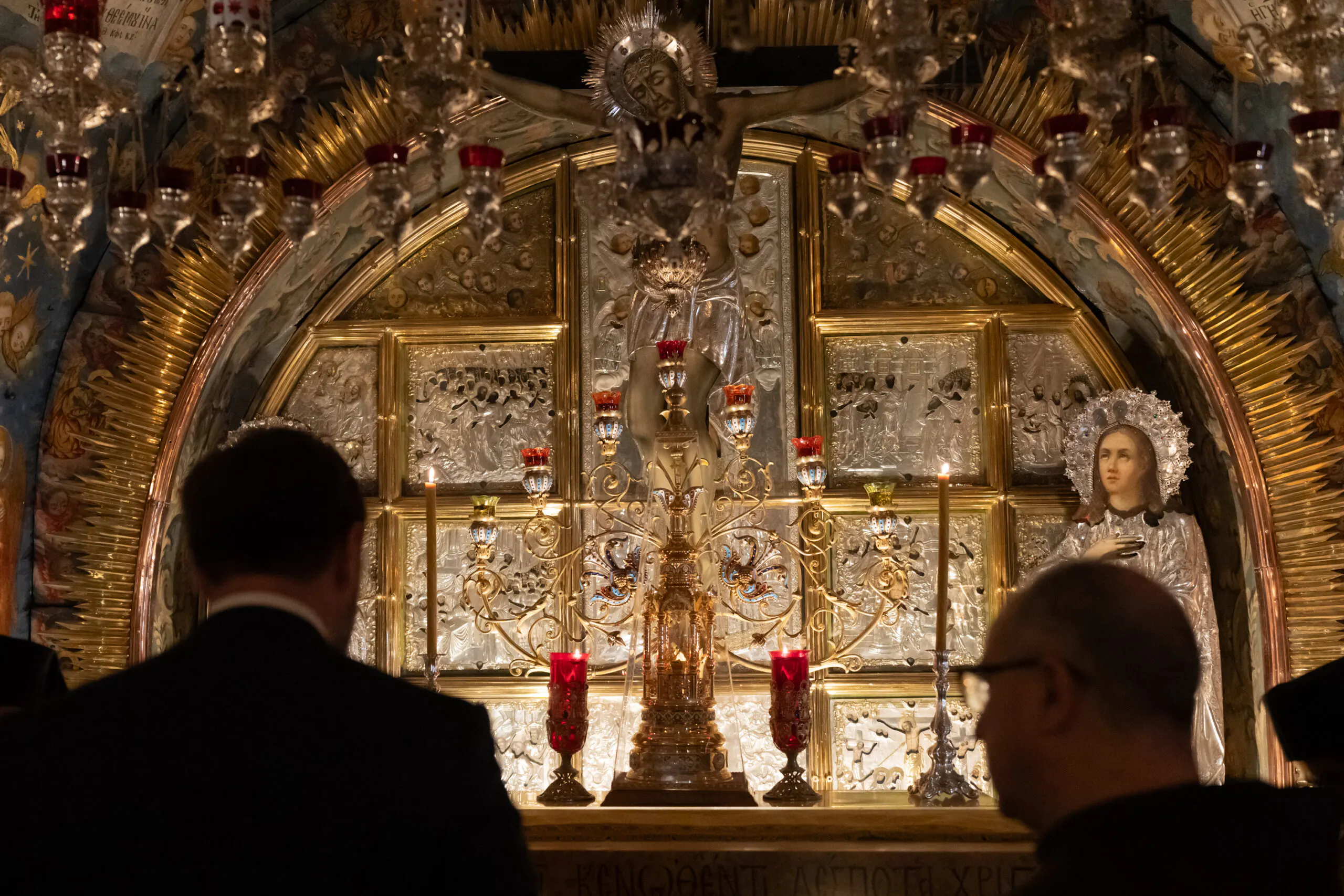
Israeli police prevented senior Catholic leaders from entering the Church of the Holy Sepulchre on Palm Sunday, marking what church authorities say is the first time in centuries that the site’s top clerics were barred from celebrating one of Christianity’s most sacred observances.
Freedom Is Back
In Style
Premium domains for sale
According to a joint statement from the Latin Patriarchate of Jerusalem and the Custody of the Holy Land, Cardinal Pierbattista Pizzaballa, the Latin Patriarch of Jerusalem, and Father Francesco Ielpo, the Custos of the Holy Land and official guardian of the church, were stopped en route to the church and turned back by police.
The two clerics were traveling privately and “without any characteristics of a procession or ceremonial act,” the statement said, yet were still denied entry to the site where they were scheduled to celebrate Palm Sunday Mass. “For the first time in centuries, the Heads of the Church were prevented from celebrating the Palm Sunday Mass at the Church of the Holy Sepulchre,” the statement noted, calling the incident “a grave precedent” that disregards “the sensibilities of billions of people around the world.”
Church authorities emphasized that they had complied with all restrictions imposed since the start of the war, including canceling public gatherings and arranging for services to be broadcast remotely to the faithful worldwide. “Preventing the entry of the Cardinal and the Custos … constitutes a manifestly unreasonable and grossly disproportionate measure,” the statement said, adding that the decision represented “an extreme departure from basic principles of reasonableness, freedom of worship, and respect for the Status Quo.”
The Patriarchate and Custody expressed “profound sorrow” that prayer on one of the most sacred days of the Christian calendar had been prevented in Christianity’s holiest site.
Italian Foreign Minister Antonio Tajani publicly condemned the move, expressing “heartfelt solidarity” with the Patriarch and Custos — both Italian nationals — and calling the decision “unacceptable.”
“For the first time, the Israeli police denied the leaders of the Catholic Church the possibility of celebrating Palm Sunday Mass in one of the holiest places for millions of believers around the world,” Tajani wrote, adding that Italy had summoned the Israeli ambassador to lodge a formal protest and reaffirm its commitment to defending religious freedom.
Israeli authorities, however, pointed to ongoing wartime conditions and security concerns as justification for the restrictions. In a statement obtained by former Israeli spokesman Eylon Levy, police said that all holy sites, including the temple mount and Western Wall in Jerusalem’s Old City have been closed in accordance with Home Front Command guidelines amid the ongoing conflict.
The Church of the Holy Sepulchre, police said, lacks adequate protected space, and recently Iranian missile shrapnel has landed nearby. They also cited the difficulty of navigating emergency vehicles through the Old City’s narrow alleyways in the event of a mass casualty incident.
According to the statement, Cardinal Pizzaballa had requested an exception to the restrictions, which authorities declined after explaining the security concerns. “‘Freedom of worship will continue to be upheld, subject to necessary restrictions,’” the police statement read, adding that Israel’s top priority remains “protecting human life.”
Israeli government officials, for their part, have pointed squarely to escalating security threats as the driving force behind the decision. In a statement released by the Prime Minister’s Office’s official X account, the government said that “over the past several days, Iran has repeatedly targeted the holy sites of all three monotheistic religions in Jerusalem with ballistic missiles,” underscoring the severity of the situation unfolding in the Old City.
The statement noted again that in at least one recent strike, missile fragments landed just meters from the Church of the Holy Sepulchre itself, an incident Israeli officials cited as evidence that even the most sacred sites are no longer insulated from the widening conflict.
“As a result, Israel has temporarily asked worshippers from all faiths not to worship at the holy sites in Jerusalem’s Old City to protect them,” the Prime Minister’s Office said, framing the restrictions as a blanket security measure rather than one targeting any single religion or denomination.
Prime Minister Benjamin Netanyahu also addressed the specific decision to block Cardinal Pizzaballa, emphasizing that it was made “out of special concern for his safety,” and insisting that “there was no malicious intent whatsoever, only concern for his safety and that of his party.”
At the same time, the government acknowledged the extraordinary nature of the restriction, particularly given the timing during Holy Week. The Prime Minister’s Office said Israel’s security agencies are now “putting together a plan to enable church leaders to worship at the holy site in the coming days,” suggesting that the restrictions could be adjusted as conditions allow.
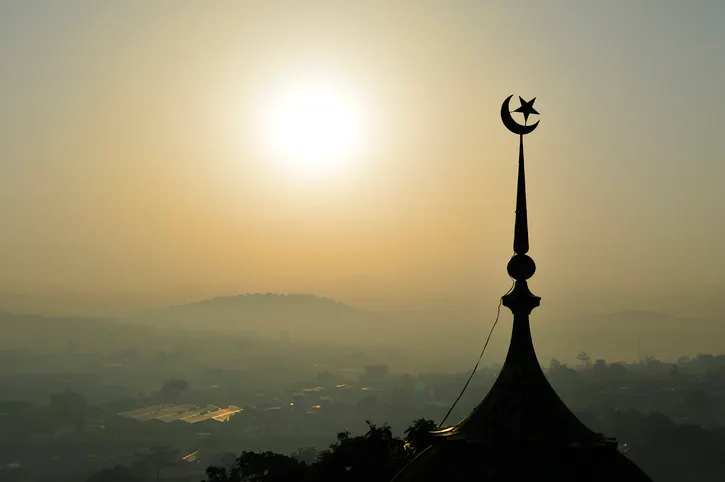
Israel’s Foreign Ministry echoed that explanation in a separate statement on X, stressing that all current limitations in the Old City are “a direct result of Iranian missile fire,” which has struck in the vicinity not only of the Holy Sepulchre, but also the Al-Aqsa Mosque and the Western Wall.
“In light of this, and in order to protect the lives of worshippers of all faiths, precautionary instructions have been issued for all holy sites of all religions, and mass gatherings are not possible,” the ministry said. “The concern over a mass-casualty event in the Old City is particularly acute given the area’s density and the difficulty of deploying first responders in such an incident,” the statement said, appealing to the logistical challenges facing security officials.
U.S. Ambassador to Israel Mike Huckabee, however, took issue with that reasoning. While acknowledging the security-driven closure of all holy sites in Jerusalem’s Old City he described the specific denial of entry to the Catholic leaders as being perhaps overzealous. “While all Holy sites in the Old City are closed due to safety concerns for mass gatherings … the action today by the Israel Nat’l Police to deny Latin Patriarch Cardinal Pierbattista Pizzaballa and 3 other priests from entering the Church to offer a blessing on Palm Sunday is an unfortunate overreach already having major repercussions around the world,” Huckabee wrote in a statement on X.
Despite the restrictions, Israeli authorities indicated that dialogue with Church leadership is ongoing. The Foreign Ministry said police are expected to meet with Cardinal Pizzaballa to “explore solutions that allow for as normal a routine as possible while ensuring public safety,” signaling a potential path forward as tensions remain high.
The Church of the Holy Sepulchre, located in Jerusalem’s Old City, is revered by Christians as the site of Jesus Christ’s crucifixion, burial, and resurrection, making it one of the most sacred places in the world. The decision to bar access on Palm Sunday, the day marking the beginning of Holy Week, has heightened tensions between church authorities and Israeli officials, raising broader questions about the balance between security measures and religious freedom during wartime.
As the conflict continues, the incident is likely to reverberate far beyond Jerusalem, drawing scrutiny from Christian communities and governments around the world.
More from this network:
Domains for Sale · GOTPeople.org · TheDSAPlatform · The Truth About Socialism
What's Your Reaction?
 Like
0
Like
0
 Dislike
0
Dislike
0
 Love
0
Love
0
 Funny
0
Funny
0
 Wow
0
Wow
0
 Sad
0
Sad
0
 Angry
0
Angry
0

I am just an average American. My teen years were in the late 70s and I participated in all that that decade offered. Started working young, too young. Then I joined the Army before I graduated High School. I spent 25 years in, mostly in Infantry units. Since then I've worked in information technology positions all at small family owned companies. At this rate I'll never be a tech millionaire. When I was young I rode horses as much as I could. I do believe I should have been a cowboy. I'm getting in the saddle again by taking riding lessons and see where it goes.
Premium domains for sale










Comments (0)