

Mother’s Day: A tribute to the one job we can’t afford to outsource
Premium domains for sale
Freedom Is Back In Style

Mother’s Day is more than flowers, lunch at a nice restaurant, Hallmark cards, and sentimental social media posts. It is a reminder of the profound and formative responsibility mothers carry in shaping the next generation.
Freedom Is Back
In Style
Premium domains for sale
In a culture increasingly built on outsourcing, mothers are constantly told someone else can do the job better. Let the schools educate them. Let youth pastors disciple them. Let sports teams shape their character. Let others teach them practical skills. Let screens entertain them while we parents catch up on life.
Our ‘do more’ culture demands peak performance in every area of life, but it is leaving both children and mothers exhausted.
But motherhood was never meant to be outsourced. As a mother of two, these are a few lessons I’ve been learning.
Motherhood is discipleship
Mothers remain one of the single greatest influences on a child’s spiritual formation.
Barna research found that among practicing Christian teens, 79% say their mother encourages them to go to church, 66% say their mother teaches them about the Bible, and 72% say their mother teaches them traditions.
Social media and its culture of comparison can make us think discipleship requires planning elaborate Bible lessons, printing worksheets, and creating Instagram-worthy devotional moments. But with just a little intention, some of the most meaningful spiritual lessons can happen naturally through ordinary life.
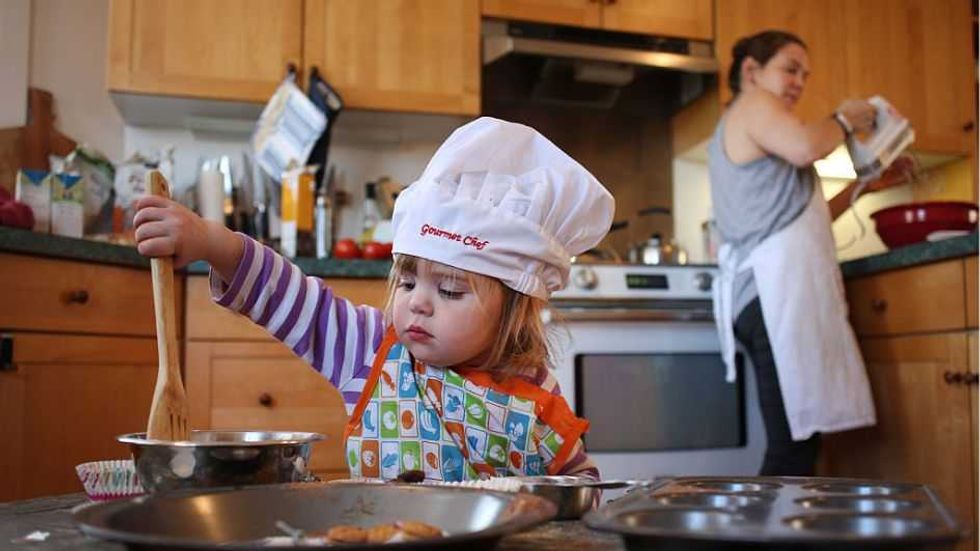
You light a candle at dinner and explain, “Jesus is the light of the world.” You pull weeds together and talk about how bitterness and sin grow quickly when we neglect to root them out. Or, as my toddler and I did last week, you read "The Little Red Hen," then knead bread dough or grind flour together while talking about diligence, generosity, and helping one another.
The advantage of this informal approach is that faith becomes woven into everyday rhythms instead of compartmentalized into a separate lesson plan. These are the moments when faith becomes tangible and competence is built.
Children need margin
Modern parenting culture often leaves children overscheduled, overstimulated, and emotionally exhausted. Childhood itself is disappearing beneath endless activities, sports schedules, programs, lessons, and pressure to achieve earlier and earlier milestones. These poor kids are hardly allowed to be kids anymore.
Parents now worry whether their preschooler can pass entrance assessments while many children barely have time left to roam outdoors, build forts, help cook dinner, or sit quietly long enough to become curious. We need fewer sensory bins in the living room and more mud puddles in the backyard.
More than anything, children need margin — the kind of unhurried space modern family life often eliminates — and our presence. They need more kitchen table talk and less time away from home.
They need to be bored because boredom is the birthplace of creativity, resilience, and imagination. In fact, a growing body of research shows that unstructured play is tied to healthier development, stronger executive functioning, and greater long-term independence. My parents’ generation understood this, but my generation often fills every gap in our children’s schedules, leaving little room for kids to simply be kids.
Our “do more” culture demands peak performance in every area of life, but it is leaving both children and mothers exhausted.
Mothers need margin
Another Barna survey found that 32% of mothers say they feel tired most of the time, while 38% say they constantly find themselves worrying about something. Many mothers feel isolated, unsupported, and crushed by unrealistic cultural pressure to “do it all.”
Many women strive to be fully present mothers, maintain spotless homes, manage packed calendars, curate magical childhood memories, and somehow do it all effortlessly. The result is that many families are running at a pace no one was designed to sustain — and more dangerously, it’s spiritually bankrupting us.
As Christian mothers, our family life should look drastically different from the world’s. Our priorities should reflect eternal values instead of mirroring the frantic priorities of the world.
Maybe for your family that means dropping a sport or cutting out an activity to make room for those family dinners and deep conversations — creating space for what matters.
My mother-in-law wisely sat down with my husband as a young boy and showed him on a calendar how many weekends the next “level” of baseball would consume. She told him, “We can do this if you’d like, but if you are saying yes to this, you are saying no to fishing, dirt biking, or camping on those weekends.”
She gave him the choice, and he chose the latter.
That kind of intentionality matters because what fills our children’s time will shape who they become.
RELATED: How to choose godly friends
 Print Collector/Getty Images
Life skills matter
A Yugo survey found that 74% of parents believe teens are not fully prepared for adult life. Only 37% of teens know how to cook a basic meal, and just 32% understand basic food safety.
I saw this firsthand during my senior year of college when several freshman girls came over for dinner and Bible study. I asked one to chop an onion and another to brown hamburger meat. Neither had ever chopped a vegetable or touched raw meat before. Not because they were lazy, but because no one had ever taught them.
I came from a very different upbringing. Before the age of 10, I was already baking bread, grinding flour, doing laundry, and helping manage our house — whether I liked it or not.
These practical skills matter because they shape what kind of roommate, spouse, parent, and adult our children will become. We should be setting our kids up for success, not failure.
Some mothers feel intimidated because they themselves were never taught these skills. But the beautiful reality is this: We live in the age of YouTube, tutorials, online learning, and accessible information. If you do not know how to garden, sew, cook from scratch, can vegetables, or bake bread, you can learn.
Ask other women, watch videos, do little by little, and more importantly, don’t be afraid of failing, and failing a lot (like I do!).
I constantly ask people to show me how to do things because I desperately need a community of women walking alongside me in this motherhood journey.
Greatest responsibility, deepest joy
Motherhood has forced me to slow down, eat a lot of humble pie, and imperfectly navigate all kinds of new terrain.
And that is fine. This vocation is ultimately not about curating an image of perfection. It is about faithfully stewarding the souls, habits, character, and formation of the children God has given us.
As mothers, we have the greatest responsibility and the deepest joy to raise our children up to love the Lord and become competent, mature adults who serve God and others well. What we build in our homes today will shape the world tomorrow.
And that responsibility is far too important to outsource.
More from this network:
Domains for Sale · GOTPeople.org · TheDSAPlatform · The Truth About Socialism
What's Your Reaction?
 Like
0
Like
0
 Dislike
0
Dislike
0
 Love
0
Love
0
 Funny
0
Funny
0
 Wow
0
Wow
0
 Sad
0
Sad
0
 Angry
0
Angry
0

I am just an average American. My teen years were in the late 70s and I participated in all that that decade offered. Started working young, too young. Then I joined the Army before I graduated High School. I spent 25 years in, mostly in Infantry units. Since then I've worked in information technology positions all at small family owned companies. At this rate I'll never be a tech millionaire. When I was young I rode horses as much as I could. I do believe I should have been a cowboy. I'm getting in the saddle again by taking riding lessons and see where it goes.
Premium domains for sale























Comments (0)