

Netflix 'Manosphere' doc: Virtuous voyeurism and dull TV

Premium domains for sale
Freedom Is Back In Style

There was a time when Louis Theroux was the best documentary-maker alive. Not the most famous, not the flashiest — the best. He had a gift for making dangerous people feel comfortable enough to hang themselves with their own words.
Freedom Is Back
In Style
Premium domains for sale
His technique was deceptively simple: show up, look confused, ask the obvious question nobody else dared ask, and let the awkward silences do the heavy lifting.
Theroux spends much of the film asking genuinely dangerous, profit-driven men why they do not try being nicer.
The results were extraordinary. He immersed himself in the Westboro Baptist Church and revealed something more than fire-and-brimstone rhetoric — that hatred has a morning routine, eats cereal, and goes to bed at a reasonable hour.
He walked into San Quentin and found the prison’s strict social architecture more fascinating than horrifying. He sat with alcoholics dying in a hospital liver ward and captured something devastating without once reaching for a violin. He starred in a porn film fully clothed, somehow maintaining both his dignity and his curiosity.
His early work was morally serious without being moralistic — an almost impossible balance that he struck repeatedly.
That Theroux is gone.
Concern troll
In his place stands something considerably less interesting: a concerned therapist in training with a camera crew, packaging society’s oddballs for an audience that already knows what it thinks of them.
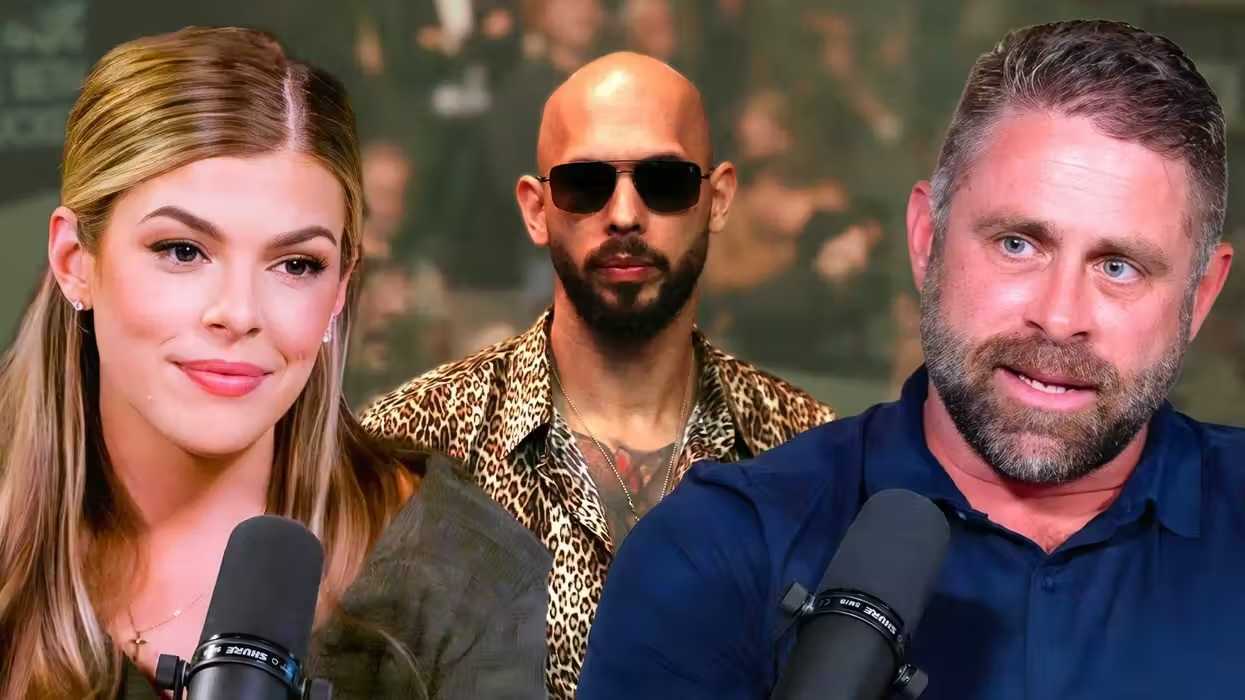
His latest Netflix outing, "Inside the Manosphere," is the clearest evidence yet. Theroux plunges into the world of online alpha-male influencers — Harrison Sullivan, Justin Waller, Myron Gaines, Sneako — tracking their revenue streams, their rhetoric, and their relentless contempt for women.
Miami apartments. Spanish nightclubs. Podcast sets where female guests are humiliated for content.
Sullivan funnels Telegram followers to OnlyFans accounts for kickbacks while publicly mocking the creators. Waller hawks Andrew Tate’s $49-a-month “university.” Gaines, a man of genuine venom, performs dominance for the camera like someone who has mistaken cruelty for confidence.
The material is genuinely ripe. These men are running sophisticated grift operations dressed up as philosophy, monetizing male loneliness and directing the resulting rage at all women. They deserve scrutiny.
The problem is that Theroux no longer scrutinizes. He pathologizes.
Practiced horror
Every interaction becomes a therapeutic probe. Every exchange is framed as evidence of something “disturbing.” The wide-eyed incredulity — once a genuine performance of curiosity — now reads as practiced horror for a largely left-leaning platform.
When Sullivan admits bluntly that he would never have found an audience doing wholesome content — “If I’d just done good things, I would never have blown up” — it is the most honest moment in the film.
Theroux treats it as a tragedy. It is simply capitalism.
Sullivan knows exactly what he is doing.
The real story is not that these men are broken. It is that they have correctly identified a lucrative market of young men who feel abandoned by mainstream culture — and are bleeding them dry. That is the documentary.
Theroux keeps making a different one — a morality play in which he is cast as the bewildered voice of reason.
RELATED: Muscular Christianity: Debunking the manosphere’s lies
 Ian Maule/Getty Images
Prepackaged pandering
The irony is that his presence amplifies the very thing he deplores. Sullivan’s mother, in a sharp moment the film almost buries, asks the obvious question: If you find this so reprehensible, why are you publicizing it?
Theroux spends much of the film asking genuinely dangerous, profit-driven men why they do not try being nicer — roughly as effective as asking Putin to send Zelenskyy a fruit basket.
He is outmatched by people who have spent years controlling their image, and he does not seem to notice. These are seasoned sharks who have fielded far worse and treat the beanpole Brit like a speed bump on the way to their next revenue stream.
What made the early work so extraordinary was Theroux’s apparent absence of agenda. He let meth addicts, dementia patients, Scientologists, and porn stars speak for themselves and trusted audiences to draw their own conclusions. He did not editorialize.
The manosphere documentary editorializes constantly — each segment arriving labeled, prejudged, prepackaged for viewers who tuned in already convinced.
This is what woke documentary-making looks like at its most comfortable: confirming what the audience believes in a way that seems like investigation.
It is virtuous voyeurism — and painfully dull television.
The manosphere — equal parts genuine grievance and cynical exploitation — is a real and fascinating phenomenon. The young men being farmed for subscription fees and manufactured resentment deserve actual examination, not a wagging finger and a worried look.
Theroux was once the person who could have done that.
Watch "Drinking to Oblivion." Watch "The Most Hated Family in America." Watch a man doing the hardest thing in journalism — entering without a verdict and finding something real on the other side.
Sadly, that man traded his instincts for a Netflix brief and never looked back.
He got paid. The audience got a lecture.
More from this network:
Domains for Sale · GOTPeople.org · TheDSAPlatform · The Truth About Socialism
What's Your Reaction?
 Like
0
Like
0
 Dislike
0
Dislike
0
 Love
0
Love
0
 Funny
0
Funny
0
 Wow
0
Wow
0
 Sad
0
Sad
0
 Angry
0
Angry
0

I am just an average American. My teen years were in the late 70s and I participated in all that that decade offered. Started working young, too young. Then I joined the Army before I graduated High School. I spent 25 years in, mostly in Infantry units. Since then I've worked in information technology positions all at small family owned companies. At this rate I'll never be a tech millionaire. When I was young I rode horses as much as I could. I do believe I should have been a cowboy. I'm getting in the saddle again by taking riding lessons and see where it goes.
Premium domains for sale















Comments (0)