

North Carolina Before the Revolution Was a Tinderbox Ready to Ignite
Premium domains for sale
Freedom Is Back In Style
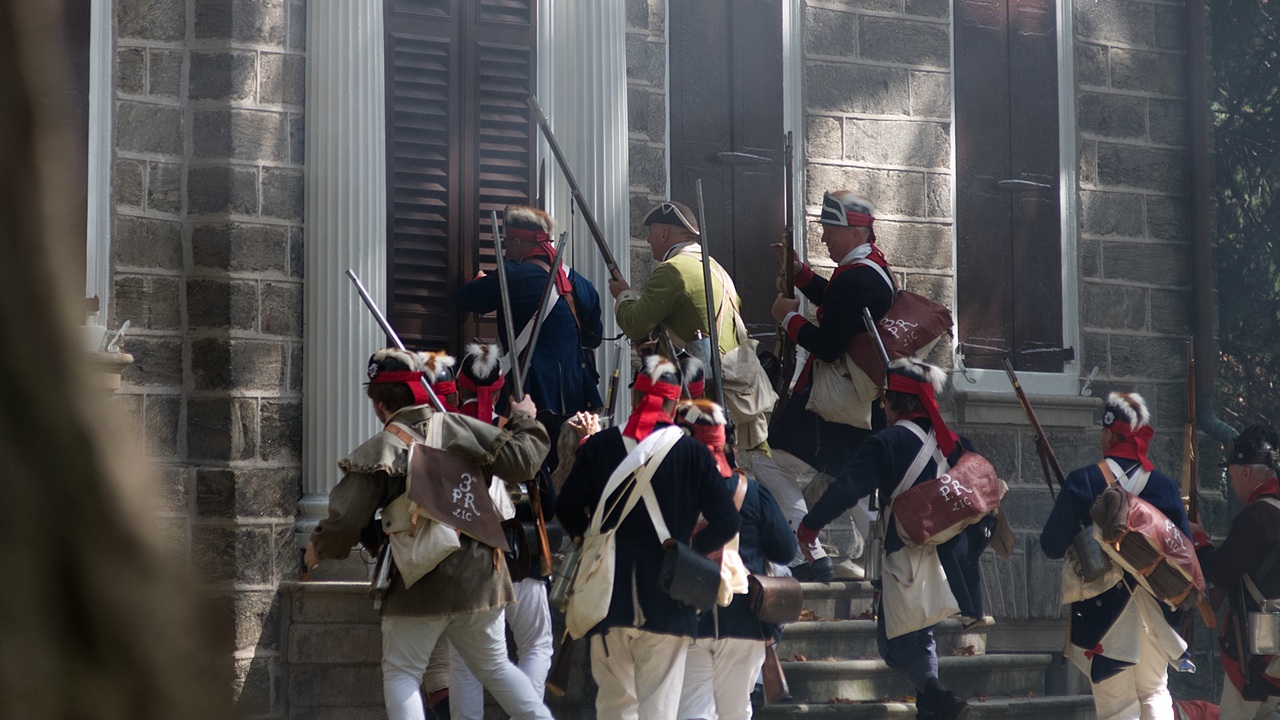
Understanding North Carolina before 1776 helps explain the crucial but often overlooked role it played in America’s break with Britain.
Freedom Is Back
In Style
Premium domains for sale
By the time of the Revolution, the colony had accumulated a volatile mix of political resentment, economic hardship, frontier independence, religious dissent, and frustration with government abuse and inadequate representation in its own colonial assembly. North Carolinians had spent years learning to question authority—and, when they believed their liberties and property were threatened, to resist it.
My own family played a role in this primed, rebellious era. From the wetlands of the Tidewater to the rolling hills of the Piedmont and into the western mountains, my lineage is full of North Carolina patriots. By 1776, my people had been there for more than a century. Descendants of English and Scotch-Irish immigrants, they were planters, farmers, tradesmen, local officials, militia members, pastors, elders, and deacons. Others were German immigrants whose Reformed communities remained separate for decades but helped shape Piedmont culture.
The real trouble began when Parliament passed the Sugar Act of 1764. The act directly impacted the colony’s major port in Wilmington, which depended heavily on Atlantic trade. It increased overhead costs, tightened commerce regulation, and strengthened British authority over the colony’s courts. It created economic uncertainty. But more troubling than that was the fact that Parliament was claiming the power to tax North Carolinians without the consent of the colony’s General Assembly.
The Stamp Act followed in 1765, taxing newspapers, pamphlets, letters, wills, books, almanacs, playing cards, and even dice to help offset the cost of troops stationed in the colonies. When Royal Governor William Tryon asked Speaker of the North Carolina Assembly John Ashe what the colony’s attitude would be toward the Stamp Act, Speaker Ashe resolutely replied, “We will resist it to the death.”
On Oct. 19, 1765, nearly 500 of Wilmington’s colonists hanged and burned an effigy of Stamp Master William Houston and then toasted “Confusion to Lord Bute and All His Adherents.” Wilmingtonians regarded these two men as everything that was wrong with Britain.
On All Hallows’ Eve, protesters staged a mock funeral for “Liberty,” carrying a coffin through the streets to St. James’ churchyard. Just before burying it, a man checked for signs of life and dramatically proclaimed that Liberty still had an existence in the colony!
Adding deeds to these words, a mob confronted Houston when he appeared in Wilmington several weeks later, demanding he renounce his office. He agreed and was escorted to the courthouse, where he formally resigned. The mob then forced Andrew Stewart, printer of the Cape Fear Gazette, to print the newspaper on unstamped paper. Afterward, they organized themselves into the Sons of Liberty, and Justice of the Peace Cornelius Harnett emerged as one of the group’s principal leaders. The Sons of Liberty pledged that they would unite and work to defeat the Stamp Act.
Their success came at a cost, since without a stamp master, business could not be conducted, and ships could not clear port. In February 1766, tensions erupted when British officials seized two ships on the Cape Fear River for lacking stamped papers. British authorities decided to send the ships to Nova Scotia for adjudication, enraging Justice Harnett and the Sons of Liberty. On Feb. 21, hundreds of men marched toward Governor Tryon’s residence in Brunswick Town, led by Justice Harnett and Speaker Ashe.
Harnett faced Tryon one-on-one, respectfully but forcefully demanding the resignation of Royal Comptroller John Pennington. He further demanded that public officials take an oath not to enforce the Stamp Act.
Faced with such strong opposition, Tryon relented.
Britain faced similar resistance across the 13 colonies, eventually making the Stamp Act impossible to enforce. It was repealed in March 1766. Resistance in North Carolina had been especially strong, with its Sons of Liberty among the most active associations opposing it. Their opposition took the form of everything from protest to armed confrontation with royal authority.
Meanwhile, North Carolina’s most significant pre-Revolutionary conflict was developing in the Piedmont.
As backcountry population grew, so did frustration with the royal governor and his representatives. North Carolinians complained that taxes were excessive and arbitrary, court and legal fees were burdensome, and local sheriffs and officials were corrupt or dishonest. Money was scarce on the frontier, but government officials’ lifestyles seemed opulent. Western settlers increasingly believed they were funding a corrupt, out-of-touch government in faraway New Bern.
Regulators generally considered themselves loyal subjects of King George III. They did not initially advocate war or independence; they wanted to regulate their colonial government, not overthrow it. The movement drew from a remarkably broad cross-section of backcountry society—farmers, artisans, tradesmen, small freeholders, and even some wealthy landowners.
Although the Church of England remained North Carolina’s established church, Anglicanism struggled to keep pace with the rapidly growing Piedmont, where dissenting churches were growing. Baptists of English and Welsh descent, Scotch-Irish Presbyterians, and German Lutherans and Moravians far outnumbered English Anglicans.
Many ministers discouraged involvement with the Regulators; church members were admonished to submit to authority and support Gov. Tryon. Dissenters, emphasizing individual conscience, personal responsibility, equality before God, and suspicion of unjust authority undermined such timid messages. While some Christians submitted to their ministers, others joined the Regulators.
Herman Husband, a Quaker farmer, began correspondence with Benjamin Franklin in Philadelphia and became one of the Regulators’ most prominent spokesmen. Through pamphlets, meetings, and petitions, Husband exposed government abuse and sought accountability, peaceful reform, and tax reduction. Husband was even elected to the Assembly, but the colony’s royal government refused reform.
Nature itself now added to the growing unrest. Years of drought and economic depression provided fresh fuel to North Carolina’s already smoldering tinderbox of conflict.
Next week, this column will explore the next phase: the rejection of peaceful protest, defeat in battle, an increase in openly Patriot Protestant ministers, the rise of female participation, and, eventually, war for independence.
This article is part of a series on the American Revolution in South Carolina, North Carolina, and Georgia.
We publish a variety of perspectives. Nothing written here is to be construed as representing the views of the Daily Signal.
More from this network:
Domains for Sale · GOTPeople.org · TheDSAPlatform · The Truth About Socialism
What's Your Reaction?
 Like
0
Like
0
 Dislike
0
Dislike
0
 Love
0
Love
0
 Funny
0
Funny
0
 Wow
0
Wow
0
 Sad
0
Sad
0
 Angry
0
Angry
0

I am just an average American. My teen years were in the late 70s and I participated in all that that decade offered. Started working young, too young. Then I joined the Army before I graduated High School. I spent 25 years in, mostly in Infantry units. Since then I've worked in information technology positions all at small family owned companies. At this rate I'll never be a tech millionaire. When I was young I rode horses as much as I could. I do believe I should have been a cowboy. I'm getting in the saddle again by taking riding lessons and see where it goes.
Premium domains for sale

















Comments (0)