

Patel Unleashes On The Atlantic Over ‘Categorically False’ Report Including ‘Locked Room’ Claim
Premium domains for sale
Freedom Is Back In Style
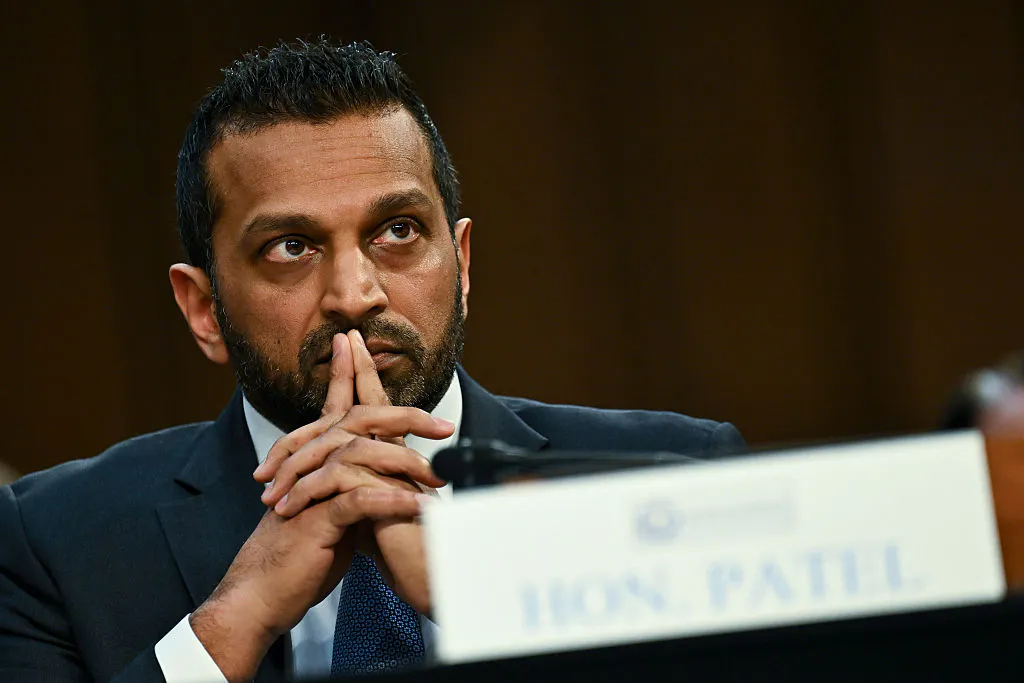
FBI Director Kash Patel is preparing for a full-scale legal battle against The Atlantic after the outlet published a bombshell report he says is riddled with falsehoods, and he’s making clear he intends to take it to the mat.
Freedom Is Back
In Style
Premium domains for sale
“Print it, all false, I’ll see you in court — bring your checkbook,” Patel told the magazine ahead of publication, a warning that has now escalated into an imminent lawsuit.
The Friday article by Sarah Fitzpatrick, titled “The FBI Director is MIA,” levels a barrage of allegations against Patel, painting a picture of a senior law enforcement official allegedly plagued by instability, heavy drinking, and internal dysfunction. The report claims Patel engaged in “erratic” behavior, suffered bouts of paranoia about his job security, and was frequently absent or unreachable during key moments.
Among the most explosive claims: that Patel is “known to drink to the point of obvious intoxication” in front of colleagues, that members of his security detail have struggled to wake him due to alleged inebriation, and that officials once considered using breaching equipment to access a locked space when he could not be reached. The piece also alleges that meetings had to be delayed due to his condition and suggests his behavior could pose a “national security vulnerability.”
Patel’s legal team has forcefully rejected every one of those claims.
In a pre-publication letter, his attorney Jesse Binnall called the allegations “categorically false and defamatory,” emphasizing that most rely on anonymous sources using vague phrasing like “people familiar with the matter.” Binnall argued that such sourcing “could not possibly possess firsthand knowledge” and accused the magazine of reckless disregard for the truth, a key component in proving defamation involving a public figure.
He also pointed to what he described as glaring factual holes, including the alleged “breaching equipment” incident, which he said has “no corroborating public record whatsoever” and appears to be either fabricated or based on a single unreliable source.
Reaction on X was immediate and sharply divided, with Patel allies and critics clashing over the credibility of The Atlantic’s reporting.
FBI media adviser Erica Knight blasted the article as a recycled collection of rumors that “every real DC reporter chased, couldn’t verify, and passed on,” while laying out a lengthy defense of Patel’s record. She pointed to internal metrics under his leadership — including tens of thousands of arrests, major increases in violent crime enforcement, and large-scale fentanyl seizures — while dismissing the report’s central claims outright. “The so-called ‘intoxication incidents’ The Atlantic breathlessly reports have happened exactly ZERO times,” Knight wrote, adding bluntly: “Lawsuit is being filed.”
Others with direct ties to Patel echoed that pushback. Clint Brown, who described himself as a “sherpa” during Patel’s transition into the role, said he spent months working closely with him, and never witnessed any of the behavior described in the report. “Your anon sourced story is BS,” Brown wrote, adding that Patel was consistently responsive, detail-oriented, and deeply engaged in his work, often reviewing briefings at all hours.
Patel himself leaned into the fight, framing the controversy as proof he’s doing his job. “Memo to the fake news — the only time I’ll ever actually be concerned about the hit piece lies you write about me will be when you stop,” he posted, adding that criticism would not deter the FBI from “making America safe again.”
On Capitol Hill, the reaction broke along predictable lines. Senate Minority Leader Chuck Schumer (D-NY) seized on the report, saying it confirmed Patel is “completely unfit to serve” and calling for his resignation. But Tom Cotton (R-AR), who works directly with Patel as chairman of the Senate Intelligence Committee, dismissed the story as a “dishonest smear” and pointed instead to what he described as tangible results from the bureau. Cotton followed up, adding, “Here’s what’s really happening: Liberal reporters and disgruntled deep state leakers — who have zero knowledge of what the story alleges — are bitter that the FBI is no longer targeting Catholic parents and pro-lifers.”
The clash underscores what is quickly becoming more than just a media dispute: a political and legal showdown that is now playing out in real time across both the press and the courts.
Inside the administration, Patel has drawn swift and public backing. “Patel has accomplished more in 14 months than the previous administration did in four years. Anonymously sourced hit pieces do not constitute journalism,” acting Attorney General Todd Blanche said when reached out to by The Atlantic for comment.
FBI Assistant Director of Public Affairs Ben Williamson, who pushed back on the allegations when first contacted by the outlet, didn’t mince words in his response. He dismissed the report as a reheated collection of long-circulating rumors that had never held up under scrutiny, saying: “This article is a compilation of pretty much every obviously fake rumor I’ve heard the last 14 months except the Atlantic is the only one dumb enough to actually print it.”
Patel himself has gone further, publicly accusing the magazine of acting with “actual malice,” the high legal bar required in defamation cases involving public officials. He went further, saying, “See you and your entire entourage of false reporting in court.”
His team is also demanding that The Atlantic preserve all internal communications, drafts, and source materials related to the story, a clear signal that litigation is not just a threat, but imminent.
For her part, Fitzpatrick is standing by her reporting, citing interviews with more than two dozen sources and insisting the story is accurate.
Neither side is backing down and so the high-stakes collision between a top federal law enforcement official and a major national publication seems imminent. If Patel follows through, the case could become a major test of modern media practices, particularly the reliance on anonymous sourcing in stories involving national security figures, and whether courts are willing to scrutinize those standards more aggressively.
The next round seems likely to play out in court, where both sides will be forced to back up their claims under oath, and where the consequences could be far more serious than a war of words.
More from this network:
Domains for Sale · GOTPeople.org · TheDSAPlatform · The Truth About Socialism
What's Your Reaction?
 Like
0
Like
0
 Dislike
0
Dislike
0
 Love
0
Love
0
 Funny
0
Funny
0
 Wow
0
Wow
0
 Sad
0
Sad
0
 Angry
0
Angry
0

I am just an average American. My teen years were in the late 70s and I participated in all that that decade offered. Started working young, too young. Then I joined the Army before I graduated High School. I spent 25 years in, mostly in Infantry units. Since then I've worked in information technology positions all at small family owned companies. At this rate I'll never be a tech millionaire. When I was young I rode horses as much as I could. I do believe I should have been a cowboy. I'm getting in the saddle again by taking riding lessons and see where it goes.
Premium domains for sale
















Comments (0)