

Pro-MAGA Mexican union head: America needs a richer Mexico
Premium domains for sale
Freedom Is Back In Style
Mexico should be rich. It shares a 2,000-mile land border with the largest consumer market on earth, coastlines on two oceans, abundant natural resources, and a young workforce. Prosperity should have arrived decades ago.
Freedom Is Back
In Style
Premium domains for sale
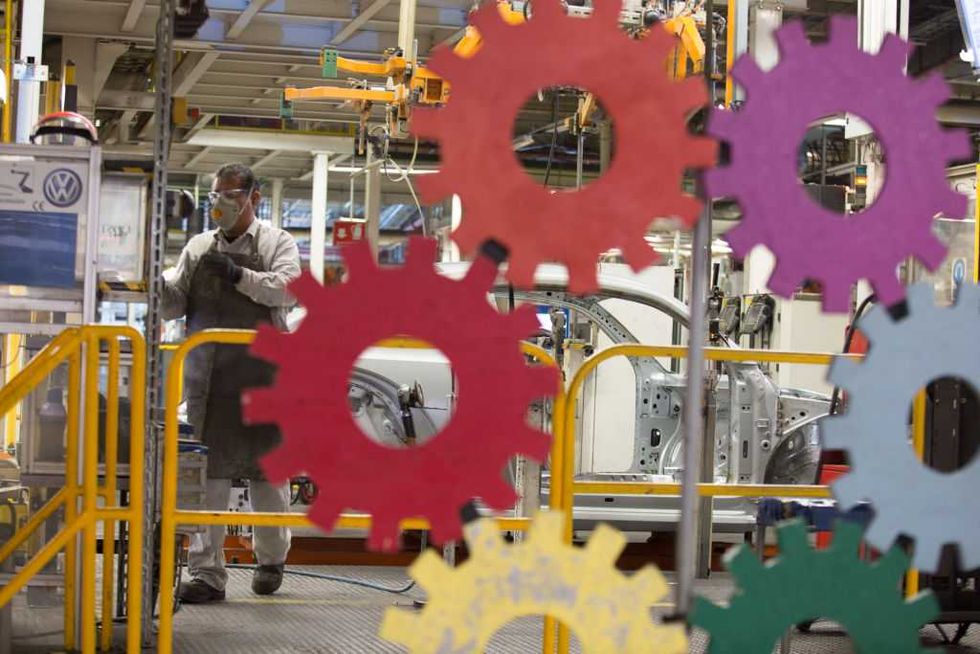
The industrial boom did. Mexico is now America’s largest trading partner for the third consecutive year, selling the United States $534 billion in goods in 2025. It has become a major manufacturing power, and the nearshoring wave that followed the trade war with Beijing made it one of the world’s most sought-after industrial destinations.
‘We are not applying to be the world’s next sweatshop. We are applying to be America’s trusted factory floor.’
But too little of that prosperity reached the people doing the work. For decades, Mexico’s biggest export was not cars or electronics. It was Mexicans: More than 12 million now live abroad, most of them in the United States. A thriving country does not export its own children by accident.
Alejandro Martínez Araiza, national general secretary of the National Trade Union for Food and Commerce, Mexico’s oldest private-sector union, has an explanation economists rarely say out loud.
“Cheap labor was never an accident. It was the design,” Martínez Araiza told me. “Investment came for the low wage, and the system was built to guarantee the wage stayed low. Protection unions were the lock on the door. Corruption was the guard. The worker was never meant to prosper, because his poverty was the product being sold.”
That diagnosis is relevant today because the old design now stands between North America and its goal of competing more effectively with China. Martínez Araiza is candid about the scale of the challenge: China still dwarfs Mexico in manufacturing output.
“Can Mexico replace China? In volume, never, and anyone who promises otherwise is selling you something,” Martínez Araiza said. “You do not defeat China by trying to be China. You defeat it by being the neighbor China can never be: next door, with shared interests, and rules you can actually verify. We are not applying to be the world’s next sweatshop. We are applying to be America’s trusted factory floor."
That is why he treats labor enforcement as supply-chain security. A real factory with real workers, better wages, and an independent union able to walk the floor is harder to disguise as a front company. In his formulation, labor enforcement becomes a certificate of origin that paperwork alone cannot fake.
His proposals for the United States-Mexico-Canada Agreement review follow from there: automatic consequences for violations, enforcement covering warehouses and logistics as well as factories, a regional wage floor of $7.25 an hour, and a verification alliance of democratic worker organizations across all three countries.
RELATED: Meet the man making Mexico useful again
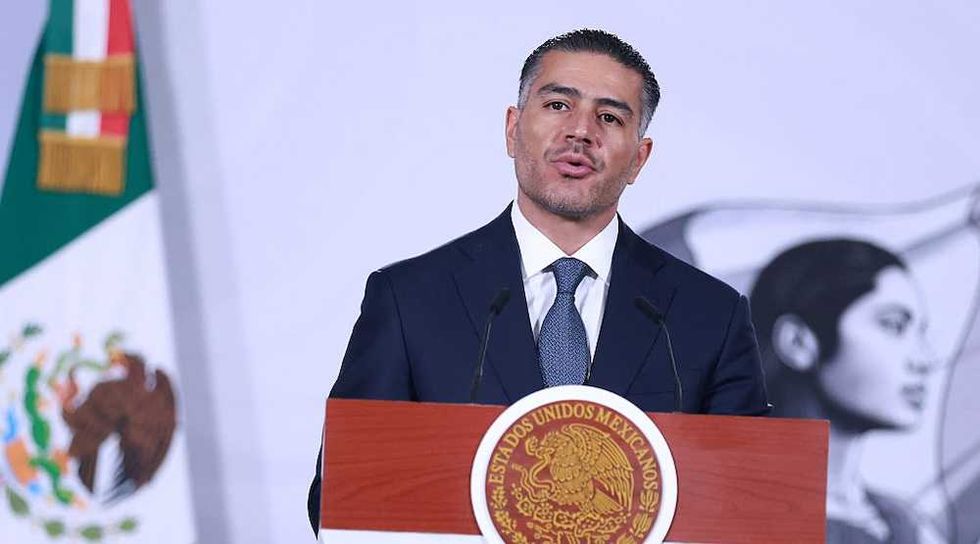 Daniel Cardenas/Anadolu/Getty Images
Martínez Araiza is equally candid about Mexico’s vulnerability. More than 80% of Mexican exports go to the United States.
“China can survive a trade war with America. Mexico cannot, and I will not pretend otherwise,” he told me. “That is exactly why Mexico’s only rational strategy is a USMCA so credible and so enforceable that no one ever needs a trade war. Certainty is the cheapest stimulus that exists."
Then comes the part Washington rarely considers. Mexico maintains trade agreements with about 50 countries. “Everyone talks about Mexico as somebody's back door,” Martínez Araiza said. “I want the opposite: Mexico as America’s front door. Build it together in North America, and sell it to the world through our agreements. Close the back door. Open the front door. Made in North America, sold to the world.”
When work pays, people stay. "Pay a real wage, and Mexico’s biggest export goes back to being products, not people," he says. Border security, in his telling, begins on the payroll.
American readers may be skeptical of a Mexican union leader offering trade advice. But the incentives line up. His program raises the cost of the labor arbitrage that moved American factories south while reducing one of the pressures that drives migration north. President Trump’s trade agenda seeks both outcomes.
Martínez Araiza proposes to pursue them with something the American taxpayer does not have to create: organized workers already inside the supply chain, using secret-ballot elections and replacing the old protection-union system workplace by workplace.
The design that kept Mexico poor is breaking. The question is whether North America can replace it with something that lets workers, manufacturers, and both countries prosper together.
“There is no fair trade on poverty wages,” Martínez Araiza said. “The best tariff is a good wage.”
More from this network:
Domains for Sale · GOTPeople.org · TheDSAPlatform · The Truth About Socialism
What's Your Reaction?
 Like
0
Like
0
 Dislike
0
Dislike
0
 Love
0
Love
0
 Funny
0
Funny
0
 Wow
0
Wow
0
 Sad
0
Sad
0
 Angry
0
Angry
0

I am just an average American. My teen years were in the late 70s and I participated in all that that decade offered. Started working young, too young. Then I joined the Army before I graduated High School. I spent 25 years in, mostly in Infantry units. Since then I've worked in information technology positions all at small family owned companies. At this rate I'll never be a tech millionaire. When I was young I rode horses as much as I could. I do believe I should have been a cowboy. I'm getting in the saddle again by taking riding lessons and see where it goes.
Premium domains for sale


















Comments (0)