

Read dangerously — but please, just read
Premium domains for sale
Freedom Is Back In Style
Banned Books Week is baloney.
Freedom Is Back
In Style
Premium domains for sale
Not because nobody ever tries to suppress a book. People do. The lure of the ban hammer is strong.
We are staging arguments over banned books in a country where too many people barely read books.
But let’s be serious. A challenge is not a ban. A school-library dispute is not the Palmer raids. A parent objecting to what an 11-year-old reads is not Anthony Comstock resurrected.
Words should mean something.
The American Library Association has spent years blurring those distinctions, and every October around this time, we get the same little morality play: librarians as defenders of civilization, readers as brave dissidents, famous novels wrapped in the aura of forbidden fruit.
Last weekend at a Barnes and Noble in Southern California, I saw the display in person.
A table that had been marked “required reading” a few weeks prior was now the “read banned books” table. There sat “The Handmaid’s Tale,” “Nineteen Eighty-Four,” “The Catcher in the Rye,” and all the usual suspects. All for sale.
Some ban!
The ALA will object that it uses “ban” in a fairly narrow sense. A book need not disappear from American commerce to count as banned. Remove it from a school or library collection and the word applies.
That’s exactly the problem.
Removing a book from one institutional collection is not the same as suppressing it from public circulation. A restriction is not automatically a ban. Precision is not too much to ask from an organization supposedly devoted to books.
America has known censorship. Real censorship.
In 1926, H.L. Mencken deliberately sold a copy of the “Hatrack” issue of the American Mercury in Boston after the Watch and Ward Society targeted it as obscene. He got arrested.
He beat the charge.
The Postal Service also declared the issue un-mailable. Had that ruling stood, the government could have put his magazine out of business.
Woodrow Wilson’s government sent Eugene V. Debs to prison for an antiwar speech. Federal agents swept up radicals in the Palmer raids. In Schenck v. United States, the Supreme Court upheld the conviction of a man who distributed anti-draft leaflets.
RELATED: Don’t fall for the fake ‘banned books’ narrative
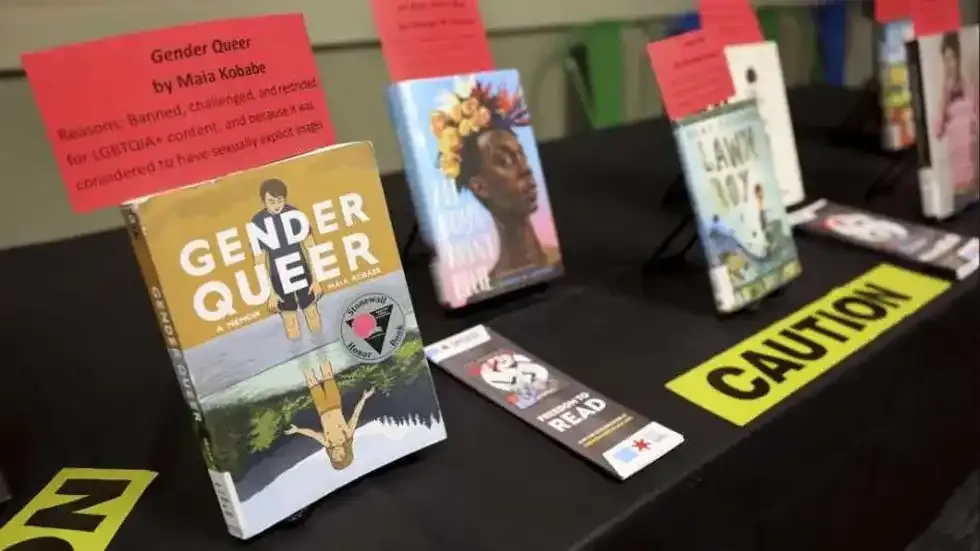 Chris Sweda/Chicago Tribune/Tribune News Service/Getty Images
That is what censorship looks like when the government means it.
Yes, school boards still do stupid things.
In 2013, a North Carolina board pulled Ralph Ellison’s “Invisible Man” after one member said he could find “no literary value” in it. Nine days later, after national ridicule, the board reversed itself.
In 2010, a Riverside County, California, school district briefly pulled Merriam-Webster’s Collegiate Dictionary because a parent objected to its definition of “oral sex.”
The dictionary came back too.
Somebody does something foolish. Somebody else objects. The fool backs down. That’s generally how freedom works.
And no, Ron DeSantis did not “ban books” in Florida. He signed laws governing what public schools may place in classrooms and school libraries.
Calling every restriction a ban is how you turn a policy dispute into a stupid morality play.
Azar Nafisi knows more about actual censorship than most Americans ever will. She lived under the Islamic Republic of Iran. In “Read Dangerously,” she writes about “literature as resistance” — literature resisting kings, tyrants, and “the tyrants within us.”
She asks how we confront an enemy without becoming like him or surrendering to him. Good question!
Reading dangerously under tyranny is one possible answer.
But at the risk of stating the obvious, America is not Iran.
And if we are going to use the word “dangerous,” let’s make it mean something.
A dangerous book is not simply one somebody objected to. It may be a book with such a rotten reputation that people condemn it without reading it. A book a publisher drops. A book a retailer refuses to carry. A book that goes out of print and can’t be had for love or money. A book people would rather summarize for you than let you judge for yourself.
Jean Raspail’s “The Camp of the Saints” will do.
First published in France in 1973, the novel imagines a flotilla of impoverished migrants sailing toward Europe. For decades, it has been reduced to a racist anti-immigrant tract.
I have read it. That is not what the book is principally about.
Raspail’s real villains are the politicians, journalists, clergy, and intellectuals who have lost the nerve to defend their own civilization.
For years, English copies were scarce and expensive. A new translation appeared last year. Amazon briefly pulled the physical edition. People complained. Amazon restored it.
That is a dangerous book because its reputation has done much of the work its critics should have done themselves.
RELATED: Jean Raspail’s notorious — and prophetic — novel returns to America
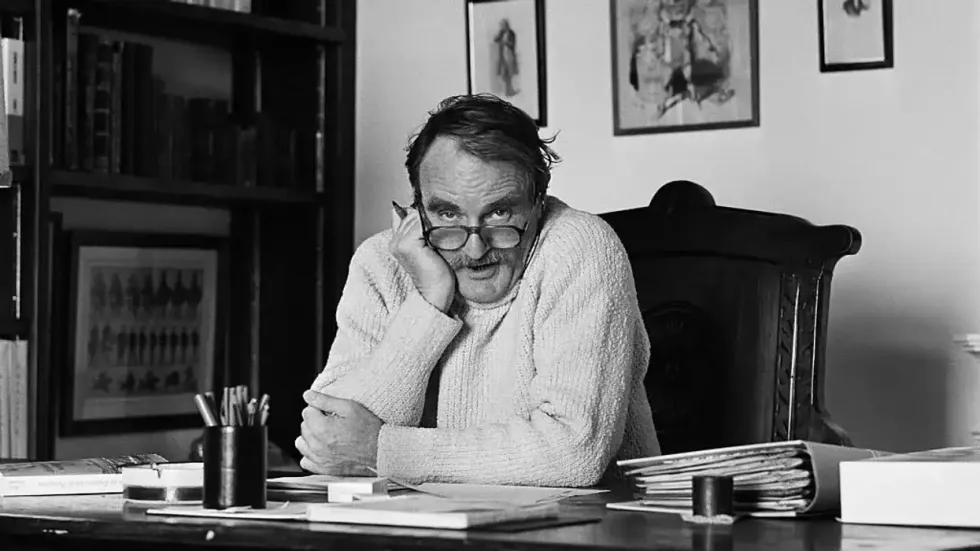 Pascal Parrot/Sygma/Sygma/Getty Images
So I say read Raspail and Julius Evola and Sam Francis. Read Nafisi and Ralph Ellison and Salman Rushdie.
Read authors who annoy your friends. Read writers your political allies dismiss. Read books with appalling reputations. Read the book everybody quotes and almost nobody seems to have opened.
Or don’t.
There is no virtue in reading a controversial book. Buying “Nineteen Eighty-Four” at Barnes and Noble does not make you Solzhenitsyn.
But please do not pretend.
Do not pretend a challenge is automatically a ban or that a book is unavailable when it is sitting on a table in front of you. Do not pretend reading a famous novel everyone can buy is an act of resistance.
We are staging arguments over banned books in a country where too many people barely read books.
Mencken praised the “gay fellows who heaved dead cats into sanctuaries” and thereby proved “that doubt, after all, was safe.”
He was right.
Read dangerously, if you like. Just read.
More from this network:
Domains for Sale · GOTPeople.org · TheDSAPlatform · The Truth About Socialism
What's Your Reaction?
 Like
0
Like
0
 Dislike
0
Dislike
0
 Love
0
Love
0
 Funny
0
Funny
0
 Wow
0
Wow
0
 Sad
0
Sad
0
 Angry
0
Angry
0

I am just an average American. My teen years were in the late 70s and I participated in all that that decade offered. Started working young, too young. Then I joined the Army before I graduated High School. I spent 25 years in, mostly in Infantry units. Since then I've worked in information technology positions all at small family owned companies. At this rate I'll never be a tech millionaire. When I was young I rode horses as much as I could. I do believe I should have been a cowboy. I'm getting in the saddle again by taking riding lessons and see where it goes.
Premium domains for sale








Comments (0)