

Russia Bombs Iconic Centuries-Old Christian Landmark
Premium domains for sale
Freedom Is Back In Style
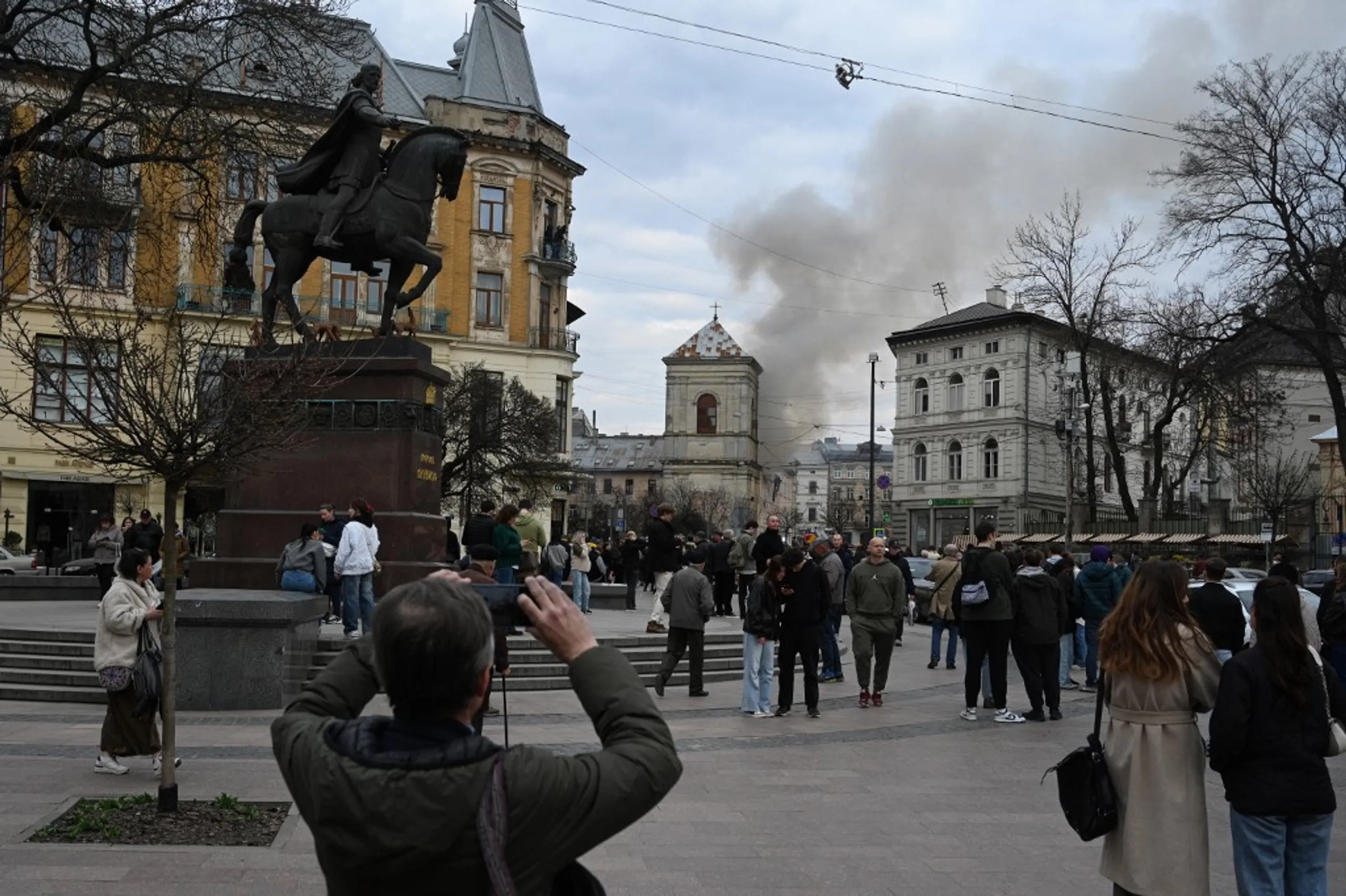
A historic Catholic church and monastery complex in western Ukraine, part of a UNESCO World Heritage site, was damaged in a Russian strike this week, underscoring the continued toll of the war on religious and cultural landmarks.
Freedom Is Back
In Style
Premium domains for sale
Russian forces launched a large-scale aerial assault on Tuesday, striking the 16th-century Bernardine monastery complex in the city of Lviv, including St. Andrew’s Church, a cornerstone of Ukraine’s Greek Catholic community. The site, located in what has been described as the heart of Ukraine’s Catholic region, dates back roughly 400 years.
The attack comes just days before Holy Week, the most sacred period in the Christian calendar. Local officials confirmed that nearby residential buildings were also hit, with fires breaking out and parts of the monastery, including its tower, sustaining damage.
The nearby Church of Saint Mary Magdalene was also impacted, with shattered windows and debris strewn across its interior. “Thank God it happened in the afternoon,” said Archbishop Mieczysław Mokrzycki of Lviv, noting that the timing likely prevented fatalities. “People were still at work, children had not yet returned from school.”
Even so, the broader assault was deadly. Ukrainian officials reported that Russia launched nearly 400 drones in a single night, one of the largest aerial attacks since the war began in 2022, killing at least six people and injuring dozens more. In another strike, a maternity hospital in the Ivano-Frankivsk region was also hit.
UNESCO said it was “deeply alarmed” by the damage to protected cultural sites, emphasizing that such landmarks are safeguarded under international law. For those on the ground, however, the destruction of churches is nothing new.
“This happens a lot,” said Steven Moore, executive producer of the documentary A Faith Under Siege, speaking from Kyiv to EWTN. He noted that Russia has repeatedly targeted religious buildings throughout the conflict, including Orthodox churches, despite claiming to defend traditional Christian values.
St. Andrew’s Church, he said, may be “the most historic church they have targeted so far.” The strike also comes at a moment of renewed intensity across the front lines, as both sides escalate operations ahead of the spring campaign season.
In eastern Ukraine, Russian forces have continued grinding advances in the Donetsk region, particularly around the heavily contested areas near Avdiivka and Chasiv Yar, where months of attritional fighting have yielded incremental gains at high cost. Ukrainian defenses, while still holding key lines, have been strained by manpower shortages and the constant pressure of artillery and drone assaults.
At the same time, Ukraine has expanded its use of long-range drone strikes deep into Russian territory, targeting oil depots, airfields, and logistical hubs in an effort to disrupt Moscow’s war machine beyond the front. These strikes, often carried out hundreds of miles from the battlefield, represent a strategic shift toward asymmetric pressure as Ukraine seeks to offset Russia’s numerical advantages.
Drone warfare, in particular, has become the defining feature of this phase of the conflict. Both sides are deploying thousands of unmanned systems monthly, from inexpensive first-person-view (FPV) drones used in trench warfare to long-range Iranian-designed Shahed drones that can strike cities far from the front. The scale and speed of this technological adaptation have transformed the battlefield into a constant, low-altitude threat environment where traditional lines of safety once assumed in Western cities such as Lviv no longer hold.
The war’s international dimensions are also becoming more pronounced. Iran continues to supply drone technology to Russia, while intelligence assessments have pointed to growing cooperation between Moscow and Beijing. Reports of North Korean personnel supporting Russian operations have further underscored concerns that the conflict is increasingly drawing in actors beyond Europe.
Ukrainian President Volodymyr Zelensky, addressing the latest strikes, said their scale demonstrates that “Russia has no intention of really ending this war.” Now in its fifth year, the conflict continues to reshape daily life across Ukraine. Air raid sirens, damaged infrastructure, and the constant threat of attack have become routine, even in cities like Lviv, once considered relatively safe.
For Ukraine’s religious communities, the war has taken on an added layer of meaning. Churches that once stood for centuries as symbols of faith and continuity are now being drawn into the front lines, damaged, shattered, and, in some cases, destroyed. As Holy Week approaches, the strike on one of Ukraine’s most historic Catholic sites stands as a stark reminder: the war is not only being fought on battlefields, but in the cultural and spiritual heart of the nation itself.
More from this network:
Domains for Sale · GOTPeople.org · TheDSAPlatform · The Truth About Socialism
What's Your Reaction?
 Like
0
Like
0
 Dislike
0
Dislike
0
 Love
0
Love
0
 Funny
0
Funny
0
 Wow
0
Wow
0
 Sad
0
Sad
0
 Angry
0
Angry
0

I am just an average American. My teen years were in the late 70s and I participated in all that that decade offered. Started working young, too young. Then I joined the Army before I graduated High School. I spent 25 years in, mostly in Infantry units. Since then I've worked in information technology positions all at small family owned companies. At this rate I'll never be a tech millionaire. When I was young I rode horses as much as I could. I do believe I should have been a cowboy. I'm getting in the saddle again by taking riding lessons and see where it goes.
Premium domains for sale





















Comments (0)