

Save your brain: Eat more meat
Premium domains for sale
Freedom Is Back In Style
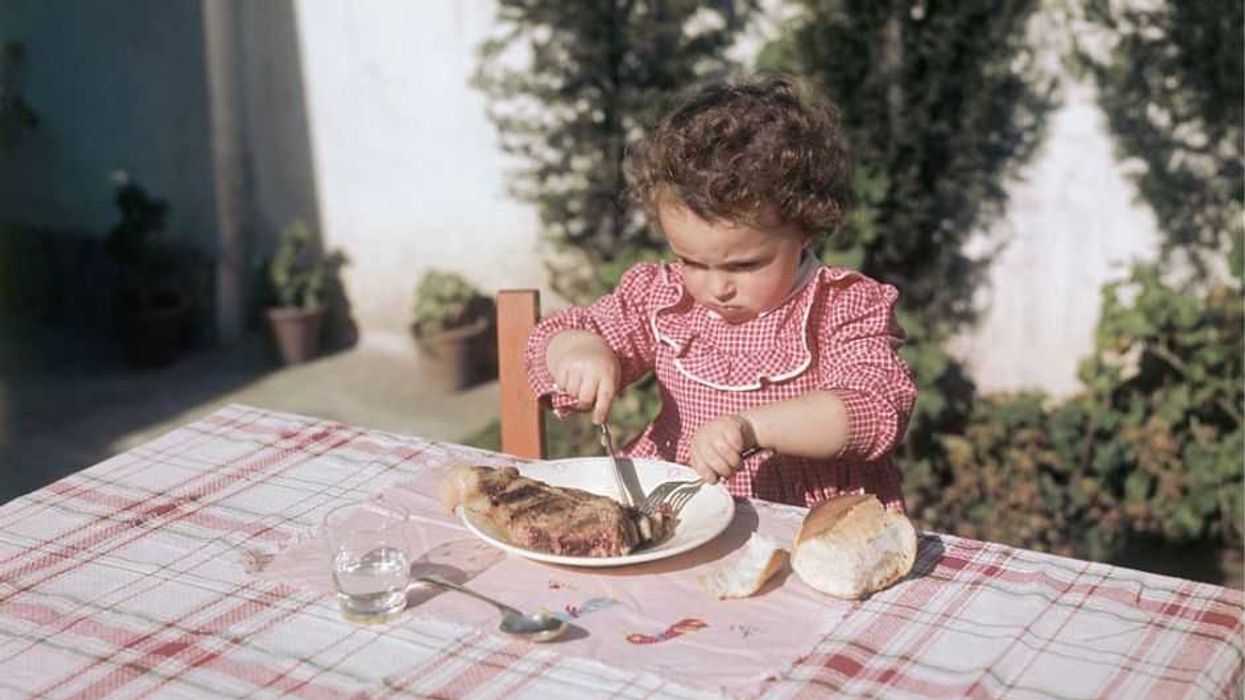
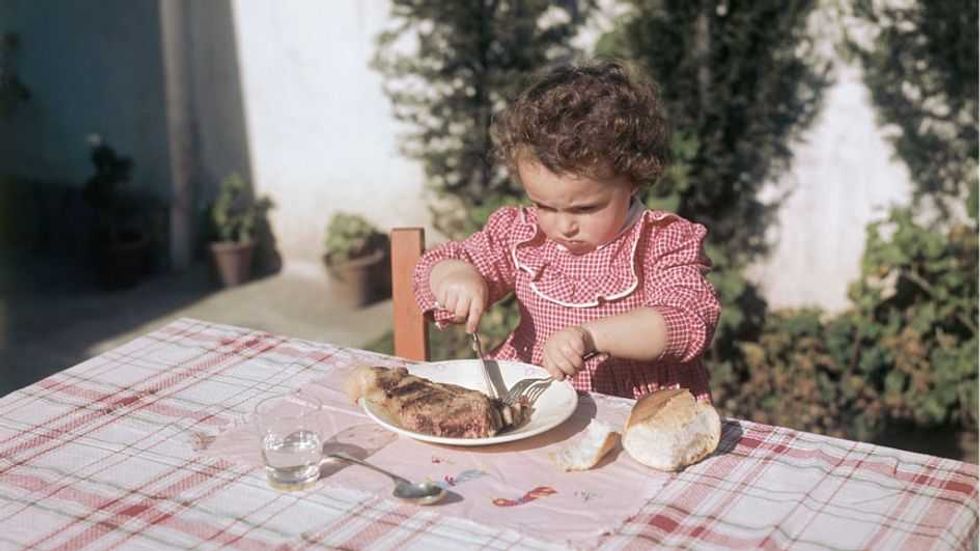
The vegetable lobby has had a good run. For decades, the conventional wisdom on brain health has been some variation of the same tired sermon: eat less meat, eat more plants, and maybe your aging mind will hold together long enough to remember where you parked the car.
Freedom Is Back
In Style
Premium domains for sale
Freedom Is Back
In Style
Premium domains for sale
A new study out of Sweden suggests that for roughly a quarter of the American population, that advice has been wrong — measurably, consistently, damagingly wrong.
Life is exhausting. Depletion is something else. And only one of them is fixed by a rib-eye.
Published in JAMA Network Open, the study tracked more than 2,000 Swedish adults over 60 for 15 years. Among carriers of the APOE4 gene — the strongest genetic risk factor for Alzheimer’s disease — those who ate the most meat showed slower cognitive decline and lower dementia risk than those who ate the least.
Among the those who ate the most meat, the elevated dementia risk associated with carrying APOE4 disappeared entirely.
The most feared dementia gene in medicine — at least in this cohort — effectively disarmed by the food that built the brain carrying it.
Brain drain
One in four Americans carries at least one copy of APOE4. Two-thirds of people with Alzheimer’s carry it. This is a massive slice of the country.
Tens of millions of Americans have been dutifully following brain-health guidelines that may be contributing to the very decline those guidelines promised to prevent.
This is what happens when nutritional science gets hijacked by ideology and the bill comes due 30 years later.
APOE4 appears to influence how efficiently the body absorbs and uses certain nutrients, particularly vitamin B12 — essential for nerve function and found almost exclusively in animal products. APOE4 carriers who ate more meat showed measurably higher B12 levels in their blood.
The gene also affects how the body processes fats and cholesterol — the building blocks brain cells require for fuel and structure. APOE4 is the oldest variant of the gene, one that likely predates agriculture entirely. Some bodies, it turns out, never got the memo about kale smoothies and the moral purity of eating like a rabbit.
Steakholders
None of this will surprise anyone who has eaten a quality steak and felt, within the hour, unreasonably capable.
That sudden clarity. The alertness. The faint, irrational optimism about existence — that’s iron talking. Heme iron, specifically, found in red meat and absorbed at rates far higher than the iron in spinach and lentils, which the body processes with all the urgency of a man skimming terms and conditions.
Roughly 40% of American women are iron-deficient. A significant portion of the population moves through daily life in a low-grade fog of fatigue and poor concentration they have simply come to accept.
Life is exhausting. Depletion is something else. And only one of them is fixed by a rib-eye.
Iron dome
The dietary culture most likely to produce iron deficiency is the same one celebrated as virtuous. Plant-based iron comes pre-sabotaged. Phytic acid in grains and legumes — the foods canonized by clean eating — actively blocks absorption before it reaches the bloodstream.
The demonization of red meat has been so thorough, so relentless, and so institutionally backed that an entire generation grew up believing a burger was more dangerous than a cigarette.
This was not an accident.
Decades of dietary guidelines, food pyramid revisions, and industry-funded nutrition research pushed animal products to the margins of the respectable plate, while carbohydrates and seed oils quietly took the center.
Early-onset dementia is rising in people who should be nowhere near it — men and women in their 30s and 40s, the first generations raised under the full weight of anti-meat orthodoxy.
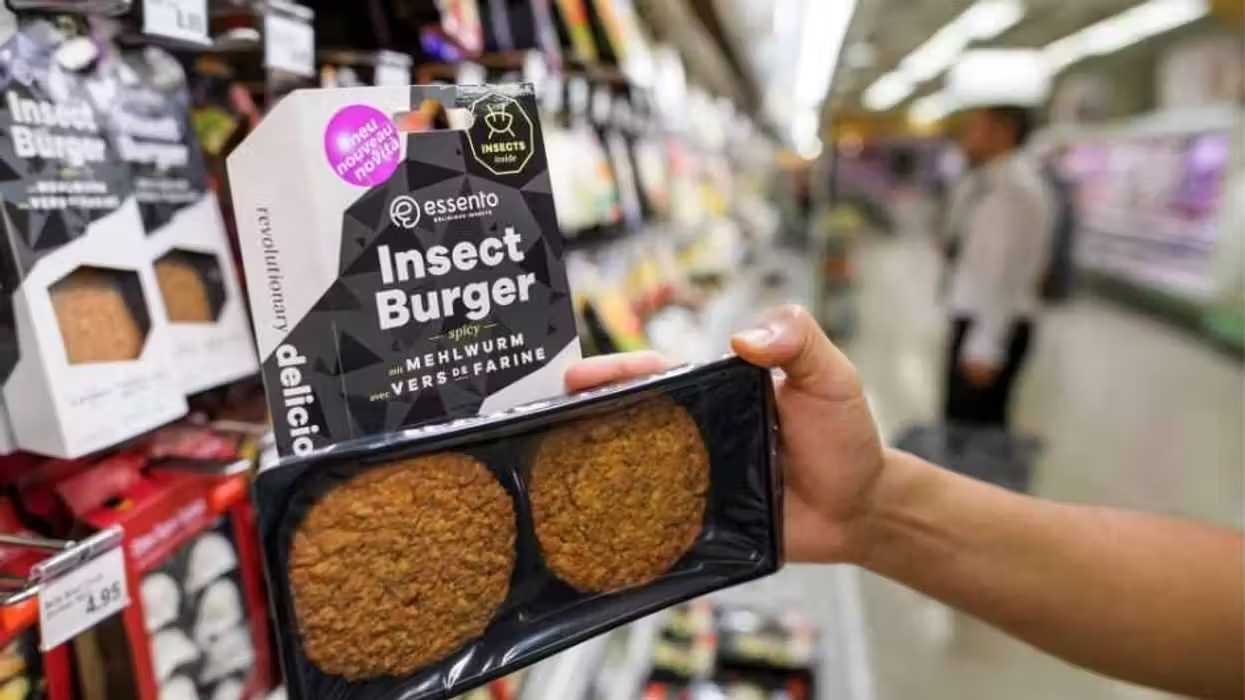
RELATED: Bugs for thee, beef for me: How big business monopolizes meat
 Fabrice Coffrini/Getty Images
Nipped in the bud
Meanwhile, more parents are raising children on exclusively plant-based diets, motivated by love and a sincere belief that they are doing right by their kids. The research on what chronic iron deficiency, B12 absence, and inadequate animal protein does to a developing brain is not something the wellness industry tends to advertise. In several studies, it reads less like a dietary choice and more like an uncontrolled experiment conducted on people too young to consent.
Meat consumption has been falling for years. Alzheimer’s rates have been climbing for years.
No one in an official capacity has connected those dots — which is itself worth noting.
The Swedish study does draw one important line. Processed meats showed no protective benefit and were linked to higher dementia risk regardless of genetics.
Bacon, sausages, deli meats, the sweating cylinders of mystery protein rotating slowly at the gas-station counter — these are not the argument.
Fresh red meat and poultry, unprocessed and cooked with basic competence, are what drove the cognitive benefit.
Carnivores settled continents, built civilizations, and mapped the known world. Every civilization that ever amounted to anything ate meat.
The ones that didn’t aren’t around to argue the point.
What's Your Reaction?
 Like
0
Like
0
 Dislike
0
Dislike
0
 Love
0
Love
0
 Funny
0
Funny
0
 Wow
0
Wow
0
 Sad
0
Sad
0
 Angry
0
Angry
0

I am just an average American. My teen years were in the late 70s and I participated in all that that decade offered. Started working young, too young. Then I joined the Army before I graduated High School. I spent 25 years in, mostly in Infantry units. Since then I've worked in information technology positions all at small family owned companies. At this rate I'll never be a tech millionaire. When I was young I rode horses as much as I could. I do believe I should have been a cowboy. I'm getting in the saddle again by taking riding lessons and see where it goes.
Premium domains for sale




















Comments (0)