

Some U.S. Allies Are Selling Out To China
Premium domains for sale
Freedom Is Back In Style
A new report reveals a growing divide among U.S. allies over China.
Freedom Is Back
In Style
Premium domains for sale
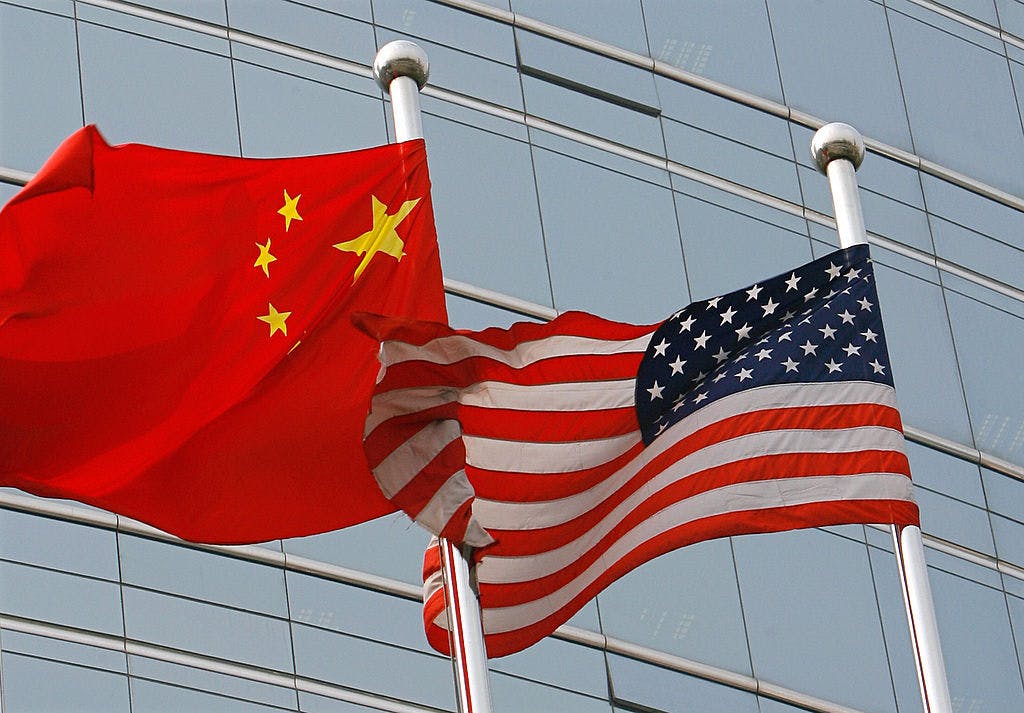
Titled Stars and Stragglers, the report from Polaris National Security examined 20 countries across technology infrastructure, economic policy, military cooperation, and diplomatic positions.
“This report qualitatively assesses which U.S. allies and partners are doing the most to help or hinder America’s efforts to counter China’s economic, technological, military, and diplomatic influence,” the report states.
Ten of those countries are designated as “Stars” for taking concrete steps to limit Beijing’s power. The remaining nations are designated as “Stragglers” for strengthening their ties with China.
The report broke down “Stars” as “Allies and partners helping America counter Chinese aggression and influence.” “Stragglers” were “Allies and partners failing to counter China — and even undercutting U.S. efforts to do so.”
Australia was designated a “Star.” The nation banned Huawei, absorbed Chinese tariffs without folding, and, according to the report, “committed nearly $3 billion to expand U.S. and British submarine capacity.” It joined a critical minerals push with the United States and received a $400 million conditional loan for an aerospace and defense project.
Japan also received a “Star” designation. The report stated that “Aside from Taiwan, no U.S. ally sits closer to the front lines of China’s ambitions than Japan.” The Far East nation also views China as its “greatest strategic challenge.”
The remaining “Stars” are: India, Israel, Lithuania, Palau, Paraguay, Philippines, Taiwan, and Ukraine.
Nations designated as “Stragglers” are heading in the opposite direction. Brazil’s trade with China hit $171 billion — more than double its trade with the U.S., while Huawei holds about 44% of its 5G networks.
Canada cut tariffs on Chinese electric vehicles from 100% to 6% and set a goal of raising exports to China by 50%.
South Korea does roughly $340 billion in trade with China, and about half of its rare earth mineral imports come from there, per the report. South Korean President Lee Jae Myung president called the continued partnership with Beijing “irreversible.”
France’s President Emmanuel Macron has told audiences that China is welcome in Europe and has pushed for more Chinese investment in nuclear and artificial intelligence.
Thailand has approved a $10 billion high-speed rail project under the CCP’s Belt and Road Initiative that will eventually connect Bangkok to China. It also continues joint military exercises with Chinese forces.
Sebastian Borda, executive director of Polaris National Security, expressed what was at stake for the U.S.: “China is the defining national security challenge of our time and the United States cannot meet it alone.”
He added that “many allies are stepping up but others have yet to match that resolve.” Borda said U.S. allies face a choice to “share the burden of deterring China or leave America to shoulder it alone.”
More from this network:
Domains for Sale · GOTPeople.org · TheDSAPlatform · The Truth About Socialism
What's Your Reaction?
 Like
0
Like
0
 Dislike
0
Dislike
0
 Love
0
Love
0
 Funny
0
Funny
0
 Wow
0
Wow
0
 Sad
0
Sad
0
 Angry
0
Angry
0

I am just an average American. My teen years were in the late 70s and I participated in all that that decade offered. Started working young, too young. Then I joined the Army before I graduated High School. I spent 25 years in, mostly in Infantry units. Since then I've worked in information technology positions all at small family owned companies. At this rate I'll never be a tech millionaire. When I was young I rode horses as much as I could. I do believe I should have been a cowboy. I'm getting in the saddle again by taking riding lessons and see where it goes.
Premium domains for sale









Comments (0)