

Supreme Court Rejects Accused 9/11 Mastermind’s Bid to Dodge Death Penalty
Premium domains for sale
Freedom Is Back In Style
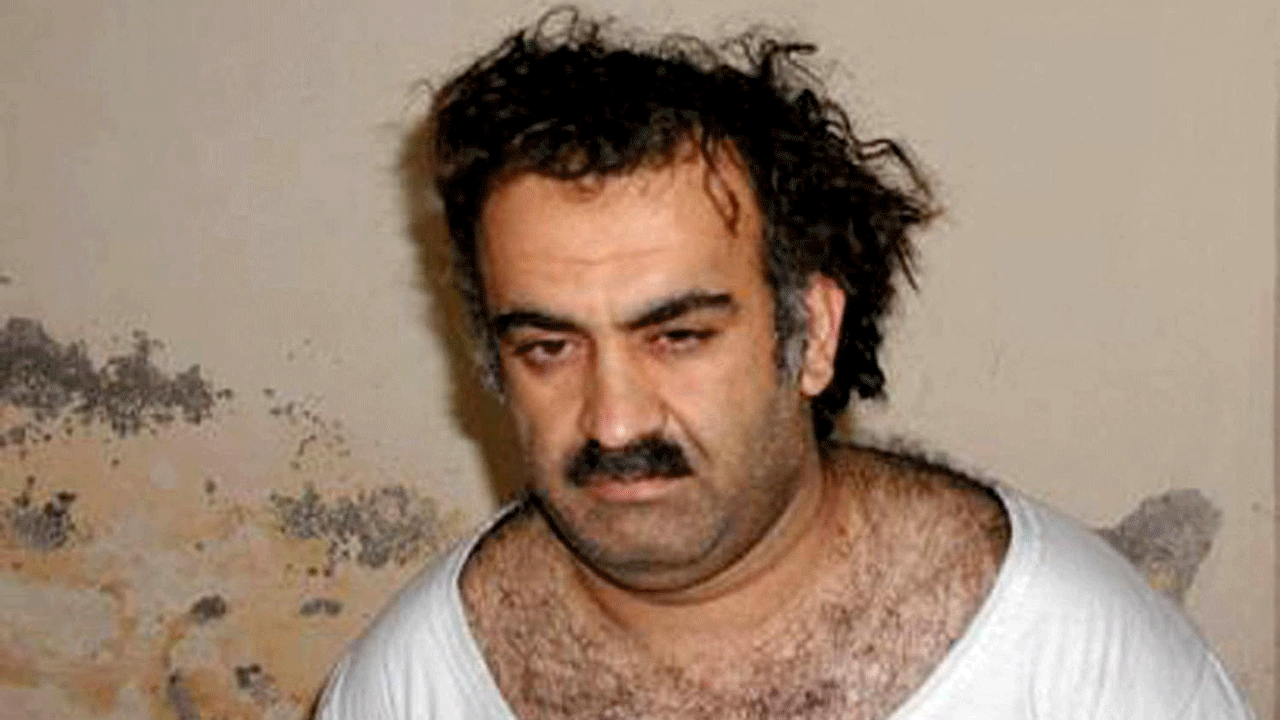
Khalid Sheikh Mohammed, the alleged mastermind behind the 9/11 terrorist attacks, will again face the potential for the death penalty after the Supreme Court denied his appeal Monday.
Freedom Is Back
In Style
Premium domains for sale
Justices rejected Mohammed’s bid to reinstate a plea agreement that allowed him and two co-defendants who helped plot the attack to avoid the death penalty. Mohammed and the co-defendants are scheduled to stand trial before a military court beginning June 5, 2028.
The Supreme Court’s order Monday doesn’t explain why the appeal was rejected. Justice Brett Kavanaugh—who served in the George W. Bush administration’s Justice Department and assisted with terrorist prosecutions after 9/11—recused himself from reviewing the case.
The co-defendants have been held at the military prison at Guantánamo Bay, Cuba, since 2006 and were charged in 2008 for their alleged roles in 9/11, when hijacked planes destroyed the World Trade Center and struck the Pentagon.
In July 2024, the Biden Defense Department announced that military prosecutors had reached a plea deal with Mohammed and alleged 9/11 co-conspirators Walid Muhammad Salih Mubarak bin ’Attash and Mustafa Ahmed Adam al Hawsawi that would remove death penalty from consideration. However, Biden’s defense secretary, Lloyd Austin, canceled the plea agreement.
The three co-defendants appealed that decision, and a military court sided with them. However, the D.C. Circuit Court of Appeals sided with Austin.
Justices on Monday announced action in several other cases that could be considered in the current term.
Justices will hear arguments about racial preference for a Maryland magnet school program in the case of Association for Education Fairness v. Montgomery County Board of Education.
Justices will also hear a case on the constitutionality of an 1868 federal law that taxes distilled spirits but also bans home distilleries, in Department of Justice v. McNutt. Penalties could amount to $10,000 or five years in prison.
In the immigration case of Bird v. Iowa Migrant Movement for Justice, the high court invited the solicitor general to file a brief expressing the views of the federal government.
Iowa Attorney General Brenna Bird is defending a law that creates a state-level crime related to illegal reentry into the United States. Challengers contend Iowa can’t enforce its own immigration-related criminal laws when immigration enforcement is primarily a federal responsibility.
The questions raised by the petition include whether a plaintiff has standing to make a pre-enforcement challenge to the constitutionality of a statute and whether overlap between state and federal criminal immigration laws is enough to pre-empt a state law if enforcement could sometimes conflict with federal officials’ prosecutorial discretion.
In O’Donnell v. City of Chicago, justices will decide whether the Windy City’s policy of impounding and selling a driver’s vehicle after two unpaid parking tickets, and extending that policy to other vehicles registered to the driver, including those never ticketed, is an unconstitutional seizure. The court also will consider whether the Constitution’s Takings Clause places any limit on the ability of a local government to confiscate property under its police power.
The high court on Monday denied the petition to hear a case from Gwynne Wilcox, who sued the Trump administration over her removal from the National Labor Relations Board. This could signal that the high court has moved on from the question of a president’s authority to remove members of executive branch boards and commissions. Justices previously cleared the way for Trump to oust a commissioner on the Federal Trade Commission.
More from this network:
Domains for Sale · GOTPeople.org · TheDSAPlatform · The Truth About Socialism
What's Your Reaction?
 Like
0
 Dislike
0
 Love
0
 Funny
0
 Wow
0
 Sad
0
 Angry
0

I am just an average American. My teen years were in the late 70s and I participated in all that that decade offered. Started working young, too young. Then I joined the Army before I graduated High School. I spent 25 years in, mostly in Infantry units. Since then I've worked in information technology positions all at small family owned companies. At this rate I'll never be a tech millionaire. When I was young I rode horses as much as I could. I do believe I should have been a cowboy. I'm getting in the saddle again by taking riding lessons and see where it goes.
Premium domains for sale












Comments (0)