

The American Writer Who Refused To Play By Today’s Rules
Premium domains for sale
Freedom Is Back In Style
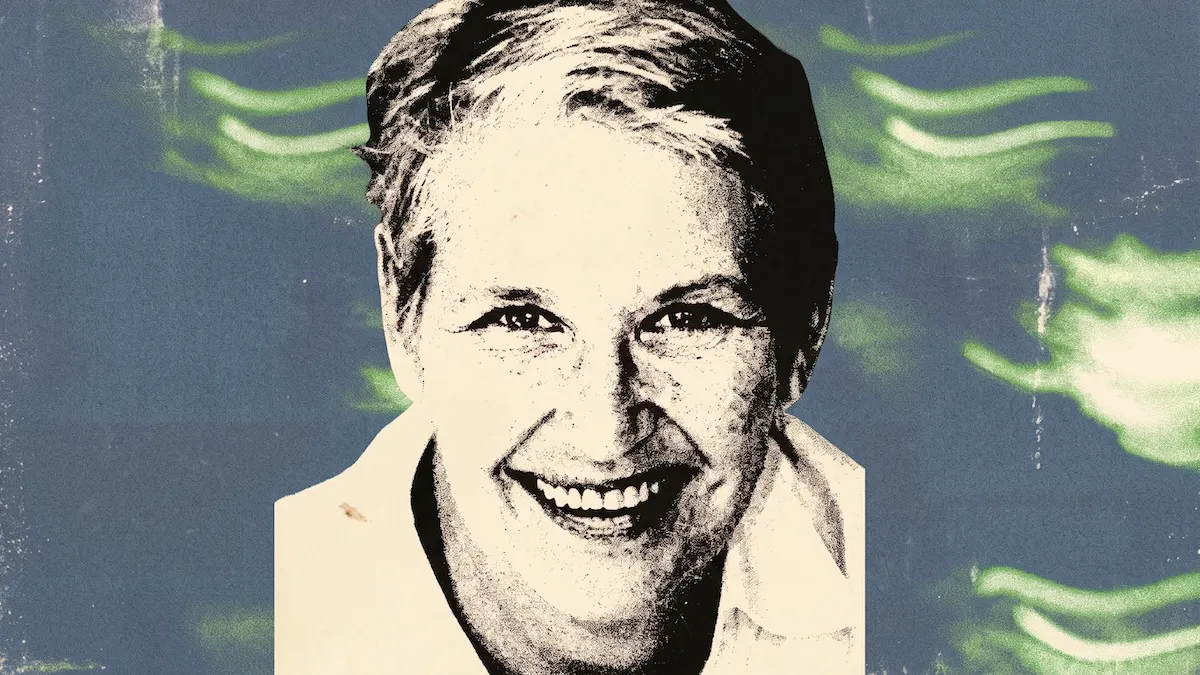
If you tell people, “Annie Dillard has died,” most of them will say, “I don’t know who that is.” And there’s no shame in that, for them or for her.
Annie Dillard, the great naturalist, essayist, and Christian interrogator — and minor novelist — died Tuesday at her home in Wellfleet, Massachusetts, at the age of 81. She was the antipode of Joan Didion, as blonde and soft and rural as Didon was dark and twitchy and urban.
Freedom Is Back
In Style
Premium domains for sale
“We can live any way we want,” Dillard wrote in her signature essay, “Living Like Weasels.” “People take vows of poverty, chastity, and obedience — even of silence — by choice. The thing is to stalk your calling in a certain skilled and supple way, to locate the most tender and live spot and plug into that pulse.”
That’s who Annie Dillard was: a woman who stalked her calling, weasel-like and unabashed.
Born Meta Ann Doak in Pittsburgh, Pennsylvania, on April 30, 1945, Dillard was raised in a well-heeled progressive family that she detailed in her first book, an autobiography called “An American Childhood,” which literary scuttlebutt says succeeded because she was upper-crust and photogenic, a pin-up Thoreau who experienced the outdoors between opulent meals.
She was 29 at the time, married to the poet Richard Dillard — thus her name. But they soon divorced and she married twice more, teaching, traveling, and living the life of an academic star, which insulated her.
Her critics pointed out that it was easy for young, chain-smoking Annie to explore nature, what with her tenure and big publishing payouts. She never denied it, referring to her “suburban wilderness.” She was honest about the fact that her adventures were simple, safe day trips to observe local wildlife, and she always returned after a couple hours to her comfortable home.
Dillard was a writer’s writer, someone whose biggest mark was on literature itself rather than the masses of paperback readers and filmgoers. Her career receded as she aged, but the echo of her observations about what it is to live in the world and make a transcript of it is loud.
“While writing is an art, it’s not a martial art,” Dillard wrote in the introduction to her 1989 book, “The Writing Life.” I’ve repeated this mantra to every nonfiction writing student I’ve ever had, and I say it to myself at least once a week.
Like Janet Burroway, who wrote the classic “Writing Fiction: A Guide to Narrative Craft,” and Vivian Gornick, whose “The Situation and the Story” is essential for both essayists and eulogists, Dillard — a longtime English professor — was best-known for her writing advice.
Writing that’s designed to settle scores or argue a case is boring, she taught. When memoir is written in order to attack, it’s obvious; it’s bad art. She was right.
When I attended the Iowa Nonfiction Writing Program in 1999, Dillard was canon and those guidelines were workshop staples. Did you hold yourself accountable? We would ask the writer of each piece of writing. Was your account fair? Is the conclusion earned, or is it simply a rant?
These concerns have been lost in an era of confessional personal essay and memoiristic screed. Titles such as “I’m Glad My Mom Died,” the runaway 2022 bestseller by child actor Jennette McCurdy, violate every one of Dillard’s stately directions. And it’s everyone’s loss.
The best of literature is, as Annie Dillard, wrote, designed to illuminate and elevate, not belittle or argue. “No manipulation is possible in a work of art, but every miracle is,” Dillard wrote in “Write Till You Drop,” an essay for the “New York Times Book Review.”
She also provided the single best piece of writing advice I’ve ever heard: Spend it.
“One of the few things I know about writing is this: spend it all, shoot it, play it, lose it, all, right away, every time. Do not hoard what seems good for a later place in the book, or for another book; give it, give it all, give it now. The impulse to save something good for a better place later is the signal to spend it now. Something more will arise for later, something better. These things fill from behind, from beneath, like well water. Similarly, the impulse to keep to yourself what you have learned is not only shameful, it is destructive. Anything you do not give freely and abundantly becomes lost to you. You open your safe and find ashes.”
The punchline is that Dillard repudiated her own terrific book on writing, insisting (through her third husband, the Thoreau biographer Robert D. Richardson) that “The Writing Life” was “an embarrassing nonfiction narrative.” About her famous essay, “To Fashion a Text,” which appeared in “Inventing the Truth: The Art and Craft of Memoir,” edited by William Zinsser, Dillard wrote on her own website: “This is emphatically not interesting; I renounce it.”
It’s ironic that so many readers’ favorite title is the one she couldn’t stand. But it’s also consistent with her never-still character. Above all, Dillard was a seeker, and this is the third piece of her legacy. Nature, writing, God. Raised in the Presbyterian Church, she was an on-again-off-for-short-times lifelong Christian who defined herself not by sect but by her relationship to paradox and sanctity — which she found everywhere in the world.
Again, she started with that which she abnegates: creationism, dogma, the idea of a personal God. “Did God create people? Sure, if that’s how you like it,” Dillard wrote in “Do I Consider Myself a Christian?” for “The Christian Century” magazine. “We didn’t create ourselves. We evolved, just as all other living beings evolved. Every creature alive today is a pinnacle of creation. So is every extinct creature.”
Hers is a modern response to works such as G.K. Chesterton’s Christian apologetics, “The Everlasting Man.” And true to her progressive roots, she wraps in Hasidism, Islam, and Buddhism, but concludes with something so fundamentally true, it seems — in the vernacular of the book Dillard abjured — “earned.”
“I know only one thing for certain: there is holiness,” she said. “Standing there, a person can sing myriad songs.”
***
Ann Bauer is co-founder of the serialized classic literature platform Storyalīz.
This article is part of Upstream, The Daily Wire’s new home for culture and lifestyle. Real human insight and human stories — from our featured writers to you.
More from this network:
Domains for Sale · GOTPeople.org · TheDSAPlatform · The Truth About Socialism
What's Your Reaction?
 Like
0
Like
0
 Dislike
0
Dislike
0
 Love
0
Love
0
 Funny
0
Funny
0
 Wow
0
Wow
0
 Sad
0
Sad
0
 Angry
0
Angry
0

I am just an average American. My teen years were in the late 70s and I participated in all that that decade offered. Started working young, too young. Then I joined the Army before I graduated High School. I spent 25 years in, mostly in Infantry units. Since then I've worked in information technology positions all at small family owned companies. At this rate I'll never be a tech millionaire. When I was young I rode horses as much as I could. I do believe I should have been a cowboy. I'm getting in the saddle again by taking riding lessons and see where it goes.
Premium domains for sale

















Comments (0)