

The Baltic’s Security Battle Is Moving Underwater
Premium domains for sale
Freedom Is Back In Style
Summary
Freedom Is Back
In Style
Premium domains for sale
- A recent incident in the Baltics illustrates what happens when governments cannot gather the evidence or establish the legal authority needed to hold anyone responsible for incidents under the sea.
- Advanced technology could strengthen surveillance and help investigators understand what happened when infrastructure is damaged.
- NATO should make evidence collection a central part of its underwater surveillance efforts rather than treating it as a separate task after damage has occurred.
NATO may be getting better at watching what happens at sea, but identifying a suspicious vessel means little if governments cannot gather the evidence or establish the legal authority needed to hold anyone responsible.
A recent incident in the Baltics illustrates this.
Two undersea data cables connecting Finland to Germany and Sweden to Lithuania were damaged in November 2024. European investigators quickly turned their attention to the Chinese cargo ship Yi Peng 3 after its movements appeared to correspond to the locations of the cable breaks.
Danish naval vessels monitored the ship for weeks, but European authorities struggled to investigate. Swedish police were eventually permitted aboard as observers during a Chinese-led investigation, while Sweden’s prosecutor was denied access.
The vessel later sailed away. European governments knew where the ship was and had good reason to investigate, yet could not conduct the investigation on their own terms.
The incident exposed a serious weakness in Baltic security.
The Baltic Sea is home to an extensive network of underwater cables and pipelines that Europe depends on for electricity, communications, and energy. Damage to these connections can disrupt entire communities and cost millions to repair.
NATO has recognized the threat, and Adm. Pierre Vandier, supreme allied commander transformation, deserves credit for advancing the alliance’s use of autonomous maritime systems. Through Task Force X-Baltic, NATO tested more than 70 air, surface, and underwater systems over three weeks in June 2025. According to NATO, its fleet of uncrewed vessels provided comparable surveillance coverage at one-third the cost of crewed frigates.
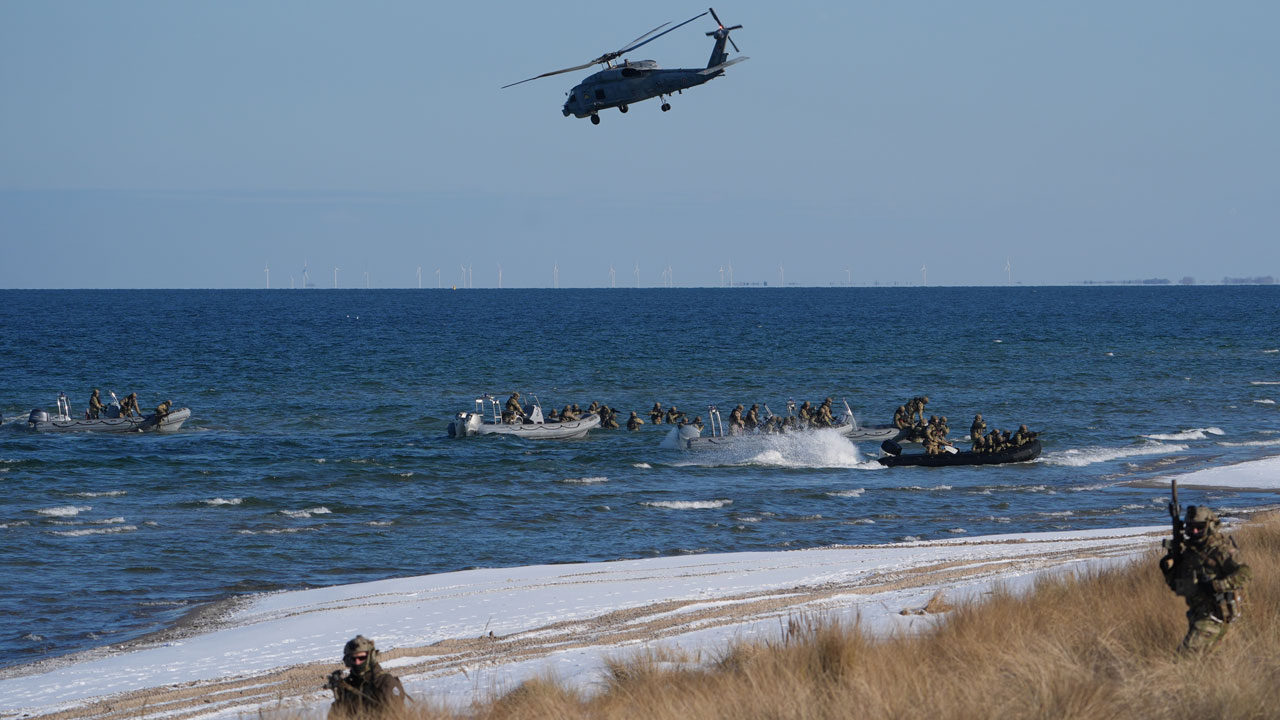
The initiative builds on NATO’s Baltic Sentry operation, launched in January 2025 to increase NATO’s presence through warships, patrol aircraft, and naval drones. These developments allow NATO to monitor more territory without relying entirely on expensive warships.
Ukraine has already demonstrated the value of maritime drones in the Black Sea, using them to strike Russian vessels and limit their freedom of movement. The Baltic presents a different challenge, but the same technology could strengthen surveillance and help investigators understand what happened when infrastructure is damaged.
That capability should extend beyond detecting suspicious activity. Underwater drones could regularly survey vulnerable cable routes, creating a record of the seabed before an incident occurs. If a cable is damaged, investigators could return to the same location and document fresh anchor marks, debris, or changes in the surrounding area. Time-stamped images and sonar records could then be compared with vessel movements, bridge logs, and recovered equipment.
None of this would automatically prove sabotage, but it would help establish a timeline and preserve physical evidence that could be presented in court. NATO should make evidence collection a central part of its underwater surveillance efforts rather than treating it as a separate task after damage has occurred.
Previous incidents show why this is such a worthwhile endeavor. In October 2023, the Balticconnector gas pipeline between Finland and Estonia was damaged, and Finnish investigators traced the damage to an anchor from the Hong Kong-flagged Newnew Polar Bear container ship. Its captain later faced criminal charges in Hong Kong and pleaded not guilty in February 2026. Although Finland and Estonia investigated the incident together, pursuing accountability required cooperation with authorities far beyond the Baltic.
The Eagle S case raised an even more complicated question. In December 2024, Finnish authorities suspected that the Cook Islands-flagged tanker had dragged its anchor across the Estlink 2 power cable and four communications cables. A Finnish district court dismissed charges against three crew members in October 2025 after finding that Finland lacked jurisdiction.
On Aug. 27, 2026, the Helsinki Court of Appeal reversed that decision, ruling that Finnish courts could hear the case because the alleged conduct had consequences in Finland and did not qualify as an ordinary maritime accident under the United Nations Convention on the Law of the Sea. The case was returned for trial, and the ruling was not final. It did not establish the crew’s guilt, but it demonstrated how difficult accountability becomes when the vessel, the damaged infrastructure, and the governments involved fall under different jurisdictions. Finding a ship is only the beginning of an investigation.
International maritime law makes these cases especially complicated. The United Nations Convention on the Law of the Sea requires countries to criminalize certain deliberate or culpably negligent damage to submarine cables and pipelines committed by vessels flying their flags or individuals under their jurisdiction. Article 113 establishes these obligations, while Article 58 makes relevant provisions applicable in exclusive economic zones.
However, an exclusive economic zone does not give a coastal state the same authority it has in its own territorial waters. A government cannot simply board a foreign vessel whenever it suspects wrongdoing.
The legal dispute surrounding Eagle S also drew on the 2012 Enrica Lexie incident, in which two Indian fishermen were killed, allegedly by Italian marines aboard an Italian tanker. An international tribunal found that India and Italy had overlapping jurisdictional claims, although the marines were protected from Indian criminal prosecution by immunity. Finland’s appellate court cited the case when considering jurisdiction over conduct at sea that caused consequences within another country.
These decisions show that international law provides a framework, but countries still face difficult questions about enforcement. Arbitration under the United Nations Convention on the Law of the Sea can resolve certain disputes between states, but it cannot replace a criminal investigation or guarantee that a suspected offender will face prosecution.
NATO and Baltic governments should address these problems before another incident occurs.
The military side should establish a shared system for monitoring vessel movements, identifying vulnerable cable routes, and conducting underwater surveys when damage is discovered.
At the same time, governments should establish clear procedures for preserving surveillance records, maintaining chains of custody, requesting cooperation from flag states, and deciding which authorities will lead an investigation. Infrastructure operators must be included, because they possess technical records, understand the relevant networks, and often begin repairs while investigations are still underway.
Physical protection remains equally important. Burying cables where practical, installing protective coverings, maintaining alternative connections, and ensuring that repair vessels are available would all reduce the damage caused by a single incident.
Naval and coast guard patrols also remain necessary. Drones can locate suspicious activity and document the seabed, but trained personnel are still needed to inspect vessels, question crews, and take enforcement action when legally authorized. These measures would give European governments a better chance of responding quickly without compromising the evidence needed to prosecute a case.
Vandier and NATO have made important progress in closing the Baltic’s surveillance gaps. Now European governments need to match that progress with stronger investigative cooperation and clearer enforcement procedures.
The recent cable incidents have shown that sophisticated surveillance alone cannot guarantee security. The next vessel suspected of damaging critical infrastructure should not be able to leave while the countries investigating it are still deciding who has the authority to act.
Europe has invested in the technology to monitor what happens beneath the Baltic Sea. It is time to make sure that evidence can lead to real accountability.
What's Your Reaction?
 Like
0
 Dislike
0
 Love
0
 Funny
0
 Wow
0
 Sad
0
 Angry
0

I am just an average American. My teen years were in the late 70s and I participated in all that that decade offered. Started working young, too young. Then I joined the Army before I graduated High School. I spent 25 years in, mostly in Infantry units. Since then I've worked in information technology positions all at small family owned companies. At this rate I'll never be a tech millionaire. When I was young I rode horses as much as I could. I do believe I should have been a cowboy. I'm getting in the saddle again by taking riding lessons and see where it goes.
Premium domains for sale























Comments (0)