

The Cardinal Sin That Shattered America’s Trust
Premium domains for sale
Freedom Is Back In Style
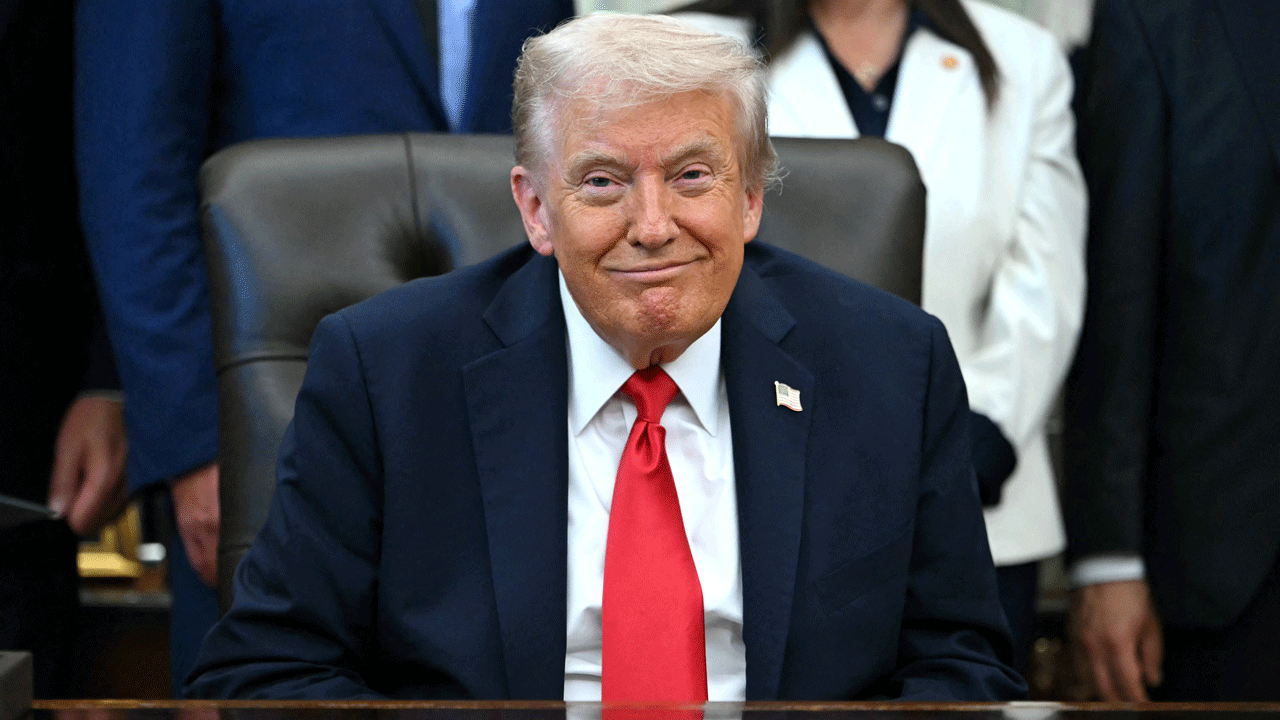
On Monday, President Trump signed an executive order that backed fewer routine vaccines for kids.
Freedom Is Back
In Style
Premium domains for sale
I’m actually rather indifferent to this. The reason I’m indifferent to this is that different countries have different standards for the number and the schedule for childhood vaccines.
Some of these vaccines are recommendations; they’re not mandates. But when you are talking about the vaccinations that are most likely to prevent health problems, they’re not all equivalent.
The HPV vaccine is for a sexually transmitted disease that typically leads to cancer. Thus, it seems it should be a matter of parental choice. If you are deeply worried that your kid is going to get HPV from something based on their activity, that is not quite the same as the MMR vaccine, which is for something that is infectious.
The reason the Europeans do it differently very often has to do with their nationalized health care systems: how often you are expected to visit the doctor, the prevalence of particular diseases in particular countries, etc. So that’s a little more complicated than people may think.
But I will tell you what is not particularly complicated. There is no data, none, that links vaccines to autism. This is not a scientifically-backed concept.

But this is what the president was promoting on Monday. I object to this because data and science show this is inaccurate.
This has been a big push by Health and Human Services Secretary Robert F. Kennedy Jr. for years. The president suggested that breaking up the vaccine schedule would decrease the prevalence of autism. The data do not exist for this proposition. They don’t.
Trump stated, “It is essential to our research efforts that we have the very best vaccine recommendations in the entire world. So we’re reducing them. We’re changing it to visits over a period of a year or year and a half so they get 20% of what they would have gotten in one big shot.”
When he says “one big shot,” he says that as though it’s a water bottle filled with vaccine.
I don’t have a problem with changing the vaccine schedule, but suggesting that this is going to reduce autism diagnoses in the United States is not backed by any evidence.
The person most associated with promoting this nonsense is gone — Andrew Wakefield. He published a paper in 1998 suggesting that there was a link between vaccination and autism. In the original paper — which was later retracted by The Lancet — Wakefield and 12 co-authors claimed to have investigated a consecutive series of 12 children referred to the Royal Free Hospital and School of Medicine with chronic enterocolitis and regressive developmental disorder. The authors reported that the parents of eight of the 12 children associated their loss of acquired skills, including language, with the MMR vaccine.
Number one: That was self-reported. Number two: That was an extraordinarily small sample size. Number three: Wakefield had been selecting these people, and his research had been funded by lawyers acting for the parents who were trying to sue the vaccine manufacturers.
The British General Medical Council found that Wakefield had acted unethically and had shown callous disregard for the children in his study, upon whom the invasive tests were performed. And all of this was fueled by Wakefield pushing single vaccines rather than, for example, the combined MMR. The new schedule that Trump is suggesting separates M from MR, measles from mumps and rubella, as opposed to one shot.
The reason all this was combined was to minimize inconvenience and ensure kids got the full battery of vaccines. Separating them off, the idea goes, means three separate visits. How many parents want to go to the doctor three separate times, as opposed to just doing it once and being done with it?
I’m not arguing that we can’t make changes to the vaccine schedule based on the best possible science or good decision-making, but the attempt to link this with autism diagnosis is not scientific.
RFK Jr. argued that there has been a skyrocketing increase in autism diagnoses after 1990.
The reason that exists is that the Americans with Disabilities Act was passed in 1975. It funded schools to a greater extent because of disability claims. In 1990, the federal government reset the standards for disability claims in schools, and they included autism.
So it turns out that if you are a school and you wish for additional federal or state monies, a great way to do that is through additional autism claims. It’s the same thing with ADHD, by the way.
How do I know that this is a case of incentives creating outcomes? Because there is a study done this year that compared autism prevalence by functional severity.
Anyone who has ever met kids with actual severe autism, moderate to profound autism, knows it is real.
But if you’re weird or if you have a particular skill set or if you’re kind of smart, people will say that you’re autistic now, which is stupid.
Autism is a real thing, and severe autism is disabling. Kids with severe autism very often cannot talk. They cannot interact in society. Having moderate autism means that you largely cannot fully interact. You very often need full-time care.
It is not the same thing as “You’re a weirdo with a 158 IQ.” Autism is not just “Your buddy’s a little bit weird around people.”
Guess what? It turns out that prevalence by functional severity, meaning diagnoses of moderate to profound autism, has been down since 2000. The diagnosis of moderate to profound autism was 1.5 per 1000 children in 2000. It is 1.2 per 1000 children in 2016.
Real hardcore autism is actually slightly down between 2000 and 2016. How about mild autism? The diagnosis rate for eight-year-olds has more than doubled. In 2000, it was 3.1 per 1000 children. Now it is 7.3 per 1000 children. Borderline autism has absolutely skyrocketed.
If autism diagnoses are increasing across the board, wouldn’t you expect more moderate to profound cases? Why is moderate to profound declining, while mild and borderline are wildly increasing?
So if you’re mild, borderline, or have no significant challenges, there has been a massive increase in diagnoses; if you’re moderate to profound autism, a decrease in diagnoses.
What could explain this? Could it be the possibility that, just as the number of COVID-attributed deaths skyrocketed when the federal government started paying hospitals based on COVID deaths, and so people started mislabeling heart attacks as COVID, could it be we’re getting a mass overdiagnosis?
It turns out that public policy has this impact on a wide variety of maladies. There was a pretty massive increase in disability all the way up to about 1978-79. That’s because the federal government started making Social Security disability more widely available then.
It turned out that a lot of people were engaging in fraud. And so a bunch of restrictions were imposed, resulting in a complete flatlining of disability spending between 1978 and roughly 1990.
Then there was a recession, and people started claiming disability to get the money; the government loosened it up, and boom, exponential growth.
It’s almost as though people respond to incentive structures.
Why am I pointing this out? Because data matters.
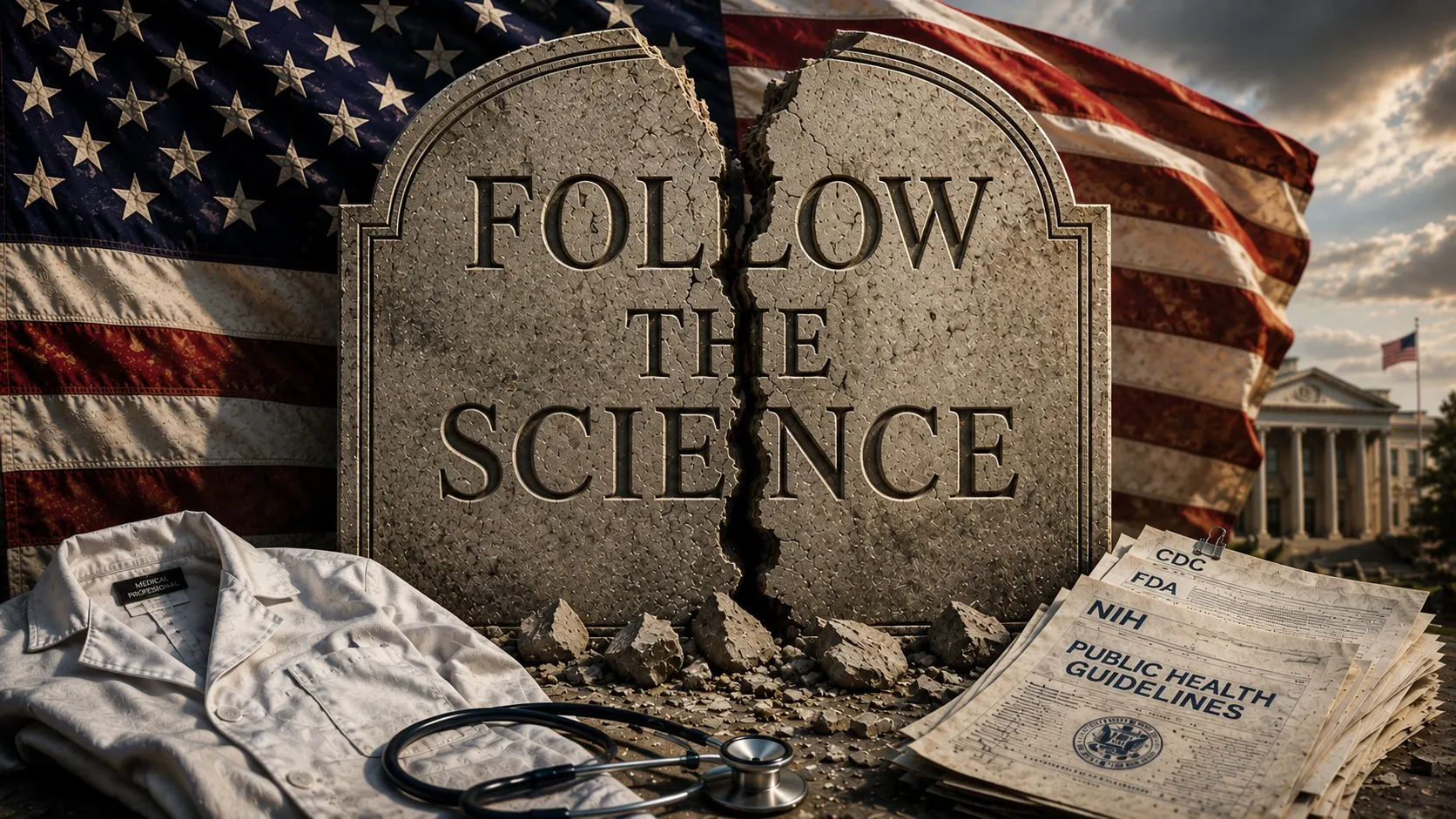
And this, to me, remains the greatest sin of people like Anthony Fauci. They destroyed any faith in data.
More from this network:
Domains for Sale · GOTPeople.org · TheDSAPlatform · The Truth About Socialism
Originally Published at Daily Wire, Daily Signal, The Blaze, or Fox News
What's Your Reaction?
 Like
0
Like
0
 Dislike
0
Dislike
0
 Love
0
Love
0
 Funny
0
Funny
0
 Wow
0
Wow
0
 Sad
0
Sad
0
 Angry
0
Angry
0

I am just an average American. My teen years were in the late 70s and I participated in all that that decade offered. Started working young, too young. Then I joined the Army before I graduated High School. I spent 25 years in, mostly in Infantry units. Since then I've worked in information technology positions all at small family owned companies. At this rate I'll never be a tech millionaire. When I was young I rode horses as much as I could. I do believe I should have been a cowboy. I'm getting in the saddle again by taking riding lessons and see where it goes.
Premium domains for sale




















Comments (0)