

The Enemy Of My Enemy Is A Terrorist: The Left’s Sick New Twist
Premium domains for sale
Freedom Is Back In Style
Hatred can make for some strange alliances. People who would ordinarily have nothing in common suddenly cheer for the same side, overlooking differences they once considered intolerable. Sometimes the only thing holding them together is a shared enemy.
Freedom Is Back
In Style
Premium domains for sale
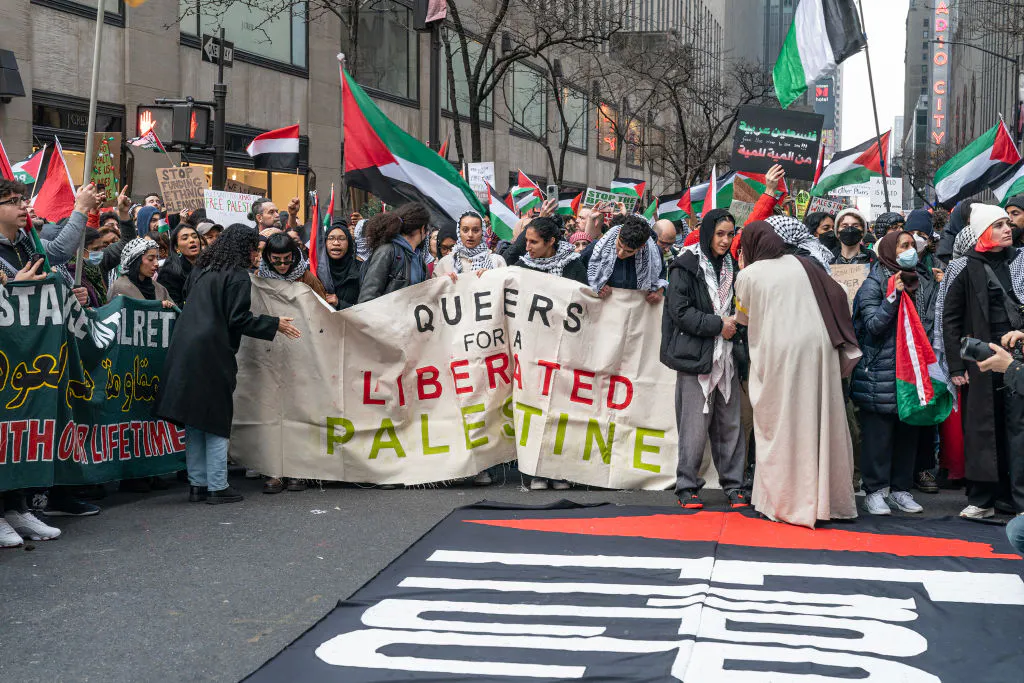
Consider the progressive activists who have expressed support for Hamas. Many champion women’s rights, gay rights, and individual freedom, yet find themselves defending an organization that rejects those very principles. They aren’t necessarily embracing Hamas’s beliefs but do seem to hate Israel more than they object to what Hamas stands for. That’s a troubling way to decide who’s worthy of support.
As a psychotherapist, I’ve seen how resentment can take over someone’s life: A person becomes so preoccupied with an ex-spouse, a difficult boss, or a family member that decisions are no longer based on what’s best for him, but on getting back at the other person. He may even act against his own interests just to feel he’s won. The person he dislikes ends up having enormous influence over his life.
The same thing happens in politics. People can become so consumed with opposing someone that they stop questioning their own side. Sharing a common enemy seems to trump everything else.
This explains why some activists who would be horrified by religious restrictions on women or the persecution of gay people can find themselves praising an Islamist organization whose beliefs conflict with nearly everything they advocate at home. Their opposition to Israel has become more important than their commitment to those values.
Criticizing Israel or supporting Palestinian rights doesn’t mean supporting Hamas. Many people oppose Israeli policies while condemning Hamas’s violence. The concern is with those who go further, treating an organization responsible for murdering civilians as admirable because of whom it fights.
I’ve noticed that people who organize their lives around resentment often have difficulty explaining what they want. They can describe everything wrong with a former partner or employer in detail. But ask what a satisfying relationship or career would look like, and the answer is less clear. The anger has given them something to focus on, but with little direction.
Political movements can develop the same problem. Opposition offers a sense of purpose without requiring agreement about what should replace the thing being opposed. People with wildly different beliefs can march together and congratulate one another on being on the right side.
But what happens when the common enemy disappears? What exactly do these people agree on?
It’s worth asking activists who celebrate Hamas whether they’d want to live under the system Hamas advocates. Would they accept its treatment of dissenters or restrictions on personal freedom? Would they tolerate an American political movement with comparable beliefs? If not, why celebrate it abroad?
Having an enemy gives people someone to blame, a reason to feel morally superior and a community that shares their outrage. But anger doesn’t tell you whether your allies are any better.
This tendency isn’t confined to the Left. Conservatives can also become so determined to defeat political opponents that they excuse conduct they would otherwise condemn. The willingness to overlook wrongdoing isn’t unique to any ideology.
Some activists who condemn offensive language as harmful have no trouble making excuses for Hamas, an organization responsible for murdering civilians. How does someone who claims to care deeply about human rights reconcile those two positions?
It raises an obvious question: Do they actually believe in the principles they promote, or do those principles only matter when it’s politically convenient?
There’s also a personal cost to being consumed by an enemy. I’ve worked with people who spent so much time resenting someone that they allowed that person to influence nearly every decision they made. Things improved when they stopped trying to prove the other person wrong and started focusing on what they wanted for themselves.
Political activists might ask themselves something similar. Would they condemn an atrocity committed by someone on their side as readily as one committed by an opponent? Would they defend the same principles even when doing so meant disagreeing with their friends?
Anger at injustice can motivate and accomplish a great deal. But it can also cloud judgment, especially when people become more interested in defeating an enemy than in examining their allies’ behavior. If your enemy determines whom you admire, what you’re willing to excuse, and which principles you’ll abandon, you’ve given that enemy far more power than you realize. You’re letting someone you hate make your decisions for you.
***
Jonathan Alpert is a psychotherapist in New York City and Washington, D.C., and author of the book “Therapy Nation.” Find him on X @JonathanAlpert.
More from this network:
Domains for Sale · GOTPeople.org · TheDSAPlatform · The Truth About Socialism
What's Your Reaction?
 Like
0
 Dislike
0
 Love
0
 Funny
0
 Wow
0
 Sad
0
 Angry
0

I am just an average American. My teen years were in the late 70s and I participated in all that that decade offered. Started working young, too young. Then I joined the Army before I graduated High School. I spent 25 years in, mostly in Infantry units. Since then I've worked in information technology positions all at small family owned companies. At this rate I'll never be a tech millionaire. When I was young I rode horses as much as I could. I do believe I should have been a cowboy. I'm getting in the saddle again by taking riding lessons and see where it goes.
Premium domains for sale






















Comments (0)