

The ‘Godballers’ are coming for the rainbow
Premium domains for sale
Freedom Is Back In Style
In the book of Genesis, the rainbow symbolizes God’s covenant never again to destroy all living creatures in a global flood.
Freedom Is Back
In Style
Premium domains for sale
Then came the 1970s, when artist Gilbert Baker created the rainbow flag that became an enduring symbol of gay rights and, eventually, the broader LGBTQ movement.
Athletes reach audiences traditional religious institutions often struggle to reach, particularly young men.
Now some Christian athletes are beginning to reclaim the symbol — and something larger along with it.
A recent episode of A.J. Rice’s “Dangerous Laughter” podcast featured sports journalist Steve Eubanks discussing his new book, “Godball: How Athletes Are Saving Christianity.” Eubanks’ central argument is that professional and college athletes are increasingly using their platforms to express Christian faith openly and that this may reflect a broader religious revival, particularly among young men.
Athletes pray publicly, talk about Jesus in interviews, and use social media to communicate directly with fans. They no longer depend entirely on sportswriters or television networks to interpret what they believe.
That matters because athletes who embrace fashionable political causes are often celebrated, while those who express traditional Christian beliefs can encounter a different response.
Chicago Bulls guard Jaden Ivey learned that lesson this year. The Bulls waived him for “conduct detrimental to the team” after he criticized the NBA’s embrace of Pride Month and described LGBTQ celebration as “unrighteous.”
Jonathan Isaac drew criticism in 2020 when, citing his Christian faith, he stood for the national anthem and declined to wear a Black Lives Matter shirt. Tim Tebow became one of the most polarizing athletes in America more than a decade ago, largely because of how conspicuously he displayed his Christianity.
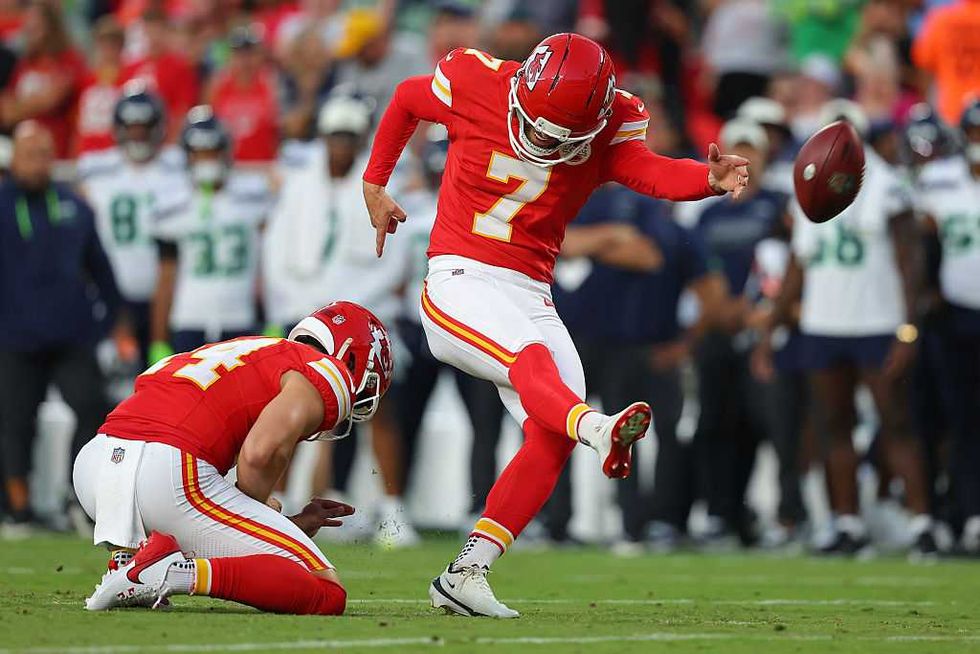
Kansas City Chiefs kicker Harrison Butker faced enormous backlash after a 2024 commencement speech at Benedictine College defending traditional Catholic teaching on marriage, family, and gender roles.
RELATED: The WNBA’s identity crisis is bigger than basketball
 Michael Reaves/Getty Images
Yet Eubanks argues that the cultural resistance may actually strengthen the phenomenon. Athletes reach audiences traditional religious institutions often struggle to reach, particularly young men. Sports reward discipline, sacrifice, teamwork, perseverance, delayed gratification, and submission to something larger than oneself — virtues naturally compatible with Christian teaching.
The most literal example of Christians reclaiming the rainbow came earlier this summer in San Francisco.
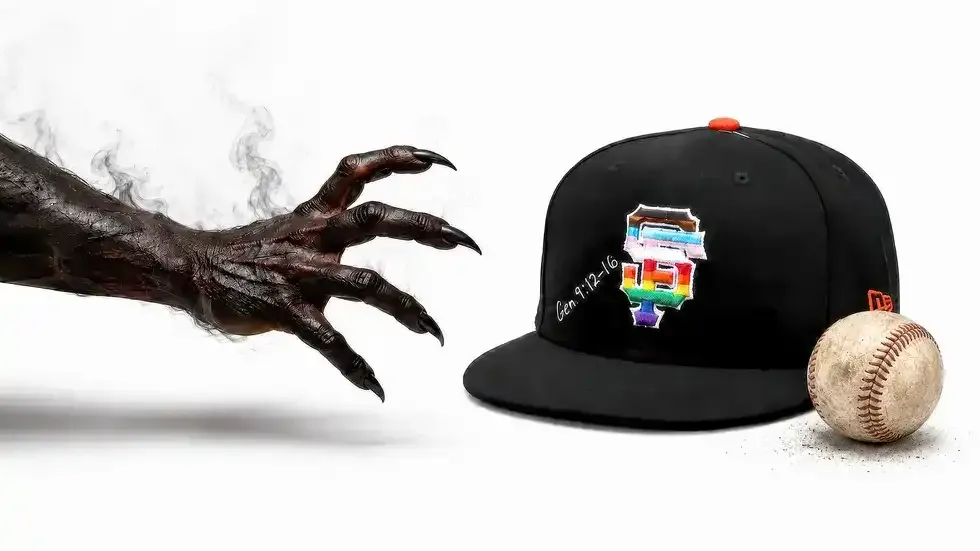
During the Giants’ Pride Night, pitchers Landen Roupp, J.T. Brubaker, and Ryan Walker wrote Bible verses on their rainbow-themed caps. Roupp cited Genesis 9:12-16 — the passage describing God’s covenant with Noah and the rainbow as its sign. A fourth pitcher, Sam Hentges, declined to wear the Pride cap altogether. MLB issued formal warnings to the three players who altered their caps.
The episode contained an irony almost too perfect to invent. The rainbow began in Scripture as a sign of God’s covenant. Christian ballplayers invoked that meaning and found themselves in trouble for altering a rainbow symbol adopted by the modern gay-rights movement.
Commissioner Rob Manfred later acknowledged another wrinkle: Giants players had not been properly informed that wearing the Pride caps was optional.
Eubanks sees these episodes as part of something larger.
There is evidence for at least part of his thesis. Gallup reported this year that the share of young American men who say religion is “very important” in their lives rose from 28% in 2022-23 to 42% in 2024-25. Young men also reached roughly the same level of religious service attendance as young women.
Sports may be one conduit for that renewed interest.
Consider Sophie Cunningham of the Indiana Fever. Cunningham has described herself as a “woman of God” and this summer publicly opposed transgender women competing in women’s sports, saying young girls “shouldn’t have to go against biological men.” The comments brought predictable backlash, but Cunningham refused to retreat.
RELATED: MLB’s Pride police strike out against Christian players
 Blaze Media Illustration
That willingness to speak plainly is central to what Rice and Eubanks describe.
Young athletes do not need to become theologians. They need only refuse the increasingly strange proposition that Christianity belongs safely in private while every other moral and political creed may be displayed at center court, midfield, or home plate.
This is where “Godball” becomes more interesting than another collection of inspirational sports stories.
Athletes occupy an unusual position in American culture. They embody physical excellence, discipline, competition, loyalty, and sacrifice. Millions of young people watch them, imitate them, and listen when they speak.
If even a fraction of those athletes begin speaking openly about Christ, marriage, family, sex, sacrifice, and moral order, they create a cultural influence far beyond the stadium.
And perhaps the rainbow is the perfect place to begin.
Christians never needed permission to remember what it meant first.
Let the Godballers become the new heretics — and reclaim the rainbow.
More from this network:
Domains for Sale · GOTPeople.org · TheDSAPlatform · The Truth About Socialism
What's Your Reaction?
 Like
0
Like
0
 Dislike
0
Dislike
0
 Love
0
Love
0
 Funny
0
Funny
0
 Wow
0
Wow
0
 Sad
0
Sad
0
 Angry
0
Angry
0

I am just an average American. My teen years were in the late 70s and I participated in all that that decade offered. Started working young, too young. Then I joined the Army before I graduated High School. I spent 25 years in, mostly in Infantry units. Since then I've worked in information technology positions all at small family owned companies. At this rate I'll never be a tech millionaire. When I was young I rode horses as much as I could. I do believe I should have been a cowboy. I'm getting in the saddle again by taking riding lessons and see where it goes.
Premium domains for sale










Comments (0)