

The International Criminal Court Is In Bed With Our Enemies And It’s Time We Clean House
Premium domains for sale
Freedom Is Back In Style
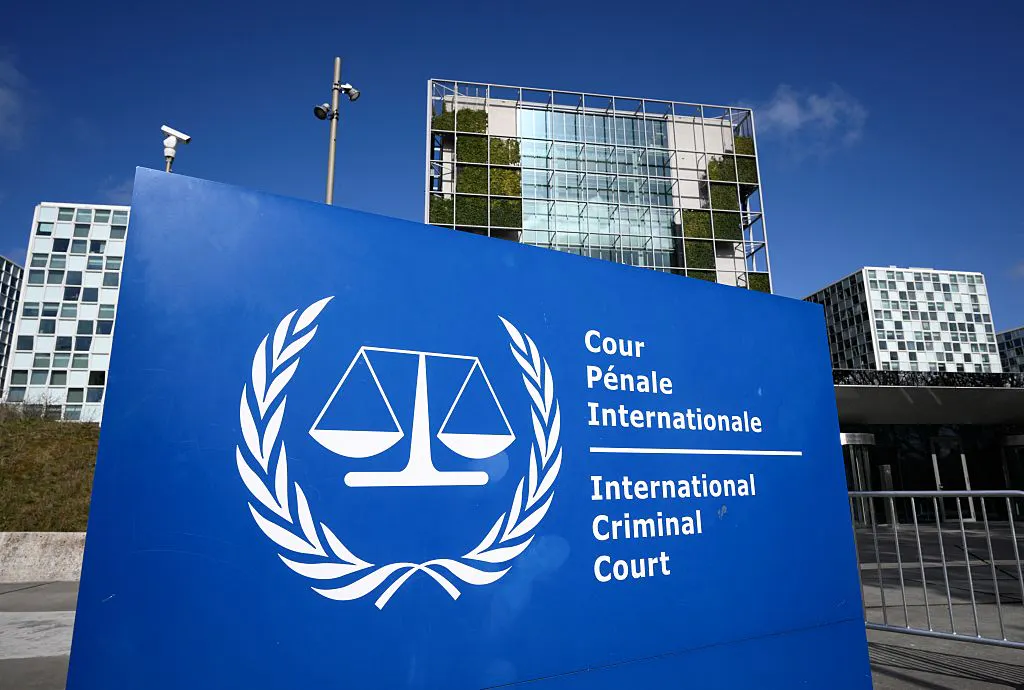
The revelations of improper conduct involving the International Criminal Court (ICC) continue to grow, with the Wall Street Journal recently breaking a story suggesting that Qatar promised to assist chief prosecutor Karim Khan if he brought charges against Israeli officials. Khan made a sudden rush to issue the indictments just as sexual assault accusations against him were coming to light. Qatar’s role makes the affair about more than one man’s alleged crimes – it is about the dangerousness and lack of accountability of the ICC as an institution.
Freedom Is Back
In Style
Premium domains for sale
Qatar is not an ICC member state. But it does host and sponsor Hamas, making its involvement with a prosecutor investigating the Gaza war deeply problematic. This may explain a strange aspect of the ICC’s arrest warrants. In addition to Israeli leaders, the ICC indicted Yahya Sinwar and two other top Hamas leaders in Gaza. It was gross moral equivalence equating Israeli leaders defending their people after the October 7 massacre with the masterminds of that crime.
The Court presented these parallel indictments as proof of its evenhandedness. Yet from the beginning, there was an obvious asymmetry: the Court indicted Israel’s top civilian leader, but ignored Khaled Mashaal and the rest of Hamas’s political leadership. When Israel mooted the warrants on Sinwar and Mohammed Deif by killing them during the Gaza war, Khan did not seek to restore balance by bringing new indictments against Hamas’s top leaders, who happen to be based in Qatar.
As the accusations against Khan began to mount, he argued it was a plot to weaken the Court, hinting at Mossad involvement. That appears to be, like so many charges against Israel, an exercise in projection. Qatar hired investigators in a failed attempt to discredit the employee who made the sexual assault allegations. Khan appears to have been right that there was a foreign intelligence operation surrounding these allegations, just not against him.
Khan specifically tied his warrants against Israeli Prime Minister Benjamin Netanyahu to the charges against him, urging his alleged victim to remain silent because it would undermine pending “Palestinian arrest warrants.” This, along with the emerging role of Qatar, makes it impossible to separate the scandal around Khan from the Court’s Gaza war indictments. Yet the Court has been silent about the Qatar revelations, a marked contrast to its public condemnation of a Trump administration executive order imposing sanctions on ICC officials as interference with its “independent and impartial work.”
The only action that the ICC has taken so far is disciplinary proceedings against Khan himself. The most that can happen is that he loses his job. His accuser never turned to the Dutch police because she said his official immunity would protect him. However, under the ICC’s rules, the judges could waive that immunity if they wished. The Court’s refusal to allow a criminal investigation of Khan, even as the scope of the scandal expands, demonstrates the institution’s political nature.
At the same time, the Court seems fully intent on proceeding with the Netanyahu prosecution. Such serious prosecutorial misconduct could, at least in the United States, lead to the dismissal of even factually substantiated criminal charges. Here, the evidence does not even show that the alleged crime (purposeful starvation of civilians) even occurred, let alone was committed by the accused. As the dust settles in Gaza, the lack of mass starvation becomes ever more evident.
An American prosecutor would be loath to try a case with such manifest prosecutorial misconduct (notably, senior court officials knew about the allegations against Khan at the time the indictments were made but kept it quiet for six months, when it leaked to the press). But Netanyahu is not facing a jury of his peers, but rather a panel of international judges who likely share the Court’s institutional culture.
Qatar’s involvement shows the ICC to be even more dangerous than its critics thought. The rap against the tribunal has long been that it acts like a global independent counsel – an unaccountable prosecutor with no democratic restraints. But even worse, it now appears that hostile states can coopt it as a political weapon in an ongoing conflict.
This illustrates the need for the Trump administration to take decisive action against the organization. The sanctions the Treasury Department has imposed on individual court officers have inconvenienced them but appear to have done little to fundamentally weaken the organization or change its trajectory. A body politically motivated enough to maintain the Israel warrants in the wake of the growing Khan fiasco will certainly retaliate against Trump and his top officials once they are out of office.
The administration should impose institution-wide sanctions on the tribunal and vigorously enforce them. The ICC recently got some good news as Peter Magyar, Hungary’s prime minister-elect, vowed to rejoin after it had become the first EU country to quit. Magyar prioritized the issue because he is seeking EU funding, and Brussels ties its financial support to adhering to its foreign policy. America must adopt the same tough approach, insisting that countries receiving benefits quit the Court. For Europe, pushing countries to join the ICC is a matter of ideology. For America, pushing back should be seen as a question of national security.
Eugene Kontorovich is a professor at George Mason University Scalia Law School and a senior legal fellow at Advancing American Freedom.
More from this network:
Domains for Sale · GOTPeople.org · TheDSAPlatform · The Truth About Socialism
What's Your Reaction?
 Like
0
Like
0
 Dislike
0
Dislike
0
 Love
0
Love
0
 Funny
0
Funny
0
 Wow
0
Wow
0
 Sad
0
Sad
0
 Angry
0
Angry
0

I am just an average American. My teen years were in the late 70s and I participated in all that that decade offered. Started working young, too young. Then I joined the Army before I graduated High School. I spent 25 years in, mostly in Infantry units. Since then I've worked in information technology positions all at small family owned companies. At this rate I'll never be a tech millionaire. When I was young I rode horses as much as I could. I do believe I should have been a cowboy. I'm getting in the saddle again by taking riding lessons and see where it goes.
Premium domains for sale

















Comments (0)